Introduction: The High-Stakes Legal Clash
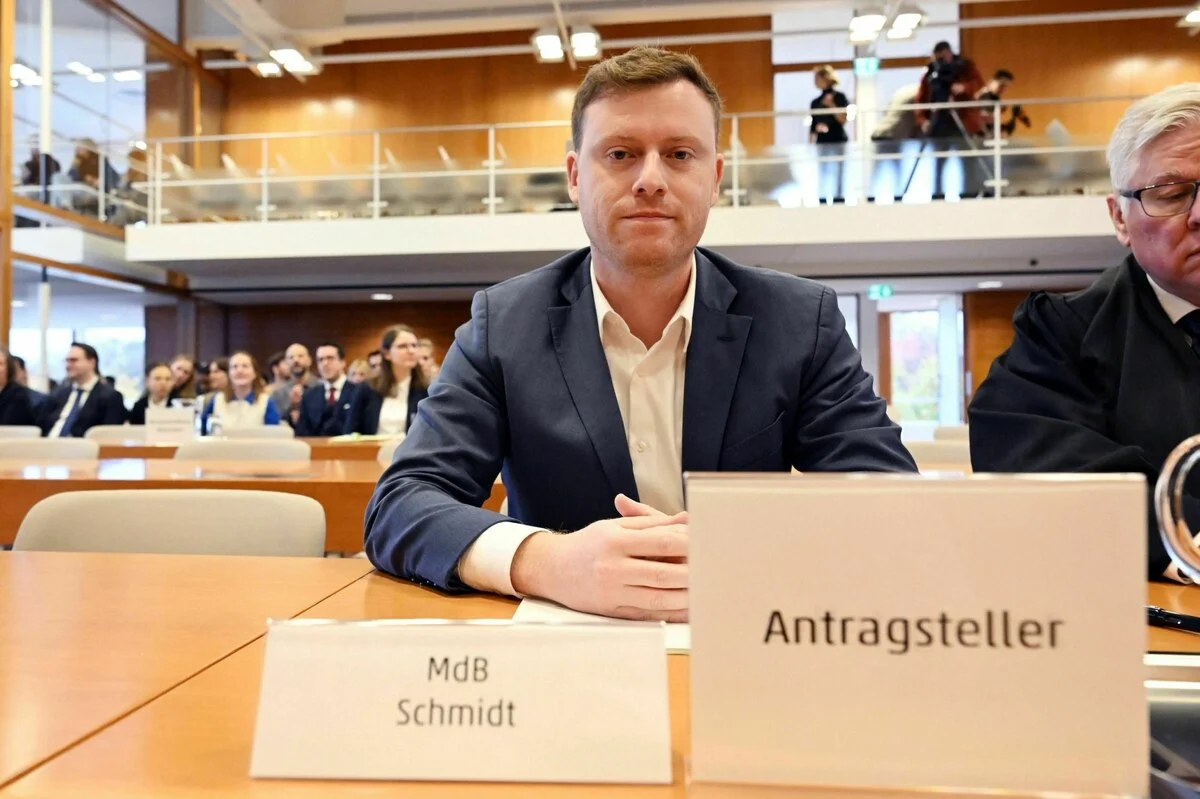
In a historic legal development, the German Federal Constitutional Court (Bundesverfassungsgericht) in Karlsruhe has begun deliberations on a case that could redefine the internal disciplinary powers of parliamentary factions. At the heart of this constitutional challenge is Jan Wenzel Schmidt, a Bundestag member who was unceremoniously expelled from the Alternative for Germany (AfD) parliamentary group earlier this year.
What began as a localized dispute within the AfD’s Saxony-Anhalt state branch has escalated into a national constitutional test case. Schmidt, once a powerhouse in the party’s state hierarchy, now finds himself as a political pariah, fighting to reclaim his status as a member of the AfD parliamentary faction. The Court’s decision, expected in the coming months, will set a definitive standard for how far a parliamentary group can go in excluding its own members—a ruling that carries weight far beyond the AfD’s internal squabbles.
A Chronology of Escalation: From Power Player to Pariah
Jan Wenzel Schmidt’s political trajectory was, until recently, one of rapid ascent. He served as a member of the state parliament in Saxony-Anhalt and occupied the influential position of General Secretary for the AfD in that same state. By 2021, he had secured a seat in the federal Bundestag.
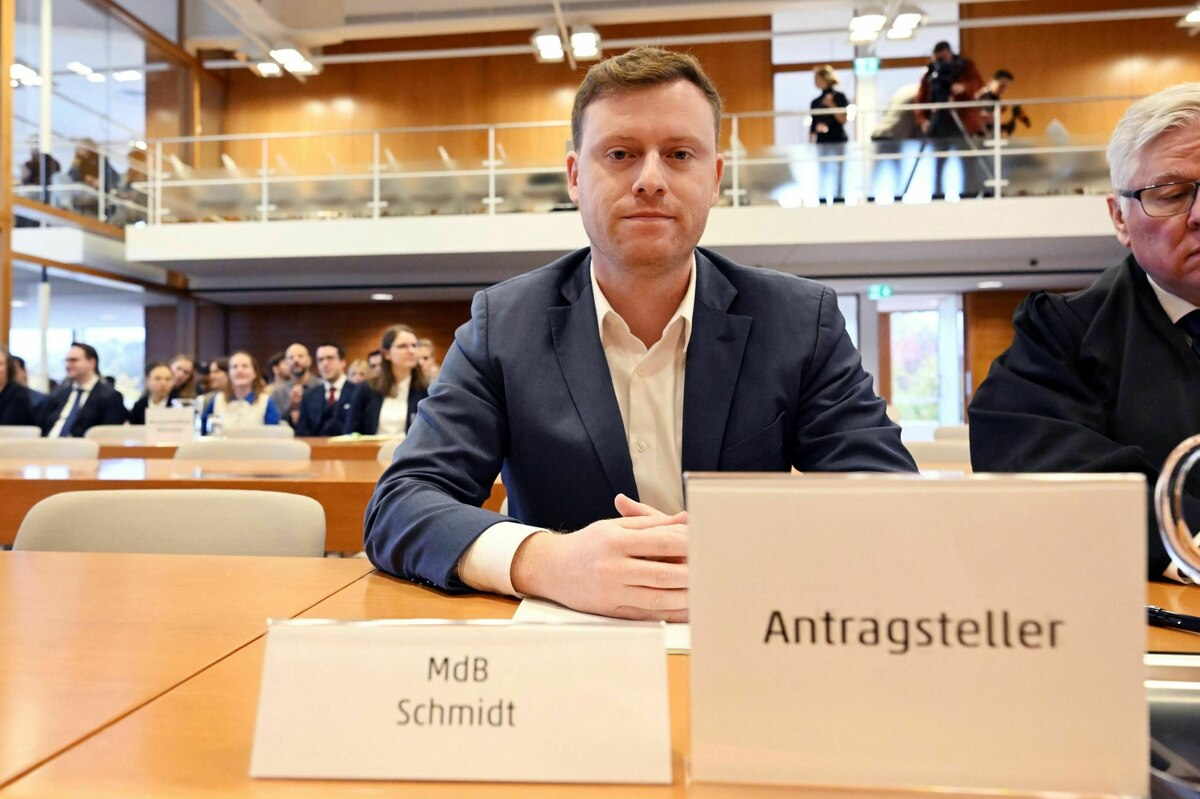
However, his influence triggered internal backlash. Colleagues accused him of a problematic entanglement between his legislative responsibilities and his private business interests—specifically citing his involvement in the trade of Chinese diamonds. Schmidt, never one to retreat, responded by launching a counter-offensive, accusing his detractors of engaging in systemic financial misconduct and nepotism, or Vetternwirtschaft.
By December 2025, the internal climate had become toxic, prompting the AfD state association to initiate formal proceedings to expel him from the party. The conflict spilled over into the public domain in February 2026, when Schmidt gave a candid interview to the right-wing portal Nius. He characterized the AfD as a "prey collective" (Beutegemeinschaft) and alleged a coordinated "war of extermination" (Vernichtungsfeldzug) being waged against him by party leadership.
This public critique proved to be the breaking point for the AfD’s federal parliamentary group. On March 3, 2026, the faction held a vote on his expulsion. The result was decisive: out of 122 members present, 98 voted in favor, 14 against, and 10 abstained. Schmidt was officially stripped of his factional status.

The Karlsruhe Arguments: Legal Theory vs. Political Reality
The constitutional proceedings in Karlsruhe represent a rare, inaugural review of a parliamentary factional expulsion. Vice President of the Court, Ann-Katrin Kaufhold, signaled the gravity of the situation by noting that the Court must now establish clear criteria for such exclusions, as no precedent exists.
The Plaintiff’s Position
Represented by attorney Roland Ulbrich, Schmidt argued that his rights as a member of the Bundestag were fundamentally violated. The core of his legal argument is that a member of parliament can only be removed from a faction for a "compelling reason." Ulbrich contended that Schmidt’s actions never met this threshold and that the parliamentary group’s power was being weaponized for internal party purges rather than legislative cohesion.
Furthermore, the legal team challenged the legitimacy of the vote itself. They raised procedural concerns, claiming the electronic devices used for the "secret" ballot lacked sufficient certification for anti-manipulation security. While the team provided no concrete evidence of tampering, the suggestion of procedural impropriety was intended to undermine the integrity of the March 3 vote.

The Defense’s Position
The AfD parliamentary group, represented by attorney Ulrich Vosgerau, presented a starkly different interpretation. Vosgerau argued that the status of a member of parliament is "barely affected" by a factional expulsion, as the individual retains their right to speak and vote in the Bundestag and remains eligible for committee assignments.
From the defense’s perspective, the legal bar for judicial intervention must remain extremely high to avoid infringing on the autonomy of political groups. Vosgerau emphasized that the expulsion was not a reaction to political dissent, but a disciplinary measure against "threats." According to the defense, Schmidt had threatened colleagues with further revelations of internal scandals, and the factional members simply refused to work with someone who relies on intimidation rather than parliamentary debate. Regarding the voting technology, Vosgerau dismissed the claims as baseless, noting that the devices have been in use since 2021 without a single prior complaint.
Implications for the German Parliamentary Landscape
The implications of the Constitutional Court’s eventual ruling are significant. While the court is focused on the specifics of the Schmidt case, its verdict will act as a "constitution of conduct" for all parliamentary groups in the Bundestag.

Precedent for Other Parties
The case has drawn attention from other political factions, most notably the Left Party (Die Linke) in Berlin. The city-state is currently embroiled in its own internal controversy regarding Vanessa Emde, a lawmaker whose public statements on Israel have led to calls for her removal from the parliamentary group. A ruling from the Federal Constitutional Court, while not legally binding for state-level parliaments, would provide a crucial legal compass for how parties manage "uncomfortable" members.
The Question of Party Autonomy
The broader question for the Court is the extent of a parliamentary group’s right to curate its own membership. If the Court rules that the threshold for expulsion is low, it could lead to a "homogenization" of factions, where members fear that any deviation from the party line could result in expulsion. If the Court sets a high bar, it could protect the independence of individual MPs but potentially paralyze factions that are unable to manage internal conflict.
The Wider Context: AfD and Power
The situation surrounding Jan Wenzel Schmidt is not an isolated incident but rather a symptom of the AfD’s broader structural challenges as it seeks to move from a protest movement to a governing party. In states like Saxony-Anhalt, where the AfD has achieved record-breaking support levels, the pressure to maintain party discipline has grown.

Reports of nepotism and the "professionalization" of the party’s internal structures have frequently clashed with the individualistic, often rebellious nature of many of its members. The party has attempted to pass legislation in some regions to limit power abuse, yet the case of Schmidt suggests that the internal culture remains highly contentious.
Conclusion: A Waiting Game
As the court proceedings move into the phase of deliberation, Jan Wenzel Schmidt remains a political "lone wolf." He is technically still an AfD member, though his membership rights have been suspended by the state party’s arbitration court since January. A separate hearing on his formal expulsion from the party is scheduled for December.
For now, the German political establishment watches Karlsruhe. The outcome will not only determine the future of Jan Wenzel Schmidt’s career but will clarify the delicate balance between the rights of an individual lawmaker and the collective authority of a parliamentary group. It is a fundamental question of democratic organization: does a faction have the right to enforce loyalty, or is an MP’s mandate untouchable regardless of their relationship with their party colleagues? The Federal Constitutional Court is now tasked with providing the answer.