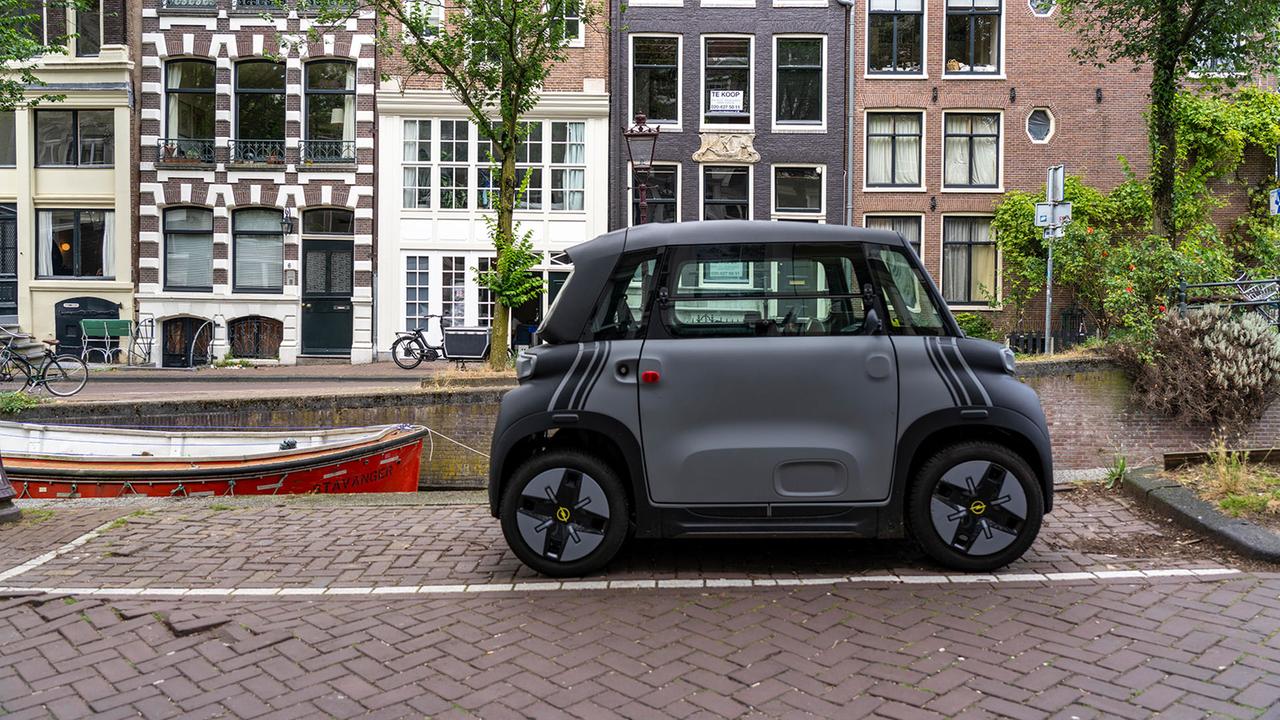
As urban congestion grows and rural transport needs evolve, "Microcars"—tiny, limited-speed vehicles—have surged in popularity across Europe. While they offer unprecedented independence to 15-year-olds and city dwellers, a fierce debate is brewing regarding their safety, regulatory loopholes, and the physical limitations of their design.
The Rise of the Mini-Mobility Trend
In the idyllic village of Unterhochstätt, nestled between the Chiemsee lake and the towering peaks of the Bavarian Alps, 15-year-old Sebastian Hofmann has found a solution to the perennial rural problem of isolation. For Sebastian, life is a balancing act of commitments: music practice, local heritage associations, volunteer firefighting duties, and school in the nearby town of Traunstein. When he begins his apprenticeship in Inzell, 25 kilometers away, he will rely on his Microcar to bridge the gap.
For his mother, the vehicle is a lifeline. "It’s a massive relief," she explains. Balancing the schedules of two younger siblings, she no longer needs to be the sole chauffeur for her son. The Microcar has granted Sebastian a level of autonomy that was previously impossible for a teenager in a rural setting.
Sebastian is far from alone. Across Germany and the broader European landscape, these pint-sized vehicles—which resemble shrunken sedans—are becoming a common sight. According to data from the German Insurance Association (GDV), there are now approximately 46,000 such vehicles on German roads, representing an 80 percent increase over the last three years.
Chronology of a Regulatory Niche
The explosion in popularity is no accident; it is the result of specific regulatory positioning. In many jurisdictions, including Germany, these vehicles fall under the "AM" license category, historically reserved for mopeds.
- The Early 2000s: The concept of the "Leichtkraftfahrzeug" (light motor vehicle) was introduced to bridge the gap between bicycles and full-sized automobiles.
- 2020-2021: The legislative landscape began to favor youth mobility, allowing 15-year-olds to operate these vehicles with a moped license. This triggered an immediate market shift.
- 2023-2024: Manufacturers like Citroën (with the Ami) and various niche brands flooded the market with electric variants, turning the Microcar from a noisy, diesel-powered oddity into a trendy, eco-friendly urban accessory.
- 2026: The current state of affairs is one of widespread adoption, but also mounting concern from traffic safety experts who argue that the law has failed to keep pace with the physical reality of the vehicles.
Defining the "Microcar"
To understand the safety controversy, one must understand the technical constraints. By law, these vehicles are severely restricted:
- Speed Limit: They are capped at a maximum of 45 km/h.
- Weight Limit: They must not exceed 425 kilograms.
- Design: They are categorized as quadricycles, not full passenger cars.
These constraints are the root of the "safety paradox." Because they look like small cars—complete with doors, a roof, and seats—drivers and parents often perceive them as safer than motorcycles or scooters. However, the engineering reality is starkly different. To stay under the 425kg weight limit, manufacturers are forced to compromise on structural integrity.
Supporting Data and The Safety Gap
Kirstin Zeidler, a leading expert at the Accident Research of the Insurers (UDV), has been vocal about the hidden dangers of these vehicles. "They look like a car, and therefore the user feels a false sense of security that doesn’t exist," Zeidler warns.
Current data presents a nuanced picture. Statistically, Microcars are involved in fewer total accidents than mopeds. This is partially attributed to the fact that they are physically larger and more visible to other motorists. However, when an impact occurs, the severity of the outcome is often disproportionately high.
"If you have an accident in a Microcar," Zeidler explains, "the lack of passive safety features becomes immediately apparent." Because of the weight restrictions, these vehicles are rarely equipped with standard automotive safety features like airbags, advanced crumple zones, or sophisticated side-impact protection systems. In a collision with a standard passenger car—which can weigh upwards of 1,500 kilograms—the laws of physics are unforgiving.
Official Responses and Regulatory Friction
The regulatory bodies are currently caught between promoting sustainable, small-scale mobility and ensuring public safety. The German Federal Ministry of Transport has faced pressure to re-evaluate the weight and safety standards, but doing so is complex.
If the weight limit is increased to allow for sturdier steel frames and modern safety tech, the vehicles become heavier, requiring larger batteries and more powerful motors, which could eventually reclassify them as full automobiles. This would necessitate a higher driver’s license class, effectively stripping 15-year-olds of their mobility rights.
The insurance industry, represented by the GDV, is calling for a middle ground. They argue that if these vehicles are to remain on the road, they should at least meet mandatory minimum crash-test standards. Currently, many Microcars bypass the rigorous Euro NCAP testing that standard cars must endure.
Implications for Future Mobility
The implications of the current Microcar boom extend beyond the safety of the individual driver.
1. Traffic Flow and Infrastructure
Sebastian Hofmann notes that his presence on the road often irritates other drivers. "There are often long queues behind me," he admits. He attempts to mitigate this by driving as far to the right as possible, but the 45 km/h speed limit on roads where other cars travel at 80 or 100 km/h creates significant tension and encourages risky overtaking maneuvers by other drivers.
2. The ADAC Intervention
The debate is set to reach a boiling point next year. The ADAC (General German Automobile Club) has announced plans to conduct comprehensive crash tests specifically targeting the current generation of popular Microcars. These tests are expected to provide the empirical data needed to influence future EU-wide legislation.
3. The Socio-Economic Impact
For rural residents like the Hofmann family, the Microcar is more than a toy—it is an economic necessity. Removing these vehicles from the market or imposing overly restrictive regulations could significantly impact the independence of rural youth, potentially limiting their access to education and early career opportunities.
Conclusion: A Balancing Act
The Microcar phenomenon represents a microcosm of modern transportation challenges: how do we facilitate mobility in an era of climate consciousness and shifting social needs without compromising the safety of our most vulnerable road users?
As it stands, the Microcar is a "compromise vehicle" in every sense of the word. It is a compromise between the speed of a car and the simplicity of a scooter, between the safety of a chassis and the weight of a bicycle. Whether the industry can innovate its way out of this trap—by developing ultra-light, ultra-strong materials that provide true protection—remains to be seen.
Until the ADAC results are released and potential legislative changes are tabled, the roads will remain a space of uneasy coexistence. For parents like those in Chieming, the fear of the "what-if" will continue to be weighed against the tangible benefits of their children’s newfound independence. The future of the Microcar is not just about engineering; it is about deciding exactly how much risk society is willing to accept in exchange for the freedom of the open road.