The boundary between biological cognition and digital processing is dissolving. What was once the exclusive domain of science fiction—the direct integration of microchips into the human brain to restore lost function—has become a clinical reality. As researchers celebrate life-changing breakthroughs for paralyzed patients, ethicists and policymakers are sounding the alarm over the sanctity of the "mental privacy" that remains our final, impenetrable frontier.
The Human Cost: A Story of Resilience
For 26-year-old Michael Mehringer, the past decade has been a study in profound patience. Following a catastrophic motorcycle accident at age 16, Mehringer was left paralyzed from the neck down. Confined to a wheelchair and entirely dependent on his parents for daily care, he spent ten years "trapped within his own body."
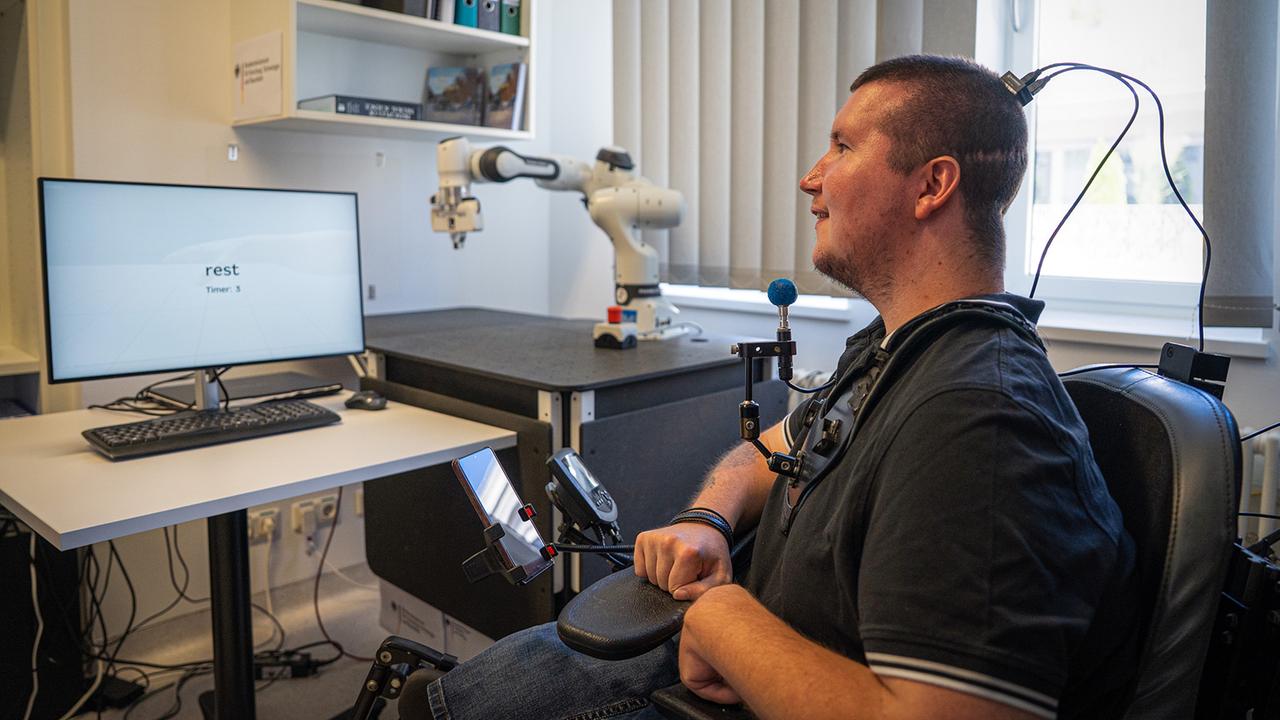
Last year, Mehringer became a candidate for a pioneering study at the Technical University of Munich (TUM). The procedure involved the surgical implantation of high-density electrode arrays directly into his motor cortex. Today, a subtle USB-style adapter protrudes from the back of his head—a literal portal connecting his neural pathways to a digital interface. "I am glad I took this step," Mehringer reflects. "It is about reclaiming a piece of the independence I lost."
Chronology of a Medical Revolution
The evolution of Brain-Computer Interfaces (BCIs) has accelerated dramatically over the last three years. The progress is no longer limited to basic cursor control; it now encompasses sensory feedback and complex motor reconstruction.
- 2023: Researchers at the University of Osaka and UC Berkeley demonstrate that AI-driven models can reconstruct rudimentary visual images and musical patterns directly from human brain activity.
- 2025: A breakthrough study in the United States sees a stroke patient regain significant motor function in a paralyzed arm using a bidirectional implant that both reads neural signals and provides sensory stimulation.
- 2026 (Present): Clinical trials move from "proof of concept" to "functional integration." Stanford researchers successfully decode "inner speech" in paralyzed patients, enabling communication via thought, protected by mental "passwords."
Decoding the Mind: How the Technology Works
At the heart of Mehringer’s transformation is a sophisticated BCI system. The implant utilizes 256 micro-electrodes, each capable of isolating the firing patterns of individual neurons. As Dr. Simon Jacob, head of the AI and Robotics group in neurosurgery at TUM, explains, the breakthrough is not just in the hardware, but in the software.
"The AI learns the patterns," says Dr. Jacob. "When it identifies a specific electrical signature in the motor cortex, it predicts exactly what Michael is attempting to do—whether that is moving a robotic arm or selecting a letter on a screen." By translating these electrical "lightning bolts" into machine-readable code, the system bridges the gap between intent and action.
The Commercialization Race: From Therapy to Mass Market
While the medical community focuses on restorative therapy, the private sector is eyeing the broader potential of neural integration. Neuralink, founded by Elon Musk, has set an ambitious, if controversial, roadmap. Financial projections suggest the company aims to conduct 20,000 implantations annually by 2031. Musk’s vision extends beyond disability, proposing a future where humans augment their cognitive abilities through a direct fusion with AI.
However, the regulatory landscape is fragmented. While the U.S. remains cautious, China has already granted official commercial approval for a BCI system designed to interface with wearable exoskeletons, marking the world’s first step toward mass-market neuro-augmentation.
Supporting Data: The AI "Shift"
The rapid maturation of this technology is largely credited to the "AI Shift." Neural data is inherently noisy and massive; traditional computational methods struggled to parse it. Modern machine learning models, however, excel at pattern recognition, allowing for real-time translation of complex neural states.
Recent experiments have demonstrated that we are approaching a "decoding threshold." With the ability to interpret internal monologues and visual stimuli, the technical capability to extract information from the human brain has outpaced our ability to regulate it.
Official Perspectives and Ethical Implications
The potential for misuse is the primary concern for scholars like Professor Judith Simon, an expert in the ethics of information technology at the University of Hamburg. "The moment we can read the brain, we can also manipulate it," she warns. "We are entering a field where mental privacy is at stake. Once thoughts become data, they become vulnerable to harvesting, surveillance, or commercial exploitation."
Dr. Marcello Ienca, a leading neuroethicist at the Technical University of Munich, emphasizes that the risks extend far beyond surgical implants. "We are seeing the rise of neuro-wearables—headbands and caps that monitor focus, stress, and fatigue," Ienca notes. "If these tools become standard in workplaces or schools, we face a fundamental question: Can an employee truly ‘consent’ to having their brain waves monitored if their job depends on it?"
The Question of "Cognitive Justice"
Perhaps the most haunting question posed by experts is that of societal equity. If brain chips eventually provide cognitive enhancements—such as improved memory, processing speed, or focus—they will likely be expensive. "We risk creating a two-tiered society," Ienca warns. "A world where cognitive capacity is a luxury good will inevitably exacerbate existing social inequalities."
A Global Call for "Neuro-Rights"
The international community is beginning to respond. Chile has taken the radical step of amending its constitution to include the protection of "neuro-rights," effectively shielding citizens from the unauthorized access or manipulation of their neural data.
The United Nations has also issued a stark warning, calling for global limits on neurotechnology. The consensus among policymakers is shifting: the technology is inevitable, but its deployment must be shackled to strict, globally recognized ethical frameworks. As Dr. Simon puts it, "We should not block the technology, but we must regulate it with the same urgency we apply to the most sensitive of human rights. After all, it is not for nothing that we say our thoughts are free."
The Road Ahead for Michael
For patients like Michael Mehringer, the philosophical debates are secondary to the visceral reality of his progress. During recent training sessions, he has successfully moved a virtual hand using nothing but his intent.
"When you see the cursor move because you willed it to move, the excitement is overwhelming," Mehringer says. His goals remain pragmatic but profound: to regain full independence, to alleviate the burden on his aging parents, and to rejoin the world on his own terms.
As society stands on the precipice of this new era, the story of Michael Mehringer serves as both a beacon of human potential and a reminder of the fragility of the human mind. The challenge for the coming decade will be to ensure that in our rush to repair the broken, we do not accidentally dismantle the very privacy that defines us as human.