By Science Editorial Desk
Updated: November 4, 2026
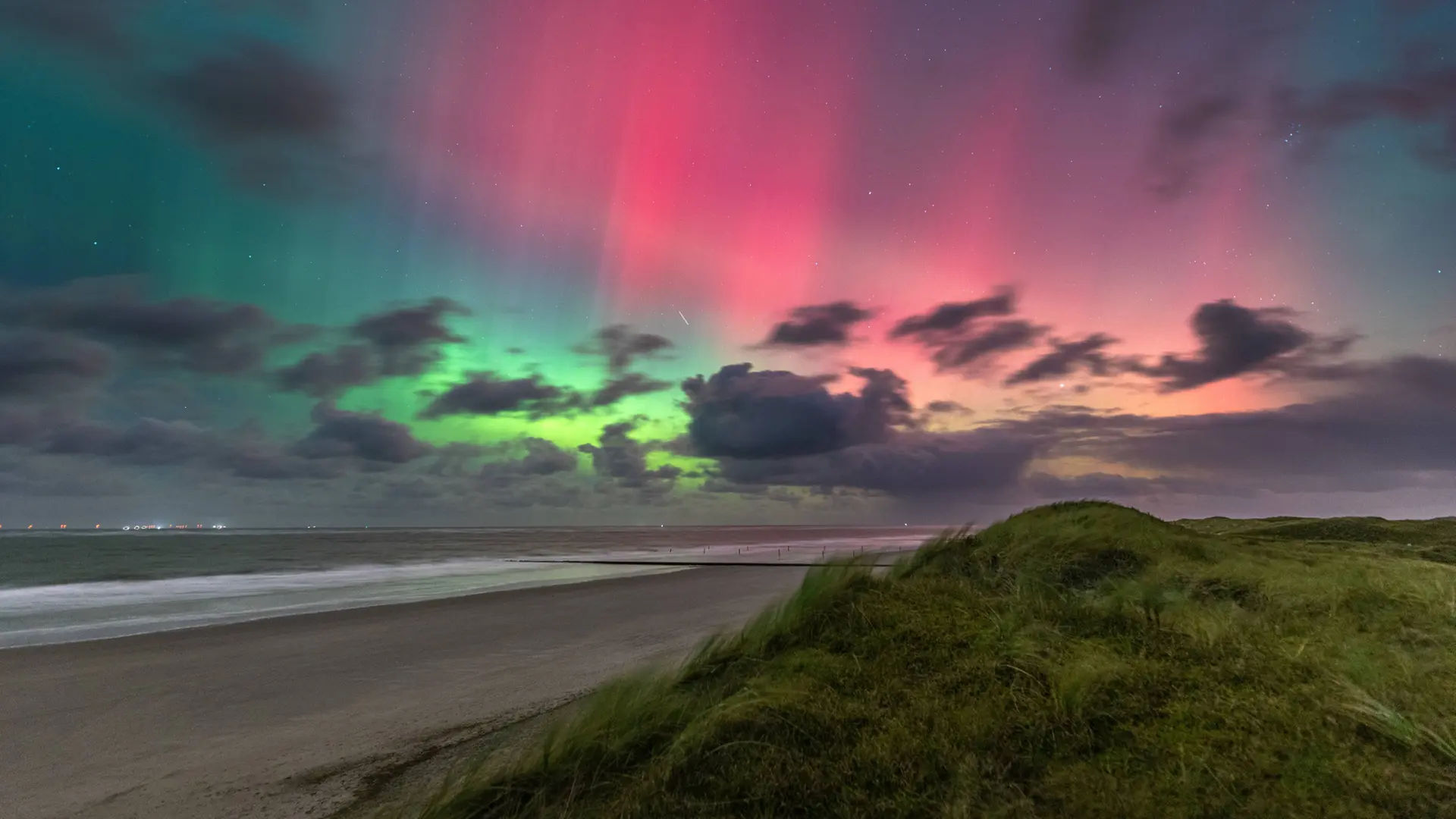
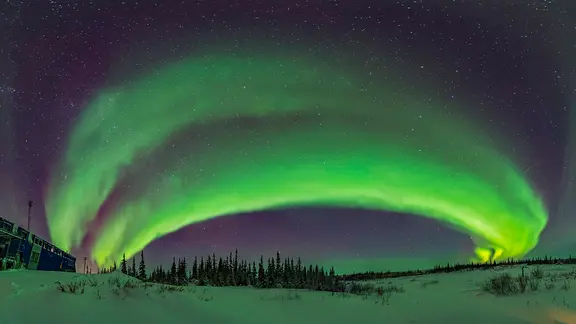
In the annals of natural phenomena, few sights command as much awe as the aurora borealis. Often compared to the ethereal, shifting curtains of a celestial theater, these displays of light have traditionally been associated with the vibrant greens of the high north. However, during the intense geomagnetic storms that have graced the skies of Germany and beyond in recent years, observers have been treated to a rarer, more haunting spectacle: the deep, pulsating crimson of red auroras.
While the fundamental physics of the aurora—charged solar particles interacting with Earth’s magnetic field—has long been understood, the precise mechanisms governing the transition from green to red, and the existence of "pure red" displays, have remained subjects of intense academic debate. Now, a groundbreaking study led by researchers from the Technical University (TU) of Braunschweig has turned to an unlikely source to bridge these knowledge gaps: the vast, digital archive of hobbyist photographers.
The Science of the Solar Storm
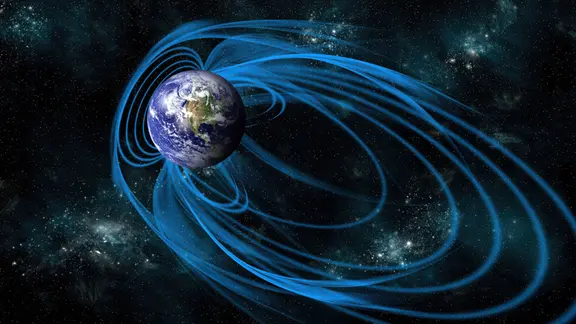
To understand why the night sky occasionally bleeds crimson, one must first look toward the sun. Solar storms are the result of coronal mass ejections (CMEs)—massive bursts of solar wind and magnetic fields released into space. When these high-energy particles reach Earth, they are guided by our planet’s magnetosphere toward the poles.
As these electrons slam into the upper atmosphere, they collide with gas molecules, primarily oxygen and nitrogen. The color of the resulting light depends entirely on the altitude at which these collisions occur and the specific gas involved. Standard green auroras typically occur at altitudes between 100 and 200 kilometers, where oxygen atoms are excited and emit their signature wavelength.
Red auroras, however, are different. They occur at much higher altitudes—often between 200 and 400 kilometers. At these rarefied heights, oxygen atoms are less dense and undergo a different type of energy transition, emitting light at a longer, redder wavelength. The rarity of these displays in temperate latitudes, such as Germany, is usually due to the fact that it requires an exceptionally powerful geomagnetic storm to push the "auroral oval" far enough south and to stimulate the high-altitude oxygen atoms sufficiently.

Chronology of a Breakthrough: The May 2024 Superstorm
The catalyst for this recent scientific leap was the "Superstorm" of May 10–11, 2024. This event, one of the most significant solar storms in recent history, provided a unique laboratory for atmospheric scientists. As the storm intensified, the night skies across Germany were bathed in a rare display of color, transitioning from traditional greens to deep, fiery reds.
For the researchers at TU Braunschweig, the challenge was not just to observe the event, but to capture it with enough spatial and temporal resolution to draw conclusions. Professional monitoring stations, while precise, are often limited in number and geographical spread. In contrast, thousands of amateur photographers across the country were positioned in their backyards, armed with high-end cameras and a drive to document the anomaly.
The research team performed a meticulous analysis of these crowdsourced images. By calibrating the settings of various consumer-grade cameras and accounting for the geographical location of each photographer, the team was able to reconstruct a three-dimensional model of the auroral event. This allowed them to map the "red-green transition" with unprecedented accuracy, revealing that the two colors often originate from the same physical process but occur in distinct atmospheric layers where the density of interfering particles varies.
Supporting Data: Why Red Auroras Last Longer
One of the key findings from the study, published in the Annales Geophysicae journal, concerns the longevity of these displays. The data suggests that red auroras possess a "persistent glow" that their green counterparts lack.
In the lower, denser layers of the atmosphere where green light is produced, atoms collide more frequently with one another, a process that quickly "quenches" the excited state of the oxygen. In the thin, high-altitude vacuum where red light is generated, these collisions are rare. Consequently, the excited oxygen atoms can stay in their active state for a longer period, resulting in a more sustained, glowing effect that lingers in the sky.
This finding helps explain why some observers reported seeing "static" red patches that appeared to hold their position in the sky for minutes at a time, whereas the green curtains appeared more dynamic and rapid in their movement. The research confirms that the sky is not merely a single canvas, but a layered, multi-dimensional environment where physics dictates color based on the sheer "crowdedness" of the air.
The Call to Action: Citizen Science
Following the success of the May 2024 analysis, the team at TU Braunschweig, led by Dr. Yasuhito Narita, has issued a formal call for public participation. Recognizing that the solar cycle is currently in a state of flux—with activity beginning a slow decline from its peak—the window for capturing such intense events is narrowing. However, even in less active phases, localized, intense solar storms can occur, and the need for data remains critical.
The researchers are specifically requesting high-quality, short-exposure photographs from future auroral events in Germany. The technical requirements are stringent but accessible:
- Exposure Time: No longer than six seconds. Shorter exposures are preferred to maintain high spatial resolution and avoid blurring the intricate structure of the light.
- Equipment: Both DSLR cameras and high-end smartphones are acceptable, provided the user can manually control exposure settings.
- Reporting: Photos should be sent to [email protected].
"The contribution of amateur astronomers and photographers has fundamentally changed our ability to study atmospheric physics," says Dr. Narita. "We are no longer limited to the data from a few scattered sensors. We now have an entire nation of ‘sensors’ capturing the sky from every angle."
Implications for Space Weather Forecasting
The implications of this research extend far beyond the aesthetic appreciation of the night sky. Understanding the mechanics of the upper atmosphere is vital for the modern world’s reliance on satellite infrastructure.
Geomagnetic storms, like the one that produced the May 2024 red auroras, are capable of inducing currents that can damage power grids, disrupt GPS navigation, and cause satellite drag, potentially leading to orbital decay. By refining our understanding of how high-altitude energy is deposited into the atmosphere, scientists can create more accurate models for predicting the effects of future solar storms.
Furthermore, this study demonstrates the power of "citizen science" as a legitimate academic tool. By validating amateur data through rigorous peer-reviewed methodology, the scientific community has opened a new door for collaborative research. This model could be applied to other atmospheric phenomena, such as noctilucent clouds or extreme weather events, where broad spatial coverage is more valuable than the precision of a single instrument.

Looking Toward the Horizon
As we look to the coming years, the sun remains a volatile neighbor. While the "Solar Maximum" may be tapering off, the sun is a complex, unpredictable engine. The researchers remain optimistic that further data collection will help clarify the nuances of the red-green transition.
For the casual observer, the message is clear: when the next solar alert is issued, grab your camera, keep your exposure short, and look up. Your photographs might do more than just capture a beautiful moment—they might hold the key to understanding the complex, invisible forces that connect our planet to the heart of the solar system.
The collaboration between the TU Braunschweig and the public represents a harmonious blend of human wonder and scientific rigor. It is a reminder that in the face of the vast, silent mysteries of the universe, our best hope for understanding lies in looking at the world together—one pixel at a time.