
FRANKFURT/LONDON – In a significant strategic maneuver to cement its dominance in the global industrial insurance landscape, Allianz Commercial has announced its intention to establish its first-ever dedicated syndicate at the world-renowned Lloyd’s of London insurance market. The move, confirmed to Handelsblatt, represents a pivotal shift in the insurer’s operational model, signaling a deeper commitment to the complex, high-stakes world of specialty risk.
The new entity, to be branded as "Allianz Commercial 1893," is scheduled to commence underwriting operations in January 2027. By integrating into the unique ecosystem of Lloyd’s, Allianz aims to unlock new avenues for growth in sectors that have historically proven difficult to penetrate through standard commercial channels.
The Core Strategic Rationale
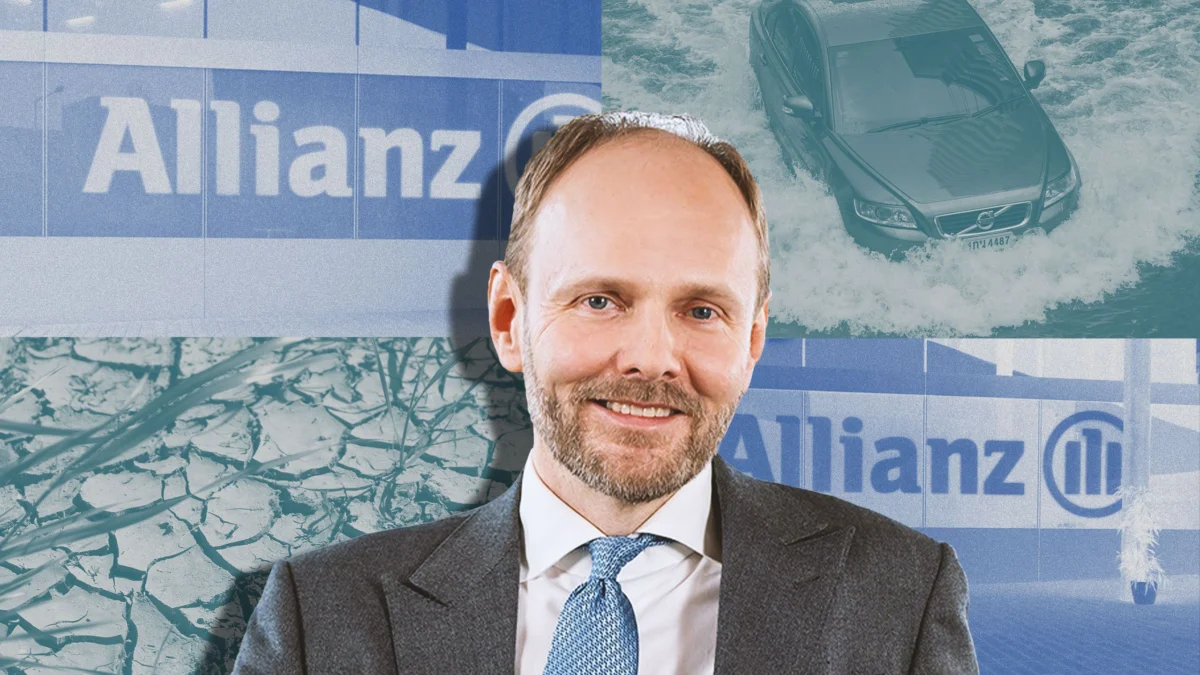
For Allianz Commercial, the decision to enter the Lloyd’s market is not merely a geographic expansion; it is a fundamental evolution of its product architecture. Thomas Lillelund, the CEO of Allianz Commercial, emphasized the transformative nature of the move.

"Lloyd’s will provide us with access to further business that we could not otherwise tap into via the open market," Lillelund stated.
The name "Allianz Commercial 1893" serves as a nod to the company’s heritage, commemorating the year the insurance giant took its first major international step by opening a representative office in London. This historical resonance highlights the company’s intent to blend its massive global balance sheet with the agile, specialized underwriting prowess that the Lloyd’s market is famous for.
A Chronology of Intent: From Concept to Launch
The journey toward the 2027 launch is a calculated process involving regulatory scrutiny, structural planning, and market integration.
- Mid-2024 (Conceptualization): Allianz leadership identifies a "specialty gap" in its portfolio, noting that certain high-complexity risks in maritime, aerospace, and specialized liability markets require the unique distribution and collaborative underwriting model offered by the Lloyd’s platform.
- Late 2024 (Preliminary Discussions): Initial consultations with the Corporation of Lloyd’s begin. These discussions focus on ensuring that Allianz’s internal risk appetites align with the regulatory requirements of the Lloyd’s market.
- Early 2025 (Regulatory Filing): The company initiates the formal application process. Given the size of the Allianz Group, this phase involves rigorous stress-testing of capital adequacy and operational compliance.
- Mid-2025 (Approval Phase): Lloyd’s grants "in-principle" approval, signaling that the structural and financial foundations of the proposed syndicate meet the market’s stringent standards.
- 2026 (Operational Readiness): The year of execution. Allianz begins staffing the syndicate with specialized underwriters who possess deep expertise in the Lloyd’s "Room" (the underwriting floor) culture.
- January 2027 (Go-Live): The official commencement of underwriting for Allianz Commercial 1893.
The Mechanics of the Lloyd’s Ecosystem
To understand the gravity of this move, one must understand the Lloyd’s model. Unlike a traditional insurance company that operates primarily on its own balance sheet, Lloyd’s is a market of syndicates. These syndicates are managed by "Managing Agents" and fueled by capital provided by corporate members.
By launching its own syndicate, Allianz is essentially creating a specialized vehicle that can interact with other market participants to "co-insure" massive risks. This is particularly relevant for the "specialty lines" cited by the company:
- Aviation and Aerospace: High-value assets that require global capacity and expert technical assessment.
- Maritime and Marine Cargo: Risks associated with international trade, piracy, and complex supply chain disruptions.
- Terrorism and Political Violence: Niche coverage that often requires the diverse underwriting talent pool concentrated in London.
The syndicate structure allows for greater agility. When a complex risk arrives—such as the construction of a major offshore wind farm or a global cyber-risk policy—the lead underwriter at a syndicate like 1893 can set the terms, and other syndicates can "follow" the line, effectively sharing the risk while Allianz retains the reputation as the primary lead.
Supporting Data: Why Now?
The commercial insurance market has been undergoing a period of "hardening" rates, where insurers have more pricing power due to increased volatility from climate change, geopolitical instability, and supply chain fragility.
Recent industry data suggests that specialty lines are currently outperforming standard property and casualty segments. As corporations face more sophisticated risks—such as the intersection of AI, climate change, and cyber-security—they are demanding "bespoke" insurance solutions rather than off-the-shelf policies.
Allianz’s entry into Lloyd’s positions them to capture this "premium" market. By 2027, the demand for high-end specialty insurance is expected to grow, as global infrastructure projects become more complex and traditional insurers pull back from higher-volatility regions.

Official Responses and Industry Outlook
Market analysts have largely viewed the move as a sign of strength for Allianz. While some industry skeptics suggest that adding a syndicate to an already massive global organization could lead to internal competition, management remains confident that the new entity will complement—not cannibalize—existing business.
"This is about synergy," says an industry analyst based in London. "Allianz has the capital, but Lloyd’s has the distribution network for the most complex risks on the planet. By joining the market as a syndicate, Allianz gains a seat at the table for risks they were previously seeing only from the sidelines."
The Corporation of Lloyd’s has also welcomed the news, viewing the addition of a powerhouse like Allianz as a validation of the London market’s enduring relevance in a digitized, globalized world.

Implications for the Future of Insurance
The launch of Allianz Commercial 1893 has several long-term implications for the insurance sector:
1. Shift Toward "Specialization over Scale"
For decades, the goal for insurers was to be the biggest player in the market. Now, the goal is to be the most specialized. Allianz is signaling that it intends to lead in the technical underwriting of risks that are currently ill-understood, such as those related to the energy transition and emerging technology.
2. The Resilience of the London Market
Despite the rise of digital insurance platforms and the growth of insurance hubs in Singapore and Dubai, the "Lloyd’s effect"—the concentration of talent, capital, and historical expertise in one square mile in London—remains an unparalleled competitive advantage. Allianz’s move underscores that to be a truly global commercial player, one must be present in the City of London.

3. Impact on Global Pricing
With the addition of a new, well-capitalized syndicate, there may be a downward pressure on rates for certain specialty risks, as more capacity enters the market. For corporate clients, this could mean more competitive pricing and more innovative coverage structures by 2027.
4. Competitive Pressure on Peers
Competitors such as AXA XL, Zurich, and Chubb will be watching the performance of Allianz Commercial 1893 closely. If the syndicate proves successful in its first 24 months, it is highly likely that other major European and American insurers will seek to expand their own presence within the Lloyd’s ecosystem, potentially leading to a new wave of consolidation or syndicate formation.
Conclusion: A Calculated Leap
The path forward for Allianz Commercial is clear. By creating a dedicated syndicate, the company is bridging the gap between its traditional corporate insurance roots and the highly specialized, collaborative underwriting model of the future.

As the calendar turns toward 2027, the industry will be watching the "1893" project as a bellwether for the future of commercial insurance. It is a bold acknowledgment that in a world of increasingly unpredictable risks, the best way to remain stable is to be at the very center of where the world’s most complex risks are managed.
For the clients of Allianz—ranging from massive industrial conglomerates to specialized tech firms—this development represents a promise of greater capacity, deeper expertise, and a more robust approach to the challenges of the coming decade. The "1893" moniker may look backward, but the strategy is firmly focused on the next century of global risk.