The political landscape of the United States shifted dramatically this week, as the Democratic Party secured a surprise victory in both the House of Representatives and the Senate during the 2026 midterm elections. While the results have injected a sense of stability into some sectors, they have triggered a significant sell-off in technology and AI-related stocks, as investors brace for a new era of federal regulation.
Executive Summary: A Reversal of Expectations
The 2026 US midterm elections, held on November 3, have delivered an outcome that few pollsters predicted. While a Democratic gain in the House was considered within the realm of possibility, their decisive capture of the Senate has been described by market analysts as a "major political shock."
For the German DAX index, the reaction was initially positive, with the index climbing to a two-month high. Investors seem to be reacting to the prospect of a "gridlocked" Washington, where the legislative agenda of the executive branch is checked by a newly emboldened opposition. However, this optimism is far from universal. The tech sector, which has been the primary driver of global market growth over the past year, is currently grappling with the reality that a Democratic-controlled Congress will likely prioritize the rigorous regulation of Artificial Intelligence (AI) and may curtail federal subsidies for large-scale data center infrastructure.
Chronology: The Road to the November Surprise
The lead-up to the 2026 midterms was characterized by intense polarization. For two years, the administration of President Donald Trump operated with a unified Republican majority in both chambers of Congress, facilitating a rapid implementation of his legislative agenda.
- Pre-Election Climate: Markets had largely "priced in" a continuation of the status quo, expecting the Republicans to retain at least one chamber.
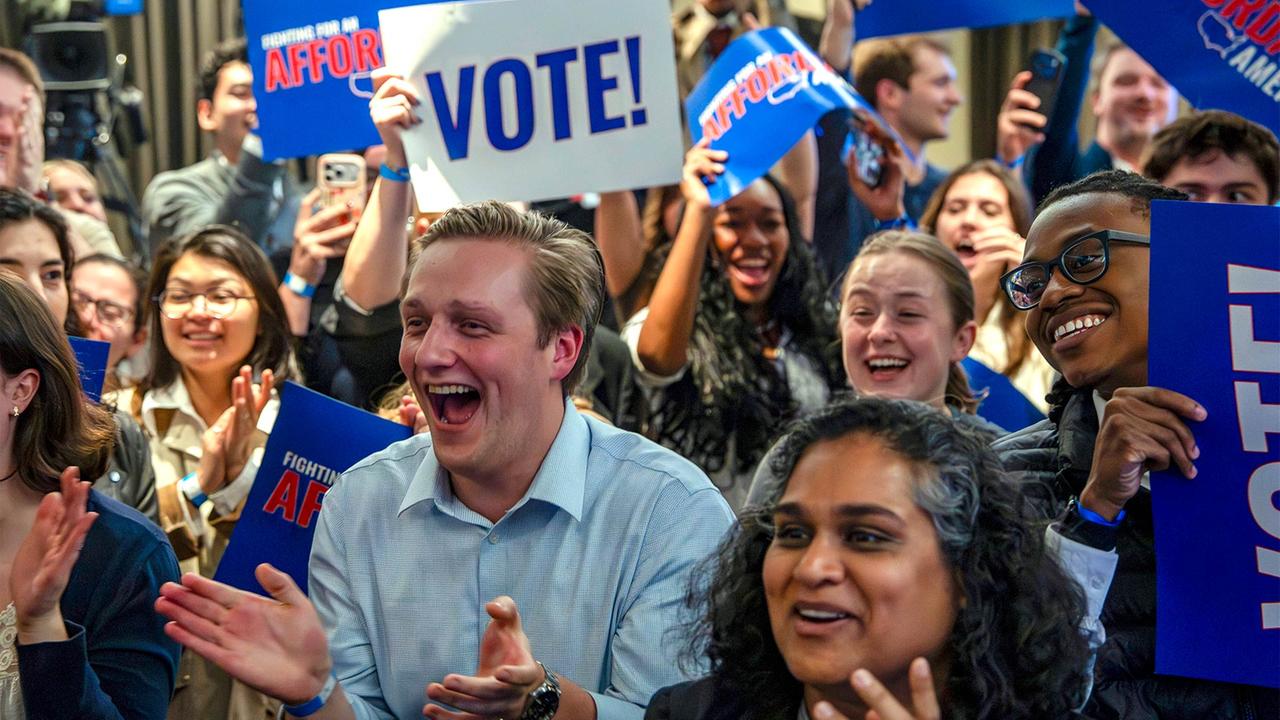
- Election Day (November 3): Voters turned out in record numbers. As the results trickled in throughout the evening, it became apparent that the Democratic platform—focused on social safety nets, environmental regulation, and antitrust scrutiny of Big Tech—had resonated deeply with a broad coalition of voters.
- The Morning After: By the early hours of November 4, the Associated Press and other major news outlets confirmed that Democrats had achieved a majority in both the Senate and the House.
- Market Response: As the news broke, Asian markets saw immediate volatility. The Japanese Nikkei index plummeted by more than 4% in early trading, dragged down by a sharp correction in semiconductor giants such as TSMC, Samsung, and SK Hynix.
Supporting Data: Economic Indicators and Market Sentiment
The immediate reaction of the DAX index—rising by 0.5%—highlights the European market’s desire for political predictability. Carsten Mumm, Chief Economist at the private bank Donner & Reuschel, noted that the results serve as a "significant exclamation mark" for the functionality of American democratic institutions.
However, the "AI Hype" bubble is facing its most significant test yet. Data shows that investors are pulling back from companies heavily invested in the physical infrastructure of AI. The concern is not merely speculative; it is grounded in local legislative trends. Across several states, including Texas—where Democrat James Talarico’s victory was a symbolic blow to the Republican establishment—voters and local officials have begun to push back against the massive energy and water consumption required by new AI data centers.
- Currency Impact: The Landesbank LBBW reports that with the Republicans’ fiscal ambitions now checked by a Democratic Congress, the U.S. dollar is expected to weaken.
- Bond Yields: Analysts are projecting a decline in US Treasury yields as the market anticipates a cooling of the aggressive fiscal stimulus that characterized the previous two years.
- Oil Prices: Despite the political earthquake, the energy market remains surprisingly resilient. Brent crude is holding steady at approximately $103 per barrel, as investors shift their focus from domestic US politics to the intensifying geopolitical tensions in the Middle East.
Official Responses and Expert Analysis
The consensus among economists is that the "Gridlock" in Washington will effectively neutralize the President’s ability to enact sweeping economic reforms.
The Regulatory Outlook
Thomas Gitzel, Chief Economist at VP Bank, suggests that President Trump will likely pivot toward executive orders to bypass a hostile Congress. "Tariffs and trade conflicts could once again take center stage," Gitzel warns. This view is echoed by the German Economic Institute (IW). Director Michael Hüther emphasized that because tariff policy is often executed via executive decree rather than formal legislation, the burden on the German export-oriented economy is likely to remain high until at least 2029.
The Institutional Perspective
Marcel Fratzscher, President of the German Institute for Economic Research (DIW), argues that the Democratic majority will make it significantly harder for the administration to dismantle institutional guardrails. The efforts to reshape the Federal Reserve, which have been a point of contention for months, are now likely to be halted. "The US will likely contribute less to global economic growth than it has in the recent past," added Holger Schmieding, Chief Economist at Berenberg Bank.
Implications for the Global Economy
The shift in power creates a complex environment for international businesses.

1. The End of the "Tech Free-for-All"
The most immediate implication is the shift in attitude toward the tech sector. For years, the rapid growth of AI was fueled by massive capital expenditure. With the Democrats now holding the power of the purse, the appetite for federal funding of AI-related hardware and energy-intensive data centers is expected to evaporate. Investors are already rotating capital out of high-growth tech stocks into defensive assets, anticipating that the regulatory environment will become significantly more hostile toward "Big Tech" monopolies.
2. The Inflationary Pressure in Europe
While the US political landscape undergoes a transition, the Eurozone is grappling with its own domestic challenges. Eurostat recently reported that inflation in the Eurozone has climbed to 4%, the highest level in over three years. This is largely driven by persistent energy costs. The European Central Bank (ECB) now faces the unenviable task of balancing this inflation against the risk of an economic slowdown caused by the anticipated contraction in global trade volumes following the US election results.
3. Geopolitical Uncertainty
The election results have also introduced a new variable in the Middle East. With the legislative branch now in opposition, the President may feel pressured to act more aggressively in foreign policy to maintain his base’s support. This creates a "tail risk" for the oil markets. If the administration decides to escalate the confrontation with Iran to compensate for the loss of legislative control at home, the stability of the global oil supply could be threatened, further exacerbating the inflationary pressures currently plaguing the European continent.
Conclusion: A New Phase of Uncertainty
The outcome of the 2026 midterms marks the beginning of a "second act" for the current administration. The promise of legislative ease has been replaced by the reality of compromise and confrontation. For the global financial markets, this transition brings both relief—in the form of restored institutional checks and balances—and anxiety, as the tech-driven growth engine faces the headwinds of potential regulation and a more protectionist trade policy.
As businesses prepare for the remainder of the decade, the mantra for investors will likely be "resilience over growth." With the US economy expected to contribute less to the global growth narrative, international markets must prepare for a period of volatility and a heightened focus on the fundamentals of the real economy, rather than the speculative surges that defined the early years of the AI boom. The democratic process has delivered its verdict, and the world is now adjusting to the consequences of a divided government in the world’s largest economy.