Stuttgart, Germany – In a move that underscores the deepening crisis facing the European automotive supply industry, the engineering giant Bosch has confirmed it will slash 750 jobs at its Abstatt location. The cuts, slated to be completed by the end of 2029, represent a significant pivot for the company’s mobility division as it grapples with an increasingly hostile economic environment, a shift in regional automotive dominance, and an intensifying price war driven by Chinese competitors.
The Core Facts: A Strategic Retreat in Abstatt
The announcement, which emerged following inquiries from the Handelsblatt, reveals that Bosch’s mobility sector is undergoing a painful transformation. The 750 positions—largely centered on research, development, and administrative support at the Abstatt facility—are the latest in a series of cost-cutting measures initiated by the Stuttgart-based conglomerate.
Bosch emphasized that the reduction would be handled as “socially responsible” as possible, utilizing mechanisms such as natural attrition, early retirement packages, and internal reassignment where feasible. However, for a facility that has long served as a cornerstone of Bosch’s innovation in vehicle control and braking systems, the scale of the layoff signals a loss of technological gravity within Germany.
Chronology of a Competitive Shift
To understand why a powerhouse like Bosch is shrinking its footprint in Baden-Württemberg, one must look at the rapid evolution of the automotive market over the last decade.
- 2015–2019: The Rise of Software-Defined Vehicles: During this period, the industry began its transition toward electrification and autonomous driving. Bosch invested heavily in integrated systems, anticipating a global shift.
- 2020–2022: The Pandemic and Supply Chain Shock: Global supply chain disruptions stalled innovation cycles. While European manufacturers focused on legacy stability, Chinese original equipment manufacturers (OEMs) accelerated their adoption of "Brake-by-Wire" and integrated chassis control systems.
- 2023: The China Pivot: It became clear that Chinese automakers were not just buying German technology—they were co-developing it locally. Bosch, seeking to remain relevant, shifted development resources to China to meet the demands of rapid-growth domestic brands.
- 2024: The Realization of Redundancy: As development moved closer to the Chinese customer, the necessity for the corresponding support staff in Abstatt diminished, leading to the current restructuring announcement.
Supporting Data: Why the Model is Breaking
The automotive supply industry is currently facing a "perfect storm." Bosch, like its peers Continental and ZF, is caught between high production costs in Germany and the predatory pricing strategies of Asian competitors.
The Price War in Braking Systems
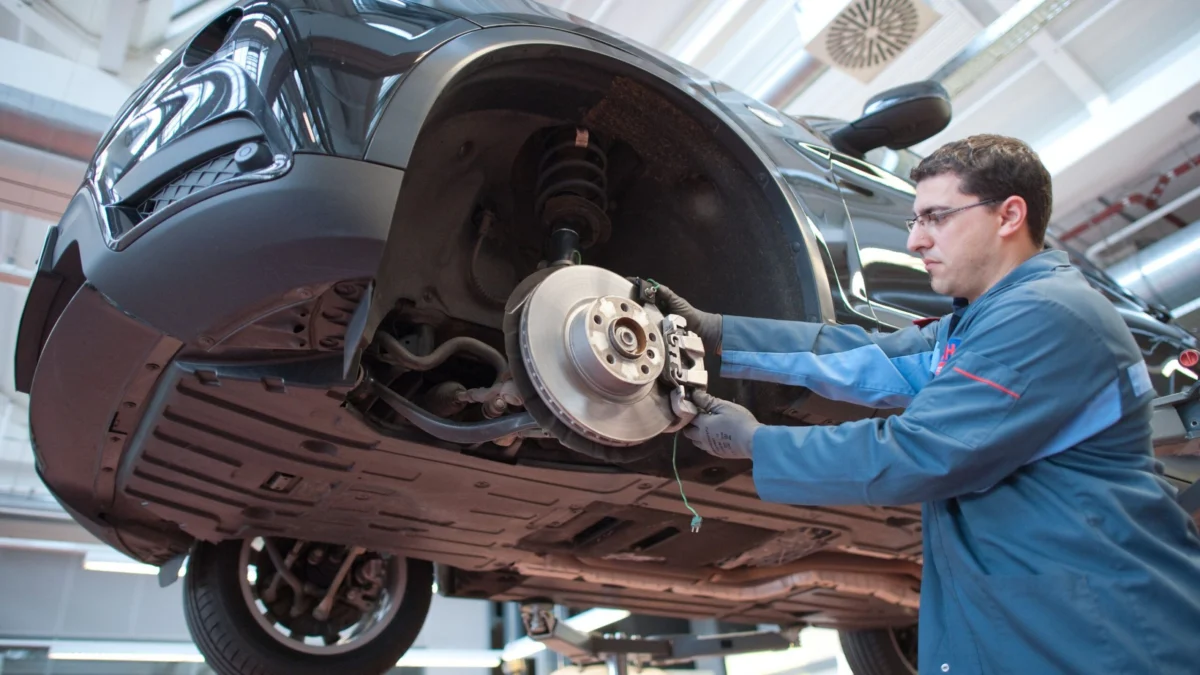
Modern integrated braking systems are no longer just mechanical; they are complex software-hardware hybrids. Chinese competitors, benefiting from lower overheads and a highly efficient domestic ecosystem, have been able to undercut European prices by significant margins. In the current market, these systems have largely become "commoditized," meaning that the manufacturer who can produce them at the lowest cost—without sacrificing the stringent safety standards required by global regulators—wins the contract.
The Decline of the "Designed in Germany" Premium
For decades, Bosch held a monopoly on technical superiority. Today, that edge has been eroded. As Mohammed Abraham, the divisional CFO, noted, the innovation cycle in China has outpaced the traditional German "waterfall" development model. By working directly with Chinese engineers, local OEMs have achieved a speed-to-market that the Abstatt facility, hampered by long bureaucratic chains and geographic distance, could not match.
Official Responses and Internal Perspectives
The atmosphere within Bosch is one of calculated pragmatism. Mohammed Abraham, in his statement to the press, highlighted the painful irony of the company’s success in Asia: "Client-oriented tasks are falling away in Abstatt because they are now being performed where the customer is located."
This statement is a stark admission of the changing landscape of globalization. For years, German firms operated on the principle of "Global Footprint, Local Innovation." That model has inverted into "Local Footprint, Local Innovation," leaving the traditional engineering hubs in Germany with fewer responsibilities.
The German Works Council has yet to issue a definitive statement on the finalized headcount, but labor representatives have historically pushed back against the "hollowing out" of German sites. They argue that if Bosch continues to shift intellectual property and development power to China, it risks losing the very expertise that made it a global leader in the first place—a phenomenon known as the "hollowing out of the engineering core."
Implications: The Structural Transformation of the Auto Industry
The news from Abstatt is not an isolated incident; it is a bellwether for the broader German automotive landscape. Several key implications arise from this development:
1. The End of the "German Engineering" Advantage
The dominance of German automotive technology was once considered insurmountable. Today, as software and digital integration take precedence over mechanical precision, the barrier to entry for Chinese tech firms and agile EV startups has lowered. Bosch is finding that the "Made in Germany" label does not always justify the price premium in the eyes of cost-conscious global OEMs.
2. De-industrialization Concerns
If a flagship company like Bosch begins to shed jobs in its home region of Baden-Württemberg, it raises questions about the long-term viability of Germany as an industrial hub. High energy costs, complex regulatory environments, and a shortage of specialized digital talent in Europe are making it increasingly difficult for firms to justify keeping high-value R&D roles on German soil.
3. The Future of Brake-by-Wire
The specific focus on "Brake-by-Wire" technology—systems that remove the mechanical link between the pedal and the wheels—is telling. This is the future of autonomous driving. By losing the development lead on these systems, traditional suppliers risk becoming simple hardware assemblers, while the high-value software integration is captured by the OEMs or tech-first competitors.
Looking Ahead: Can Bosch Rebound?
Bosch’s strategy moving forward appears to be one of "survival through adaptation." The company is not pulling out of the market; rather, it is aggressively reallocating its human capital. While 750 jobs are being cut in Abstatt, the company continues to invest in software and AI-driven mobility solutions elsewhere.
However, the human cost of this transition cannot be ignored. The 750 employees affected are likely highly skilled engineers and technicians. Their departure from the Abstatt facility represents a loss of institutional knowledge that, once gone, is difficult to replace.
As the automotive industry pivots toward a software-defined, electric future, the role of the traditional Tier-1 supplier is being fundamentally redefined. Bosch is essentially fighting a two-front war: one against the commoditization of its hardware, and another against the loss of its relevance in the global development cycle.
The next five years will be decisive. If Bosch can successfully transition its remaining German staff to focus on high-end, next-generation software architecture—and leave the cost-intensive commodity manufacturing to its Asian divisions—it may stabilize. If not, the Abstatt announcement may merely be the first chapter in a much longer, more difficult narrative of decline for the traditional European automotive supply chain.
For the workers in Abstatt, the road ahead is uncertain. For the global automotive industry, the lesson is clear: the era of European technological hegemony is over, and in its place is a cold, calculated, and intensely competitive global market where speed, price, and local presence are the only currencies that matter.