

Introduction: A Shift in Sentiment
The landscape of Asian financial markets underwent a significant transformation this Thursday, as investors aggressively reallocated capital away from the once-unstoppable artificial intelligence and semiconductor sectors. While lower oil prices provided a rare moment of relief for broader market sentiment, the major indices in the region remained divided, reflecting a deep-seated anxiety regarding the future of the tech boom.
The primary catalyst for this shift appears to be mounting concern over the political environment in the United States. Specifically, market participants are increasingly convinced that the recent electoral success of the Democratic Party could translate into a regulatory and fiscal environment that stifles the rapid expansion of AI-driven data centers. As the "AI gold rush" encounters its first major political hurdle, capital is flowing out of high-growth tech stocks and into more traditional, value-oriented sectors, signaling a potential long-term rotation in investment strategy.
The Core Facts: A Sharp Correction in Tech
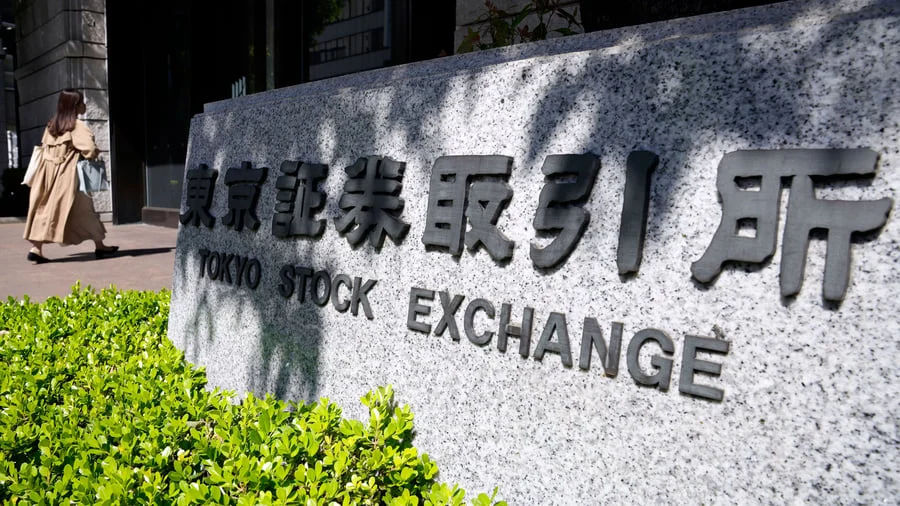
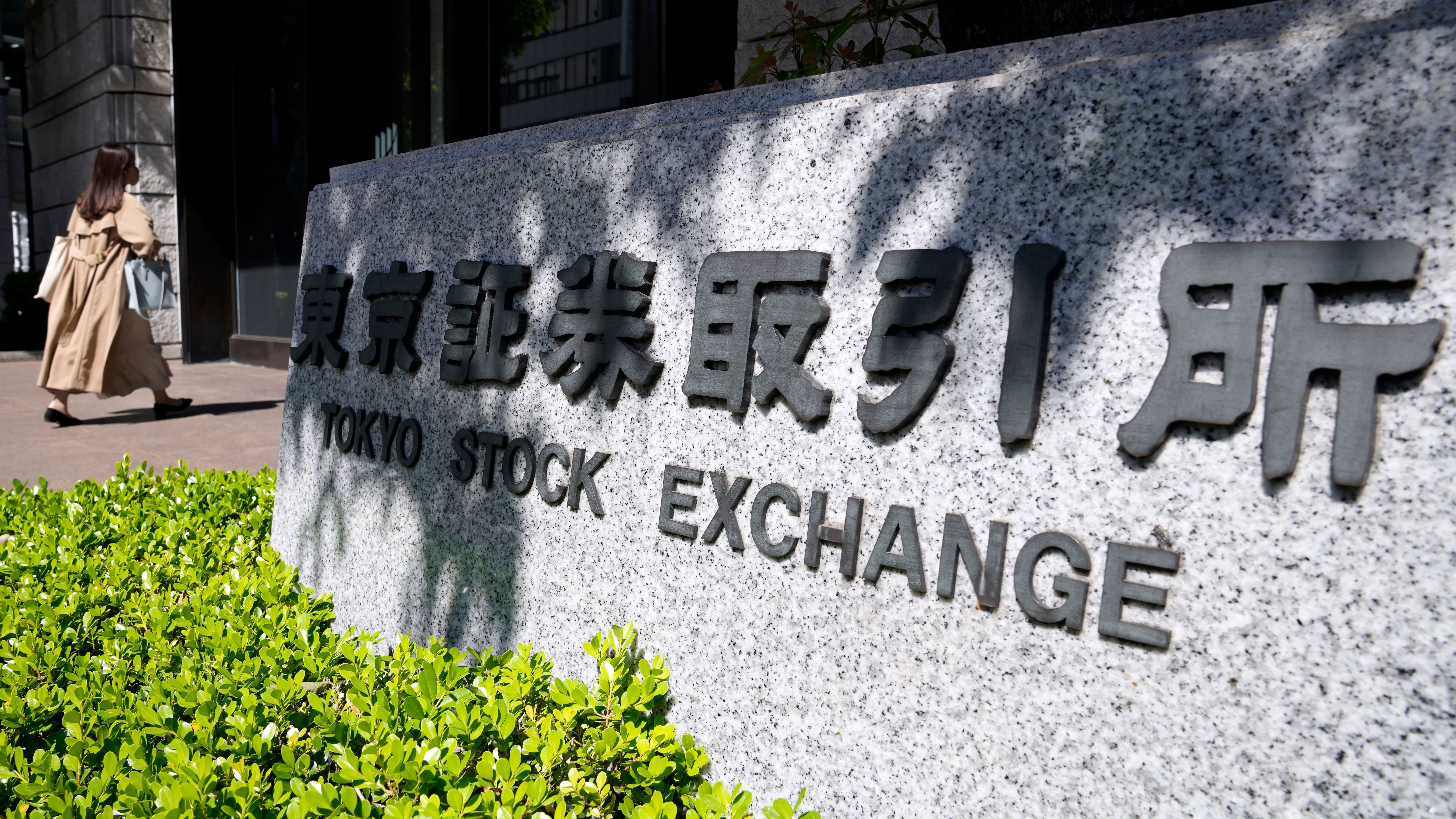
The impact of this sentiment shift was most visible in Japan, where the Nikkei index faced substantial downward pressure. The sell-off was concentrated in the semiconductor manufacturing and equipment sector, which has been the primary beneficiary of the global AI hype cycle over the last eighteen months.
Key industry bellwethers saw their valuations plummet in a matter of hours. Advantest, a global leader in semiconductor test equipment, suffered a staggering 10.3 percent decline. Similarly, Tokyo Electron, another titan in the chip-making machinery space, recorded a loss of 8.6 percent. These are not merely statistical fluctuations; they represent a fundamental reassessment of the "buy-at-all-costs" mentality that has dominated the tech sector since the inception of the current generative AI wave.

Chronology of the Shift
The transition from aggressive growth to defensive positioning did not happen overnight, but it reached a breaking point this Thursday.
- Early Trading Session: Initial market reactions were buoyed by reports of declining oil prices, which typically reduce input costs for manufacturing-heavy economies like Japan. This led to a brief, deceptive stability in the broader Topix index.
- Mid-Morning Sell-off: As trading progressed, the focus shifted sharply to the semiconductor giants. Institutional investors began offloading positions in Advantest and Tokyo Electron, triggering automated stop-loss orders and compounding the downward momentum.
- Late Afternoon Pivot: By the close of the trading session, the rotation was complete. The capital extracted from the tech sector was swiftly redeployed into defensive and cyclical stocks, particularly within the real estate and retail sectors, which outperformed the broader market significantly.
Supporting Data: The Anatomy of the Rotation
The breadth of the market shift is perhaps best illustrated by the performance of the Tokyo Stock Exchange’s sub-sectors. Out of 33 distinct industry groups, 25 recorded gains, underscoring that this was not a market-wide crash, but rather a surgical extraction of capital from AI-exposed assets.
The winners of this rotation represent a move toward domestic stability. The real estate sector led the charge with a 6.5 percent gain, as investors sought refuge in tangible assets. The retail sector followed closely with a 5.4 percent increase, highlighted by a robust 7.9 percent rise in the shares of Fast Retailing, the parent company of the global Uniqlo brand.
Toyota Motor Corp also served as a focal point for investors. The automotive giant saw its shares climb by 5.3 percent, driven by optimism surrounding its impending earnings report. Furthermore, tech-adjacent but consumer-facing giants like Sony and Nintendo saw gains of 6.6 percent and 4.6 percent, respectively, as they appeared shielded from the specific political risks currently plaguing the data-center-dependent chip makers.

Official Responses and Expert Analysis
Market strategists have been quick to dissect the underlying logic of this pivot. Wataru Akiyama, an equity strategist at Nomura Securities, provided a succinct diagnosis of the current climate.
"Capital that had previously been funneled into AI and semiconductors is now being systematically reallocated into other sectors," Akiyama explained. "The prevailing narrative among institutional investors is that the current political landscape—particularly the Democratic Party’s trajectory—will lead to regulatory bottlenecks or redirected federal funding that could delay the construction of massive AI data centers. If the pace of infrastructure deployment slows, the current, aggressive projections for profit growth in the chip sector become mathematically unsustainable."

This expert perspective highlights a critical divergence between the long-term potential of AI and the short-term reality of infrastructure logistics. Investors are no longer willing to pay a premium for growth that relies on the rapid, uninterrupted build-out of physical data centers if the legislative path to that expansion is obscured by political uncertainty.
Implications: The End of the "Easy Money" Era?
The events of this week have profound implications for global financial markets, extending far beyond the borders of Japan.

1. The Politicization of Tech Growth
For years, the tech sector operated under the assumption of a bi-partisan "innovation-first" policy environment. The current pivot suggests that this era is ending. If major AI infrastructure projects become entangled in partisan debates—whether over energy consumption, land use, or federal investment—the volatility observed in the Nikkei will likely become the new baseline for global tech stocks.
2. A Return to Value
The shift toward real estate and traditional retail indicates that "Value" is back in vogue. Investors are showing a preference for companies with predictable cash flows, tangible assets, and limited exposure to the whims of Washington regulators. This rotation is a defensive mechanism, suggesting that the "smart money" is preparing for a period of economic uncertainty where growth can no longer be guaranteed by technological disruption alone.

3. The Data Center Bottleneck
The focus on data centers is particularly telling. The AI boom has always been dependent on physical infrastructure—the literal hardware and real estate required to power large language models. By targeting this specific bottleneck, investors are signaling that they have done their due diligence. They recognize that the limitation to AI progress is no longer just the code or the chips themselves, but the ability to build the massive, energy-hungry facilities required to house them.
4. Regional Market Contagion
While the Nikkei and the Hang Seng are the immediate theaters of this conflict, the contagion effect is inevitable. As Asian markets set the tone for the trading day, European and North American markets are likely to follow suit. If the thesis that "AI growth is slowing" gains traction in New York and London, the resulting capital flight could lead to a global repricing of the entire technology sector.

Conclusion: A Market in Transition
The volatility seen in Tokyo this week serves as a stark reminder that the financial markets are inherently reflexive. The same investors who drove the semiconductor sector to record highs based on the promise of an AI revolution are now the ones dismantling those positions based on the political risks of that same revolution.
For the average investor, this suggests a need for extreme caution. The era of blind faith in AI-growth stocks has given way to a more discerning, skeptical, and politically aware market environment. As we look toward the coming quarters, the companies that will thrive are not necessarily the ones with the most advanced algorithms, but the ones that can navigate the shifting political landscape and deliver consistent, tangible value in an era of uncertainty. The rotatory movement observed in Asia is a signal: the market is no longer just looking at the horizon of what technology can do; it is looking at the floor of what the economy can support.