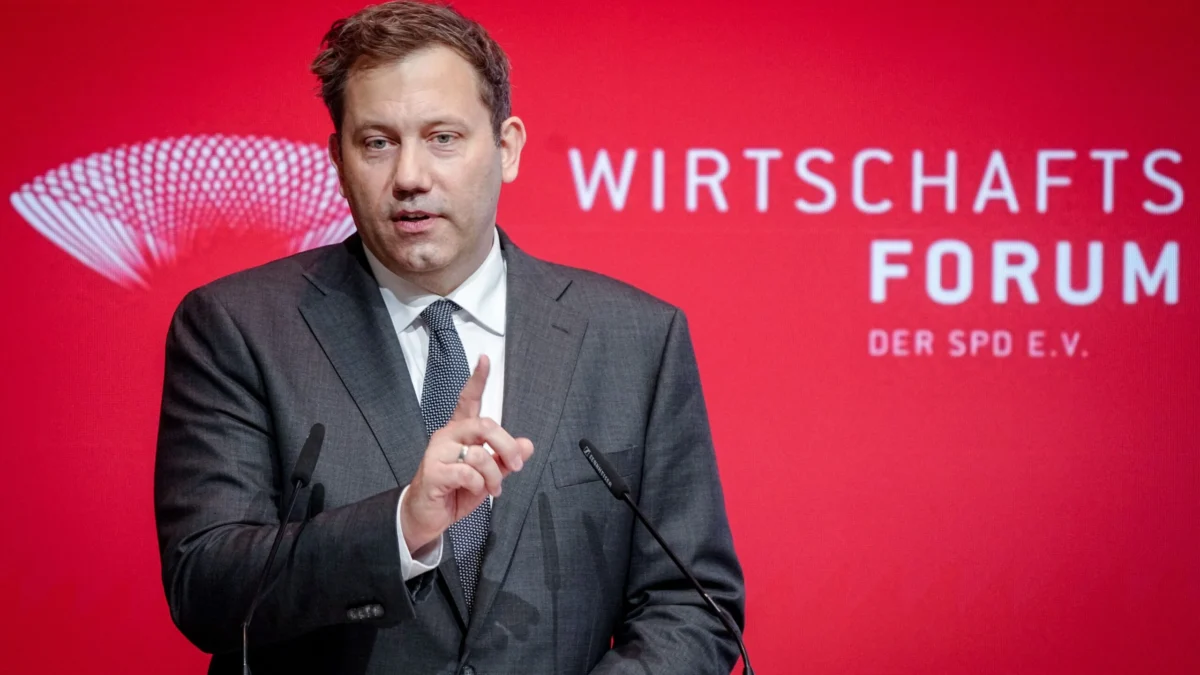
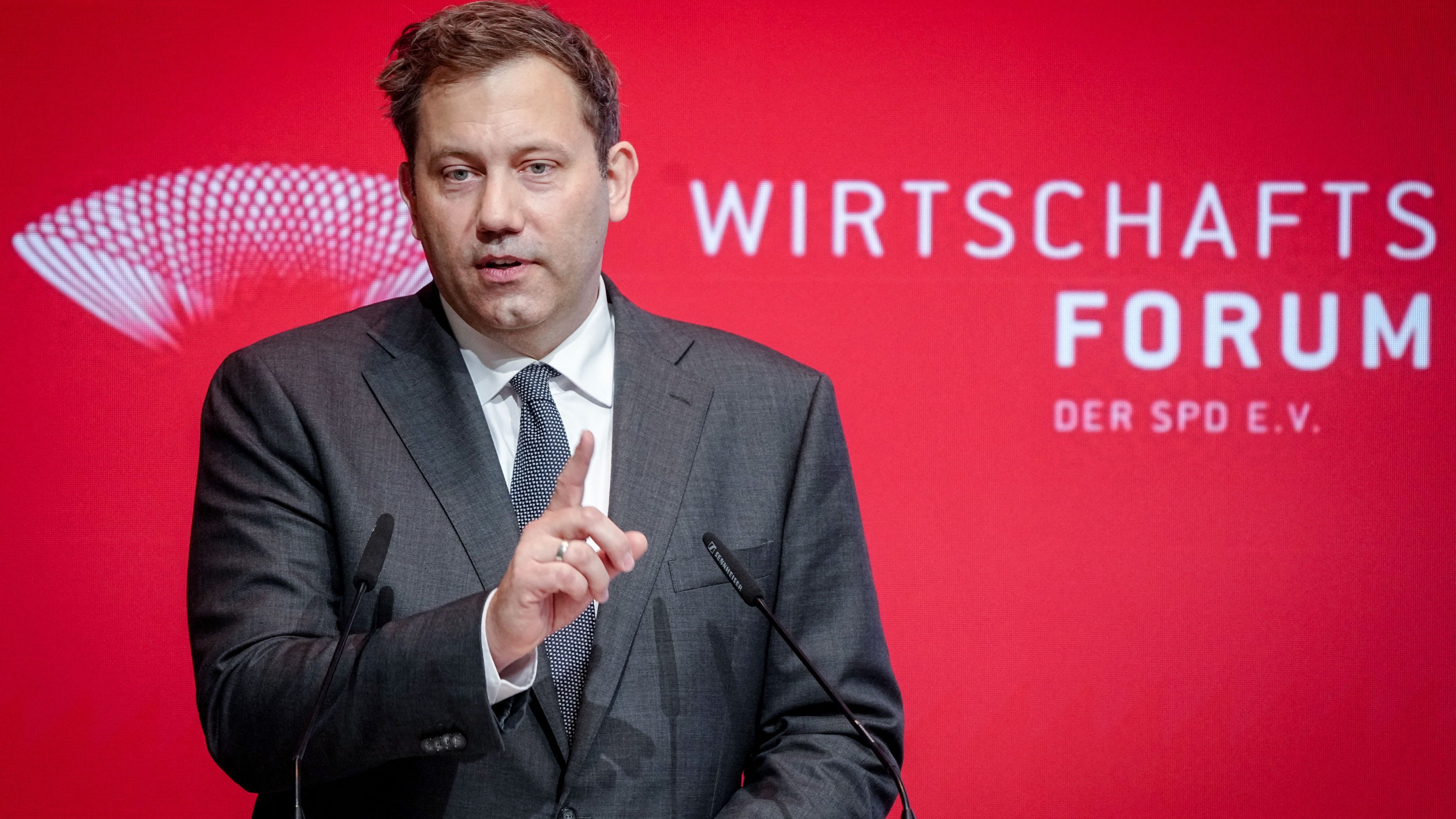
Berlin – In the corridors of the German Bundestag, where the battle over the 2027 federal budget is reaching a fever pitch, any sign of financial relief is usually welcomed with open arms. For Finance Minister Lars Klingbeil (SPD), who has spent months navigating a landscape of fiscal contraction and mounting pressure, a sudden, multi-billion-euro surplus might at first glance appear to be the "Get Out of Jail Free" card his ministry desperately needs.
However, the reality of government accounting is rarely so forgiving. While recent documents obtained by the Handelsblatt reveal that the federal government will spend roughly 4.2 billion euros less than expected on renewable energy subsidies (EEG) this year, this windfall is effectively a mirage. It will not serve as a panacea for the broader structural deficits currently paralyzing the coalition government.
The Core Facts: A Mathematical Discrepancy
The financial surplus stems from the Renewable Energy Act (EEG) account. Historically, these costs were shouldered directly by consumers through a surcharge on their electricity bills. However, since 2023, the federal government has fully assumed the burden of these subsidies, integrating them into the national budget based on projections provided by grid operators.
For the current fiscal year, the Ministry of Finance had allocated approximately 16.6 billion euros to cover these costs. Yet, as the year draws to a close, internal papers indicate that only 11 billion euros have been utilized. Even with late-year adjustments and updated projections from grid operators, total expenditures are expected to hover around 12.4 billion euros. This leaves a surplus of 4.2 billion euros—a significant sum in any other context, but one that is subject to strict budgetary rules.

Chronology of the Fiscal Crunch
The path to the current impasse has been marked by a series of failed projections and political brinkmanship:
- Mid-2026: Finance Minister Lars Klingbeil presents his initial draft for the 2027 budget, which includes a series of ambitious, yet contested, savings targets and revenue-generating measures.
- Late Summer 2026: Doubts begin to surface regarding the feasibility of these measures. Key items, such as the proposed plastic tax and pension reforms, face significant legislative hurdles and skepticism from coalition partners.
- November 2026: New data from grid operators regarding EEG costs highlights a massive gap between the allocated budget and actual requirements, bringing the 4.2 billion euro surplus to light.
- Present Week: The Haushaltsausschuss (Budget Committee) enters critical "reconciliation" sessions. Negotiations are ongoing, with high-level coalition leaders attempting to bridge the remaining gaps before the final vote, expected in the early hours of next Friday.
Supporting Data: Where the Money Goes (and Why It’s Trapped)
The central question facing policymakers is whether these 4.2 billion euros can be diverted to plug the gaps in the 2027 budget. The answer, according to internal government circulars, is a resounding "no."

The funds are currently categorized under "Individual Plan 60," which governs the "General Financial Administration." According to constitutional and administrative law, these funds cannot simply be transferred to cover unrelated spending or to offset deficits in other areas of the budget. They are strictly earmarked for the purpose of subsidizing renewable energy.
The government has already moved to commit a portion of this surplus to a specific, related purpose: the re-introduction of the "tank discount" (a temporary reduction of energy taxes on gasoline and diesel). This measure, running from October to December, is expected to cost approximately 1.2 billion euros.

Once this obligation is met, approximately 3 billion euros remain. While this could theoretically be used to reduce the required subsidies for 2027, it cannot be used to fund the government’s other policy priorities or to cover general structural deficits. For the 2027 budget, the Ministry of Finance is already projecting that it will need 17.5 billion euros for EEG support—a figure higher than the 16.6 billion initially budgeted. The surplus from 2026 will be absorbed by this rising demand, essentially meaning the "windfall" is already spoken for.
Official Responses and Political Posturing
The political reaction to this situation has been one of frustration and finger-pointing.

A spokesperson for the Ministry of Finance confirmed that "it is unlikely that the full amount will flow out," noting that fluctuations in budget execution are routine. However, they emphasized that "lower expenditures in one area do not automatically mean that funds are available for additional expenditures elsewhere."
Green Party budget expert Sebastian Schäfer has been particularly vocal in his criticism of the current state of affairs. "The coalition has painted itself into a corner with a series of promises it cannot keep, putting itself under immense pressure," Schäfer stated. Regarding the EEG surplus, he warned against "creative bookkeeping."

"Instead of accounting tricks, we now need clear priorities and structural growth impulses," Schäfer insisted. He further highlighted that the opposition (the Union, CDU/CSU) has "put a lot in the shop window" regarding tax policy, yet has failed to provide a viable path to funding those promises.
The Broader Implications: A Stalled Legislative Agenda
The inability to use the EEG surplus as a "slush fund" means the coalition must face its fundamental budgetary failures head-on. The 2027 budget remains characterized by "unknowns" and potentially gaping holes.

The Problem of Revenue Uncertainty
The budget assumes significant revenue from sources that are far from guaranteed:
- The Plastic Tax: Originally projected to bring in 800 million euros, this measure is now widely expected to be scrapped due to concerns over bureaucratic costs and opposition from the Union.
- The Sugar Tax: Expected to contribute 690 million euros starting mid-2027, this remains a point of contention, though some within the CDU have signaled a willingness to compromise, provided the funds are directed toward the Ministry of Health.
- The Pension Reform: A cornerstone of the SPD’s social agenda, the reform is supposed to yield 2 billion euros in savings. However, there is currently no formal draft bill, making the timeline for these savings highly speculative.
The Union’s Demands vs. Reality
The Union is pushing for a full compensation of "cold progression" (the phenomenon where inflation-driven wage increases push taxpayers into higher tax brackets). This alone would cost the federal government between 2 and 4 billion euros. When combined with other demands, some SPD members argue that the Union’s current agenda would blow an 11-billion-euro hole in the budget.

The "Lawnmower" Debate
In an attempt to find immediate savings, some factions have proposed the "lawnmower method"—a flat-rate reduction of all subsidies by a fixed percentage (e.g., 15%). However, both the SPD and the Union have largely dismissed this as economically illiterate, arguing that such a blunt instrument would stifle essential growth and innovation.
Conclusion: A Budget on the Brink
As the Budget Committee prepares for its final reconciliation meeting, the mood is one of quiet desperation. The 4.2 billion euro surplus in the EEG account acts as a reminder of the volatility of modern fiscal planning, but it offers no escape from the difficult choices that lie ahead.

The coalition now faces a binary choice: either they find the courage to implement unpopular but necessary structural reforms, or they continue to rely on the current strategy of delay, hoping that future economic conditions provide the relief that current planning has failed to secure. As the clock ticks toward the final deadline next week, the political capital of the government is being spent as quickly as the budgetary funds they are struggling to control. Without a clear path to closing the multi-billion-euro gap, the 2027 budget threatens to become the ultimate litmus test for the longevity of the current administration.