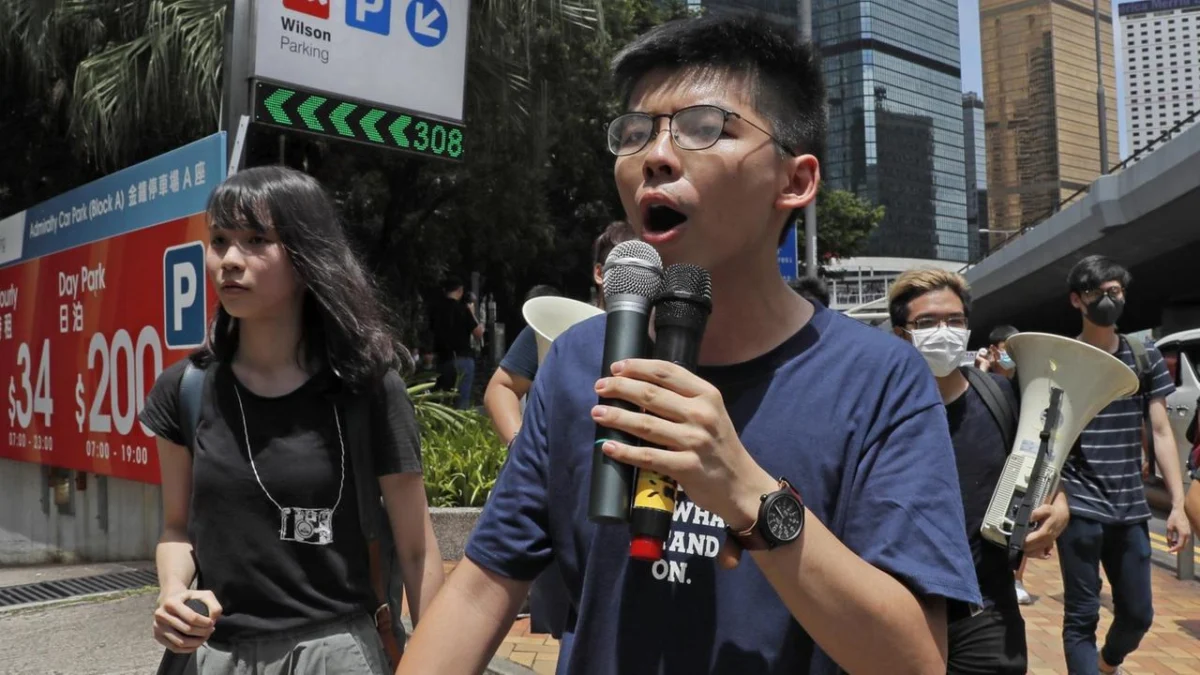
Hong Kong, November 5, 2026 – In a move that underscores the deepening erosion of civil liberties in Hong Kong, prominent democracy activist Joshua Wong has been sentenced to a new, severe prison term of ten years. The judgment, delivered today, finds Wong guilty of "conspiracy with foreign forces against national security," a charge levied under the sweeping National Security Law (NSL) imposed by Beijing. This marks Wong’s second conviction under the controversial law, effectively cementing his long-term incarceration and sending a stark warning to any remaining voices of dissent within the city.
The sentence comes at a critical juncture, as Wong, one of the most recognizable faces of Hong Kong’s pro-democracy movement, would otherwise have been eligible for release in January of next year. Instead, he now faces a decade behind bars, a testament to Beijing’s unwavering resolve to quash all forms of political opposition and redefine the city’s future.
Main Facts
A Decade Behind Bars: Joshua Wong’s Latest Sentence
Joshua Wong, the 30-year-old democracy activist who rose to global prominence for his unwavering advocacy for Hong Kong’s autonomy and democratic rights, was today sentenced to ten years in prison. The verdict was handed down by a Hong Kong court, following his conviction in September on charges of "conspiracy with foreign forces to endanger national security." This grave charge, a cornerstone of the National Security Law, criminalizes a broad spectrum of activities deemed to undermine China’s sovereignty over the Special Administrative Region.
The severity of the sentence reflects the current political climate in Hong Kong, where national security offenses are treated with the utmost gravity. Wong’s legal team had reportedly argued against the maximum penalties, citing his long history of non-violent activism and the broad interpretation of the NSL. However, the court’s decision underscores the Hong Kong judiciary’s increasingly firm stance in enforcing Beijing’s security mandate.
This is not Wong’s first encounter with the NSL. He had previously been convicted and served time under the same law, alongside numerous other activists who have been swept up in the post-2019 crackdown. The timing of this new sentence is particularly poignant, as it directly pre-empts his anticipated release from a prior conviction, ensuring his continuous incarceration. Without this latest prosecution, Wong would have walked free in a mere two months, in January 2027. His continued detention and the length of this new sentence send an unambiguous message about the fate awaiting those who challenge the established order.
Wong’s long-standing activism, which began in his teenage years, has consistently placed him at the forefront of Hong Kong’s democratic aspirations. His journey from a student leader protesting educational reforms to an international advocate for Hong Kong’s freedoms has been met with escalating legal challenges, culminating in this latest, and most punitive, conviction.
Chronology of Dissent and Crackdown
Joshua Wong’s trajectory from a schoolboy activist to a political prisoner is intricately woven with the story of Hong Kong’s evolving relationship with mainland China. His life in activism has mirrored the city’s struggle for self-determination and the gradual tightening of Beijing’s control.
From Umbrella Movement to Mass Protests (2014-2019)
Wong first gained significant public attention in 2012 at the age of 15, when he founded the student activist group Scholarism. The group successfully mobilized thousands to protest a proposed "moral and national education" curriculum, which critics feared was a thinly veiled attempt to indoctrinate students with pro-Beijing ideology. The government eventually backed down, marking an early victory for youth activism.
His prominence soared during the 2014 Umbrella Movement. This 79-day occupation of major thoroughfares was sparked by Beijing’s decision to screen candidates for Hong Kong’s Chief Executive election, effectively denying universal suffrage. Wong, along with fellow student leaders Nathan Law and Alex Chow, became a symbolic figure of the movement, advocating for genuine democracy and self-determination. Despite the widespread support and peaceful nature of the protests, they ultimately failed to extract concessions from Beijing.
Following the Umbrella Movement, Wong co-founded Demosistō in 2016, a political party advocating for self-determination for Hong Kong. Through Demosistō, Wong and his colleagues sought to transform street activism into electoral politics. However, their attempts to participate in the political system were repeatedly thwarted. Wong himself was barred from running in local elections, and several Demosistō members who won legislative council seats were later disqualified.
The summer of 2019 witnessed an unprecedented wave of mass protests, triggered by a controversial extradition bill that would have allowed criminal suspects to be sent to mainland China for trial. Millions took to the streets in demonstrations that often turned confrontational, evolving into a broader movement demanding greater democracy, police accountability, and the withdrawal of the bill. While Wong was already facing legal challenges from previous activities, he remained a vocal and visible leader, actively engaging with international media and testifying before foreign legislative bodies, urging global support for Hong Kong’s autonomy. These international engagements would later form a crucial part of the "collusion with foreign forces" charges.
The Imposition of the National Security Law (2020)
The scale and persistence of the 2019 protests, which Beijing characterized as "riots" fueled by "foreign interference," ultimately led to a decisive and severe response from the central government. On June 30, 2020, Beijing bypassed Hong Kong’s legislature and unilaterally imposed the National Security Law (NSL) on the city. The law was presented as a necessary measure to restore stability and order, and to combat secession, subversion, terrorism, and collusion with foreign forces.
However, critics, both within Hong Kong and internationally, immediately condemned the NSL as a fundamental assault on the "One Country, Two Systems" framework, which guaranteed Hong Kong a high degree of autonomy and freedoms distinct from mainland China for 50 years. The law’s broad and vaguely defined offenses, coupled with provisions allowing for mainland security agents to operate in Hong Kong and for certain cases to be tried in mainland courts, sent a chill through the city. The NSL also established a dedicated national security police unit and appointed judges to hear security cases, further undermining judicial independence.
The immediate impact was devastating. Many pro-democracy organizations, including Demosistō, disbanded hours before the law came into effect, fearing its retroactive application and severe penalties. Numerous activists went into exile, while others, including Joshua Wong, chose to remain and face the consequences.
Wong’s Previous Legal Battles and Imprisonments
Joshua Wong’s current sentence is the culmination of a long history of legal skirmishes. Prior to the NSL, he had already faced multiple charges related to his involvement in protests, ranging from unlawful assembly to contempt of court. He served several short stints in prison for these offenses, which, while disruptive, were typically in line with Hong Kong’s common law system and did not carry the draconian sentences now seen under the NSL.
His first major conviction under the National Security Law came in late 2020, when he pleaded guilty to charges related to organizing and inciting an unauthorized assembly during the 2019 protests. This initial NSL sentence, while significant, was then followed by other charges, including the current "collusion with foreign forces" charge. The specific details of this charge often revolve around his meetings with foreign politicians, his appeals to international bodies, and his public statements encouraging international scrutiny of Beijing’s actions in Hong Kong. Chinese authorities consistently frame such interactions as evidence of illicit foreign interference and a direct threat to national security, rather than legitimate international advocacy for human rights and democracy.
Wong’s experience is not isolated. Hundreds of activists, journalists, former lawmakers, and civil society leaders have been arrested under the NSL since its promulgation. The law has become the primary tool for Beijing and the Hong Kong authorities to dismantle the pro-democracy movement and reshape the city’s political landscape.
Supporting Data and Broader Context
Joshua Wong’s decade-long sentence is more than just the punishment of an individual; it is a powerful symbol of a systemic shift in Hong Kong, reflecting Beijing’s relentless campaign to consolidate control and suppress any form of perceived challenge to its authority.
The Erosion of Hong Kong’s Autonomy
The "One Country, Two Systems" framework, enshrined in the 1984 Sino-British Joint Declaration and Hong Kong’s Basic Law, was designed to guarantee the city a high degree of autonomy, a separate legal system, and fundamental freedoms for 50 years after its handover to China in 1997. This framework promised that Hong Kong’s capitalist system and way of life would remain unchanged, distinct from mainland China’s socialist system.
However, the imposition of the National Security Law in 2020, and its subsequent rigorous enforcement, has fundamentally undermined this promise. The NSL bypasses Hong Kong’s legislative process, grants sweeping powers to authorities, and introduces legal concepts alien to the city’s common law tradition. Freedoms of speech, assembly, and the press, once cornerstones of Hong Kong’s vibrant society, have been severely curtailed. Public displays of dissent are met with swift arrests, and even historical acts of protest are being re-examined under the new legal framework. The law has effectively extended Beijing’s legal and political reach directly into Hong Kong, blurring the lines of the "Two Systems" to an unprecedented degree.
The Purge of Dissent: Numbers and Impacts
The crackdown following the 2019 protests and the NSL’s implementation has been comprehensive and far-reaching.
- Arrests: Over 200 people have been arrested under the NSL since its enactment, with many more facing charges related to the 2019 protests. These include prominent figures, but also ordinary citizens, students, and journalists.
- Media Closures: Once a bastion of press freedom in Asia, Hong Kong’s media landscape has been decimated. Iconic pro-democracy newspapers like Apple Daily, founded by Jimmy Lai, were forced to close after their assets were frozen and senior executives arrested. Independent online news outlets such as Stand News and Citizen News also ceased operations, citing safety concerns for their staff. This has created a chilling effect, leading to widespread self-censorship across the remaining media.
- Civil Society Dissolution: Hundreds of civil society organizations, trade unions, and advocacy groups have disbanded, fearing prosecution under the NSL. Organizations ranging from teacher unions to human rights groups have closed their doors, leaving significant gaps in independent civic engagement.
- Electoral Overhaul: Beijing introduced drastic changes to Hong Kong’s electoral system in 2021, ensuring that only "patriots" can govern the city. This involved reducing directly elected seats, increasing the power of a pro-Beijing election committee, and implementing a stringent vetting process for all candidates. The result has been a Legislative Council virtually devoid of opposition voices.
- Exodus: The deteriorating political climate has prompted a significant exodus of professionals, academics, and young people from Hong Kong, seeking new homes in countries like the UK, Canada, and Australia. This "brain drain" threatens the city’s long-term economic competitiveness and cultural vibrancy.
The "Foreign Collusion" Allegation: A Tool for Suppression
The charge of "collusion with foreign forces" is particularly potent and frequently deployed under the NSL. Its broad and vague wording allows authorities to criminalize virtually any interaction between Hong Kong individuals or organizations and foreign entities that Beijing deems undesirable. For activists like Joshua Wong, who had actively sought international support for Hong Kong’s democratic movement, this charge has been strategically used to target their global advocacy efforts.
Wong’s meetings with U.S. politicians, his testimony before congressional committees, and his appeals to international human rights bodies, which would be considered legitimate engagement in many democratic societies, are now re-interpreted by Beijing as acts of treasonous conspiracy. This re-framing effectively isolates Hong Kong’s pro-democracy movement from international solidarity and serves to deter any future attempts by activists to seek external assistance or highlight the city’s plight on the global stage. It transforms legitimate diplomacy and human rights advocacy into a severe national security threat, justifying lengthy prison sentences.
Official Responses and International Reactions
The conviction and sentencing of Joshua Wong have elicited a predictable spectrum of responses, reflecting the deep divisions between Beijing’s narrative of stability and the international community’s concerns over human rights and rule of law.
Beijing’s Stance: Stability and Sovereignty
The central government in Beijing consistently frames the National Security Law as a necessary and legitimate instrument to restore order and stability in Hong Kong following the tumultuous 2019 protests. Official Chinese media and government spokespersons routinely assert that the law targets only a small minority of "troublemakers" and "anti-China forces" who seek to destabilize the city and undermine national sovereignty.
Regarding cases like Joshua Wong’s, Beijing maintains that all prosecutions are conducted in strict accordance with the law, that the Hong Kong judiciary is independent, and that the rule of law is fully upheld. They vehemently reject any external criticism as unwarranted interference in China’s internal affairs, asserting that Hong Kong is an integral part of China and its affairs are sovereign matters. From Beijing’s perspective, Wong’s conviction for "collusion with foreign forces" is a legitimate application of the law to combat acts that threaten national security and sovereignty, rather than a political persecution. They argue that such measures are essential for Hong Kong’s long-term prosperity and the well-being of its citizens.
Hong Kong Authorities: Upholding the Law
The Hong Kong Special Administrative Region (HKSAR) government echoes Beijing’s stance, emphasizing its commitment to upholding the rule of law and ensuring national security. Officials, including the Chief Executive and Secretary for Justice, repeatedly state that the NSL is applied impartially, without political bias, and that all individuals are equal before the law. They assert that the law is not intended to stifle legitimate dissent or undermine fundamental freedoms, but rather to protect them by preventing acts of secession, subversion, terrorism, and foreign collusion.
In response to international condemnation, Hong Kong authorities often reiterate that the city’s courts operate independently and that defendants are afforded due process. They dismiss accusations of political persecution, arguing that individuals like Joshua Wong are being prosecuted for specific criminal acts, not for their political beliefs. The HKSAR government aims to project an image of a city that has successfully restored order and is now focused on economic recovery, with the NSL as a crucial safeguard against future unrest.
International Outcry and Concerns
The international community, particularly Western governments and human rights organizations, has consistently expressed grave concerns over the National Security Law and its impact on Hong Kong. The sentencing of Joshua Wong is expected to trigger a fresh wave of condemnation.
- Western Governments: The United States, the United Kingdom, the European Union, and other democratic nations are likely to issue strong statements condemning Wong’s sentence, characterizing it as a further blow to Hong Kong’s autonomy, rule of law, and fundamental freedoms. They will likely reiterate calls for Wong’s immediate release and express alarm at the increasingly punitive measures taken against pro-democracy figures. Some governments may consider imposing further sanctions on Hong Kong or mainland Chinese officials deemed responsible for undermining the city’s freedoms.
- Human Rights Organizations: Groups such as Amnesty International, Human Rights Watch, and various other international advocacy organizations will undoubtedly denounce the sentence as politically motivated and a violation of international human rights norms. They will highlight the broad and vague nature of the NSL, the lack of fair trial guarantees, and the systematic dismantling of civil society in Hong Kong. They will call for international pressure on Beijing and Hong Kong authorities to respect human rights and uphold the "One Country, Two Systems" framework.
- United Nations Bodies: While the UN Human Rights Council has periodically addressed the situation in Hong Kong, specific action related to individual cases is often limited. However, UN experts and special rapporteurs may issue statements expressing concern about the implications of the NSL for freedom of expression and fair trial rights in Hong Kong.
The international response will underscore a growing consensus that Beijing has fundamentally altered Hong Kong’s legal and political landscape, moving it further away from its promised autonomy and closer to mainland China’s authoritarian system.
Implications and Future Outlook
Joshua Wong’s decade-long sentence is more than a judicial outcome; it is a profound political statement with far-reaching implications for Hong Kong’s future, its identity, and its relationship with the global community.
A Symbol of Beijing’s Unyielding Grip
The severe sentence handed to Joshua Wong serves as an unambiguous message from Beijing: dissent will not be tolerated, and those who challenge the central government’s authority will face severe consequences. Wong, once the youthful face of Hong Kong’s aspirations for democracy, has become a potent symbol of Beijing’s unyielding grip on the city. His prolonged incarceration signifies the effective end of prominent, visible street-level activism and the curtailment of any organized political opposition within Hong Kong.
This sentence aims to instill fear and deter any nascent forms of resistance, signaling that even the most internationally recognized figures are not immune to the NSL’s reach. It consolidates Beijing’s narrative that stability, enforced through strict security laws, takes precedence over political freedoms. The long-term impact on Hong Kong’s identity will be profound, as a generation that once championed civil liberties now grapples with a future under increasingly restrictive rule.
The Fate of Hong Kong’s Youth and Future Generations
Wong’s sentence will undoubtedly cast a long shadow over Hong Kong’s youth. For many young people who were inspired by his courage and vision, this outcome will serve as a harsh lesson on the perils of political activism in the current environment. It may lead to further disillusionment, emigration, or a retreat from public life. The vibrant youth activism that characterized Hong Kong for over a decade is now largely suppressed, forcing future generations to navigate a drastically altered political landscape.
The focus in schools and universities is shifting towards "national security education" and patriotism, designed to foster loyalty to Beijing. This re-education, coupled with the absence of independent civic spaces, risks stifling critical thinking and independent political engagement among young people, potentially creating a generation less inclined to challenge authority. The "brain drain" of talent, particularly among those who value democratic freedoms, will continue to diminish Hong Kong’s dynamism and diversity.
Sustained International Scrutiny
While the international community has expressed strong condemnation, the question remains whether this will translate into sustained pressure or concrete action. Western governments face a delicate balance between advocating for human rights and maintaining crucial economic ties with China. The sentencing of Joshua Wong will likely reignite calls for sanctions, visa restrictions, and other diplomatic measures. However, the efficacy of such actions in altering Beijing’s course remains debatable, given China’s robust economy and its firm stance on what it considers internal affairs.
International media and human rights organizations will continue to scrutinize the situation in Hong Kong, ensuring that the erosion of freedoms does not fade from global consciousness. However, without a united and sustained international front, the risk is that Hong Kong’s plight becomes a secondary concern amidst other geopolitical challenges. The future of Hong Kong hinges on this delicate interplay of internal suppression and external vigilance, with Joshua Wong’s decade-long sentence serving as a stark reminder of the immense stakes involved.