BELGOROD, RUSSIA – November 5, 2026 – A Ukrainian drone attack on Wednesday morning in Russia’s southwestern Belgorod region resulted in the deaths of three individuals, according to local authorities. The incident marks another grim escalation in the cross-border hostilities that have plagued the region since the full-scale invasion of Ukraine began in February 2022. The victims were reportedly traveling in a minibus in a village near the Ukrainian border when their vehicle was struck.
The Belgorod region, strategically vital for the Russian military due to its proximity to Ukraine and extensive logistical infrastructure, has become a frequent target for Ukrainian forces. These attacks are consistently framed by Kyiv as defensive measures aimed at disrupting Russian supply lines and military operations that support offensives in eastern and southern Ukraine, particularly against cities like Kharkiv and the contested Donbas region.
This deadly strike occurred as the Ukrainian Air Force reported a massive overnight interception effort, claiming to have shot down more than 270 Russian drones across various parts of Ukraine. The dual reports underscore the relentless and intensifying drone warfare that characterizes the conflict, with both sides employing unmanned aerial vehicles for reconnaissance, precision strikes, and saturation attacks.
The ongoing violence in border areas like Belgorod highlights the severe human cost and strategic complexities of the protracted war. As civilian casualties mount and critical infrastructure remains under threat, the cycle of retaliation deepens, leaving little room for de-escalation in the immediate future.
Main Facts of the Incident
On Wednesday, November 5, 2026, a Ukrainian drone attack targeted a rural area within Russia’s Belgorod region, leading to the tragic deaths of three civilians. The regional governor’s office confirmed that the victims were occupants of a minibus traversing a village situated perilously close to the international border with Ukraine. The specific village’s name was not immediately released, but it was described as being within the typical operational range of cross-border drone incursions. Emergency services were reportedly dispatched to the scene, where the extent of the damage to the vehicle and the surrounding area was being assessed.
The incident is part of a pattern of increased aerial activity in the border regions. Belgorod, which shares a significant frontier with Ukraine, serves as a crucial staging ground and logistical hub for the Russian armed forces. From this region, Russian military convoys, equipment, and personnel are frequently channeled towards the front lines in Ukraine, particularly to support ongoing assaults on Ukrainian territories including Kharkiv and the Donbas. This strategic importance renders Belgorod a legitimate, albeit highly sensitive, military target from Kyiv’s perspective, despite its location on Russian soil.
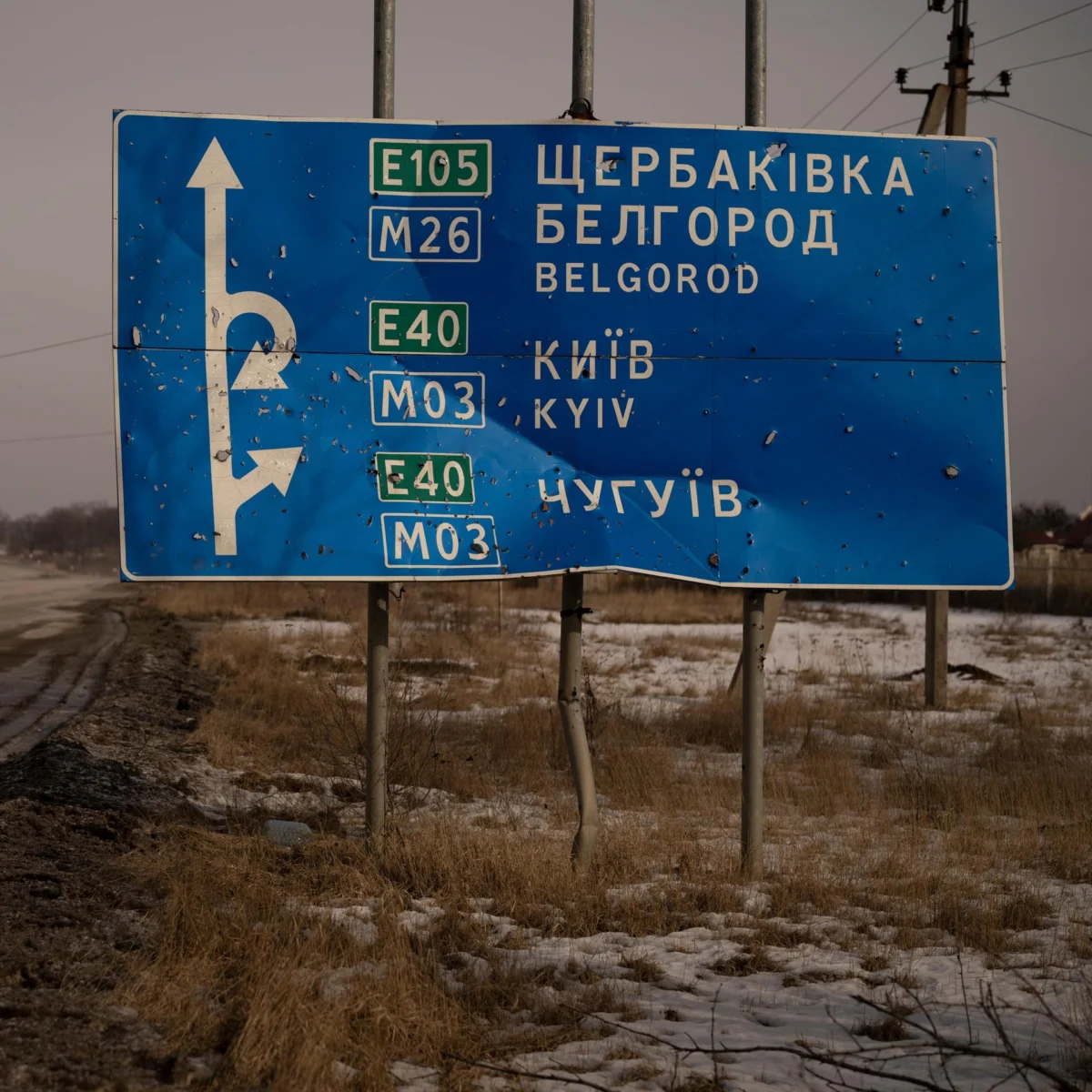
The timing of this fatal drone strike coincided with a significant announcement from Ukraine’s General Staff, which reported an extensive air defense operation during the preceding night. According to Ukrainian military officials, their air defense systems successfully intercepted over 270 Russian drones, primarily Iranian-designed Shahed-136/131 kamikaze drones, launched in a large-scale wave across multiple Ukrainian oblasts. This concurrent reporting of offensive and defensive aerial operations paints a stark picture of the relentless drone-centric warfare defining the current phase of the conflict, demonstrating both sides’ reliance on and vulnerability to unmanned aerial systems. The backdrop of these events is a landscape frequently scarred by conflict, as evidenced by an archived image showing a bullet and shrapnel-damaged road sign leading to Belgorod, a stark visual reminder of the persistent danger in the region.
Chronology of Events and Broader Context
Immediate Aftermath and Local Response
Following the fatal drone strike on the minibus, local emergency services in the Belgorod region swiftly responded to the scene. First responders, including paramedics and rescue teams, were deployed to provide assistance, though tragically, for the three occupants of the minibus, aid arrived too late. Initial reports from regional authorities focused on confirming the casualties and assessing the immediate damage. Governor Vyacheslav Gladkov, a prominent figure in conveying news from the embattled region, was expected to issue a detailed statement, likely condemning the attack as an act of Ukrainian aggression and reiterating calls for enhanced security measures. Local residents, accustomed to the constant threat of cross-border shelling and drone activity, likely faced renewed anxieties and fears, highlighting the pervasive psychological toll of living in a war zone. The area around the impact site would have been secured for investigation, with debris analysis and forensic teams working to determine the precise nature of the drone and its munition.
Broader Context of Attacks on Belgorod
The November 5th incident is far from an isolated event; it represents a continuation of a sustained campaign of Ukrainian cross-border attacks targeting the Belgorod region. Since the full-scale invasion commenced in February 2022, Belgorod has transformed from a peaceful border city into a frontline zone. Early in the conflict, attacks were primarily limited to sporadic shelling of border villages. However, as Ukraine developed its drone capabilities and extended its operational reach, the nature and intensity of these strikes evolved.
Throughout 2023 and 2024, Belgorod witnessed an increase in drone attacks, often targeting energy infrastructure, military depots, and administrative buildings. These included several instances where groups of drones penetrated Russian airspace, causing significant damage and sometimes casualties. Notable incidents involved strikes on oil depots, railway infrastructure, and military barracks, all aimed at disrupting Russia’s war machine. There were also instances of ground incursions by pro-Ukrainian Russian volunteer groups, further destabilizing the border areas and prompting Russia to significantly reinforce its defensive postures. The frequency and sophistication of these attacks have steadily increased, demonstrating Ukraine’s growing capacity to project power beyond its borders, largely in response to the relentless Russian bombardment of Ukrainian cities. The damage visible on road signs, like the one captured in an archive photograph depicting a bullet and shrapnel-scarred sign on the road to Belgorod, serves as a silent testament to the region’s enduring ordeal.
Ukrainian Air Defense Actions
In a contrasting but equally significant development, the Ukrainian Air Force announced a major defensive victory on the same day, reporting the interception of over 270 Russian drones during the night preceding the Belgorod incident. This massive wave of Russian drones, primarily Shahed-136/131 loitering munitions (often referred to as "kamikaze drones"), was reportedly launched from various directions, targeting critical infrastructure, military facilities, and civilian areas across multiple regions of Ukraine.
The sheer number of drones intercepted underscores the scale of Russia’s aerial assault tactics, which often involve saturating Ukrainian air defenses to deplete their missile stocks and overwhelm their systems. Ukrainian air defense units, comprising mobile fire groups, anti-aircraft missile units, and fighter aircraft, were engaged in intensive combat operations for several hours. The successful interception rate, if confirmed, highlights the continuous improvement in Ukraine’s air defense capabilities, bolstered by Western military aid, including advanced missile systems and radar technologies. These defensive operations are crucial not only for protecting lives and infrastructure but also for maintaining morale and demonstrating Ukraine’s resilience in the face of persistent aggression. The nightly drone and missile attacks have become a grim routine for Ukrainian civilians, who often spend hours in shelters, while air defense crews work tirelessly to protect their skies.
Supporting Data and Strategic Context
Strategic Importance of Belgorod
The Belgorod region’s geographical position makes it a cornerstone of Russia’s logistical and operational support for its forces engaged in Ukraine. Situated directly north of Ukraine’s Kharkiv and Sumy oblasts, Belgorod serves as a critical choke point and staging area. Its importance can be dissected across several key dimensions:
Firstly, Logistical Hub: Belgorod boasts an extensive network of roads and railways that are indispensable for moving troops, heavy weaponry, ammunition, fuel, and other vital supplies to the front lines. The main rail lines running through Belgorod are directly linked to major Russian military supply depots and then branch out towards eastern Ukraine, particularly the Donbas region where some of the most intense fighting occurs. Disrupting these routes significantly hampers Russia’s ability to sustain its offensive operations.
Secondly, Staging Ground: The region has been widely documented as a primary staging area for Russian military units before their deployment into Ukraine. Numerous military bases, training grounds, and temporary encampments are located within Belgorod, where troops are assembled, equipped, and prepared for combat. Attacks on these facilities aim to degrade Russia’s combat readiness and slow down troop rotations.
Thirdly, Air and Artillery Bases: Belgorod hosts several airfields and artillery positions from which Russian aircraft and long-range artillery systems launch strikes into Ukrainian territory. Neutralizing or disrupting these bases is a direct response to the ongoing bombardment of Ukrainian cities and military positions.
Finally, Proximity to Kharkiv: The city of Belgorod is merely 80 kilometers (50 miles) from Kharkiv, Ukraine’s second-largest city, which has endured relentless shelling and missile attacks since the war’s outset. Russian forces have historically used Belgorod as a springboard for attacks on Kharkiv, and Ukrainian counter-strikes are often aimed at diminishing this threat. From Ukraine’s perspective, targeting military assets and logistical nodes within Belgorod is a strategic imperative to defend its own territory and population.
Humanitarian Impact on Border Regions
The relentless cross-border hostilities have inflicted a devastating humanitarian toll on the civilian populations of both the Belgorod region in Russia and the Ukrainian border communities. In Belgorod, the frequent shelling, missile strikes, and drone attacks have led to civilian casualties, damage to residential buildings, and significant disruption to daily life. Schools have been forced to close or operate remotely, public services are often interrupted, and many residents have been displaced, either temporarily evacuating to safer areas within Russia or permanently relocating. The psychological impact of living under constant threat is profound, leading to widespread anxiety, trauma, and a sense of insecurity among the population. The image of a bullet-ridden road sign on the approach to Belgorod is not merely symbolic; it represents the tangible danger that residents face daily.
The situation in Ukrainian border cities like Kharkiv, Sumy, and Chernihiv is even more dire, having borne the brunt of large-scale Russian invasions and sustained bombardment for years. Millions have been displaced, entire neighborhoods flattened, and critical infrastructure systematically destroyed. The attacks on Belgorod, while tragic for its residents, are often framed by Ukrainians as a necessary evil, a mirror image of the suffering inflicted on their own people by Russian aggression originating from these very regions. This cycle of violence underscores the urgent need for civilian protection and adherence to international humanitarian law from all parties.
Types of Drones and Tactical Objectives
Modern warfare is increasingly defined by the proliferation and sophistication of drone technology. Both Russia and Ukraine extensively utilize a diverse array of unmanned aerial vehicles (UAVs) for a multitude of tactical objectives:
- Kamikaze/Loitering Munitions: Drones like Russia’s Shahed-136/131 (Iranian-designed) and Ukraine’s various domestic kamikaze drones (e.g., UJ-22, Beaver) are designed to fly to a target and detonate upon impact. Their objectives range from striking critical infrastructure (energy, communications) to military assets (equipment, personnel) and overwhelming enemy air defenses. The reported interception of over 270 Russian drones highlights the scale of these saturation attacks.
- Reconnaissance Drones: UAVs such as Russia’s Orlan-10 and Ukraine’s Leleka-100 provide real-time intelligence, identify targets for artillery and missile strikes, and assess battle damage.
- FPV (First-Person View) Drones: Small, agile, commercially available drones adapted for military use, often carrying explosives. These are particularly effective for precision strikes against individual vehicles, personnel, and fortified positions, especially in close-quarters combat. Ukraine has excelled in adapting these drones for offensive purposes.
- Strike Drones: Larger, more advanced drones capable of carrying heavier payloads, such as Ukraine’s larger attack drones which have targeted deep inside Russian territory, or Russian Lancet drones known for precision strikes against high-value targets.
The tactical objectives of drone attacks are varied: to disrupt enemy logistics, degrade combat capabilities, conduct reconnaissance, harass enemy forces, and even to create psychological pressure on civilian populations. The use of drones allows for strikes with reduced risk to human pilots, often at a lower cost than traditional missiles, and can bypass certain conventional air defense systems due to their small size and low flight altitude.
International Law and Rules of Engagement
The targeting of military objectives in an armed conflict is permissible under international humanitarian law (IHL), also known as the laws of war. However, IHL also mandates strict adherence to principles of distinction, proportionality, and precaution. The principle of distinction requires combatants to distinguish between military objectives and civilian objects, and between combatants and civilians. Directing attacks against civilians or civilian objects is prohibited. The principle of proportionality dictates that even if an attack targets a military objective, the anticipated military advantage must not be excessive in relation to the incidental harm to civilians or civilian objects. Finally, precaution requires all feasible measures to be taken to avoid or minimize civilian harm.
The complexity arises in border regions like Belgorod, where military infrastructure is often co-located with civilian populations or in close proximity. Ukraine asserts that its strikes on Belgorod target legitimate military objectives, such as supply depots, troop concentrations, and launch sites, which are actively supporting the invasion of its territory. Russia, conversely, frequently characterizes these attacks, especially those resulting in civilian casualties, as acts of terrorism and indiscriminate targeting of its population. The international community often urges all parties to the conflict to uphold IHL, investigate alleged violations, and ensure accountability, while recognizing the inherent difficulties of conducting warfare in densely populated areas and across internationally recognized borders.
Official Responses and International Stance
Russian Response
The immediate aftermath of the drone attack in Belgorod saw swift and unequivocal condemnation from Russian authorities. Governor Vyacheslav Gladkov, who frequently communicates updates on cross-border incidents, confirmed the civilian casualties and promptly labeled the strike as a "terrorist act" perpetrated by Ukrainian forces. Such characterizations are standard in Russian official discourse, aiming to frame Ukrainian actions as illegitimate and aggressive, justifying further Russian military responses.
The Russian Ministry of Defense (MoD) and the Kremlin were expected to issue more formal statements, likely reiterating accusations of Ukrainian indiscriminate targeting of civilian areas and vowing a robust response. Russia often leverages these incidents to underscore its narrative that it is protecting its own population from Ukrainian aggression, even as its forces continue to conduct extensive military operations within Ukraine. Calls for increased air defense capabilities and tightened border security in the Belgorod region would also likely follow, potentially leading to further militarization of the border areas and additional civilian restrictions. The incident will undoubtedly be used in state media to galvanize domestic support for the ongoing military campaign and to portray Ukraine as a rogue state disregarding international norms.
Ukrainian Response
Ukrainian officials typically maintain a degree of strategic ambiguity regarding specific cross-border attacks on Russian territory. While they rarely explicitly claim responsibility for individual drone strikes or shelling incidents within Russia, they often frame such actions as legitimate defensive measures or "karma" for Russia’s aggression. The overarching narrative from Kyiv is that any strikes on Russian soil are a direct consequence of Moscow’s unprovoked invasion and its use of Russian territory to launch attacks on Ukraine. Ukrainian authorities consistently reiterate their right to self-defense and to target military infrastructure that supports the Russian war effort.
In parallel, the Ukrainian Air Force’s announcement of intercepting over 270 Russian drones serves as a counter-narrative, highlighting the constant threat Ukraine faces from Russian aerial attacks. This messaging aims to draw international attention to the scale of Russian aggression and the necessity of continued military aid for Ukraine’s defense. By emphasizing their defensive successes, Ukraine seeks to bolster confidence in its capabilities and reinforce its position as a victim of aggression exercising its inherent right to defend itself.
International Reactions
International bodies and many Western governments generally express concern over any escalation of hostilities and the resulting civilian casualties, regardless of which side is responsible. Organizations such as the United Nations and the International Committee of the Red Cross (ICRC) consistently call for all parties to the conflict to respect international humanitarian law, protect civilians, and ensure humanitarian access.
While there is broad international condemnation of Russia’s initial invasion and ongoing aggression against Ukraine, specific cross-border incidents on Russian territory are often met with nuanced responses. Western allies of Ukraine typically do not endorse or encourage attacks on Russian territory but also acknowledge Ukraine’s right to self-defense. Their focus remains on providing military and financial support to Ukraine to defend its sovereign territory and repel the Russian invasion, while generally urging Ukraine to avoid actions that could lead to broader regional escalation. Calls for de-escalation, adherence to international law, and the protection of civilian lives remain a constant refrain from the international community.
Implications and Future Outlook
Escalation Risks
The fatal drone attack in Belgorod, coupled with Ukraine’s interception of a massive Russian drone wave, underscores the perilous cycle of escalation inherent in this protracted conflict. Each cross-border strike by Ukraine often triggers a retaliatory response from Russia, and vice-versa. This "tit-for-tat" dynamic risks broadening the geographical scope of the conflict, drawing more civilian areas into direct harm’s way, and potentially leading to the deployment of more destructive weaponry. As both sides continue to develop and deploy advanced drone technologies and long-range strike capabilities, the likelihood of deeper penetration into enemy territory increases, raising the stakes for further escalation and unintended consequences. The international community remains wary of any moves that could destabilize the region further or provoke a direct confrontation between NATO and Russia.
Impact on Civilian Morale
For the civilian populations in both Russia’s border regions and Ukraine, the relentless drone and missile attacks take a severe psychological toll. In Belgorod, the constant threat of incoming strikes, as evidenced by the damaged road sign on the approach to the city, fosters an environment of fear and uncertainty. This erosion of security can lead to widespread anxiety, distrust in authorities’ ability to protect them, and potentially influence public opinion regarding the war. Similarly, in Ukraine, despite the resilience shown by its citizens, the daily barrage of Russian drones and missiles exacts a heavy psychological price, contributing to widespread trauma, displacement, and a profound sense of loss. The human cost of living under constant threat profoundly impacts societal well-being and long-term recovery efforts for both nations.
Military Strategy and Drone Warfare
The incidents on November 5, 2026, vividly illustrate the evolving role of drone warfare as a cornerstone of modern military strategy. For Ukraine, targeting Belgorod’s military infrastructure with drones is a crucial tactic to disrupt Russian logistics, degrade their combat capabilities, and relieve pressure on its own front lines. These strikes aim to force Russia to divert resources, including air defense systems, to protect its own territory, thereby thinning out defenses elsewhere. For Russia, the massive drone waves are designed to overwhelm Ukrainian air defenses, deplete their missile stocks, and strike critical infrastructure, aiming to undermine Ukraine’s ability to wage war and sustain its economy.
The continuous innovation in drone technology, counter-drone systems, and electronic warfare is shaping the battlefield. The ability to launch large numbers of inexpensive drones against high-value targets, or to intercept them effectively, is becoming a defining factor in the conflict’s progression. This shift demands constant adaptation in military doctrine, training, and technological development.
Future Outlook for Border Regions
Given the current trajectory, the border regions between Russia and Ukraine are likely to remain hotbeds of intense conflict for the foreseeable future. Neither side appears willing to cede ground or halt cross-border operations, viewing them as essential components of their respective war efforts. The Belgorod region, by virtue of its strategic importance to Russia, will almost certainly continue to be a priority target for Ukraine. Conversely, Russia is expected to maintain its aerial bombardment campaigns against Ukraine, including massive drone attacks.
Any prospects for de-escalation in these areas are intrinsically linked to the broader resolution of the conflict, which currently remains elusive. Without a diplomatic breakthrough or a significant shift in military dynamics, residents of Belgorod and Ukrainian border towns will continue to endure the daily realities of a grinding, drone-centric war, where the lines between front and rear, and between military and civilian, are increasingly blurred. The long-term implications for regional stability, international security, and the lives of millions remain profoundly uncertain.