By Editorial Staff
Published: November 1, 2026
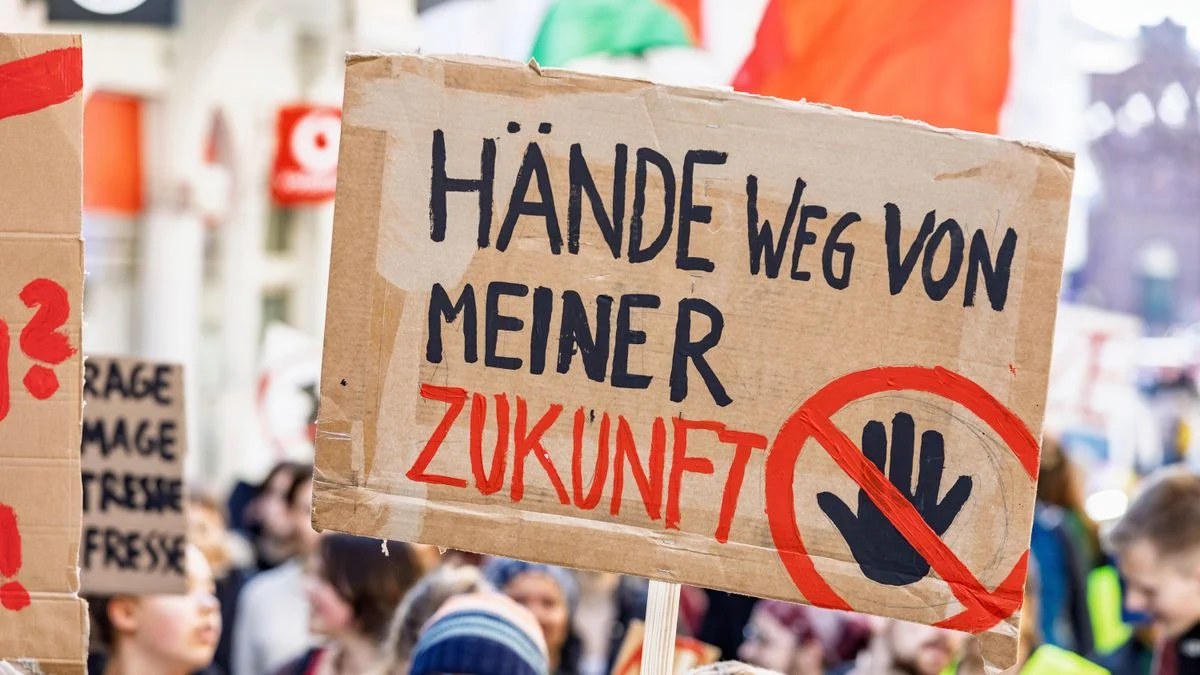
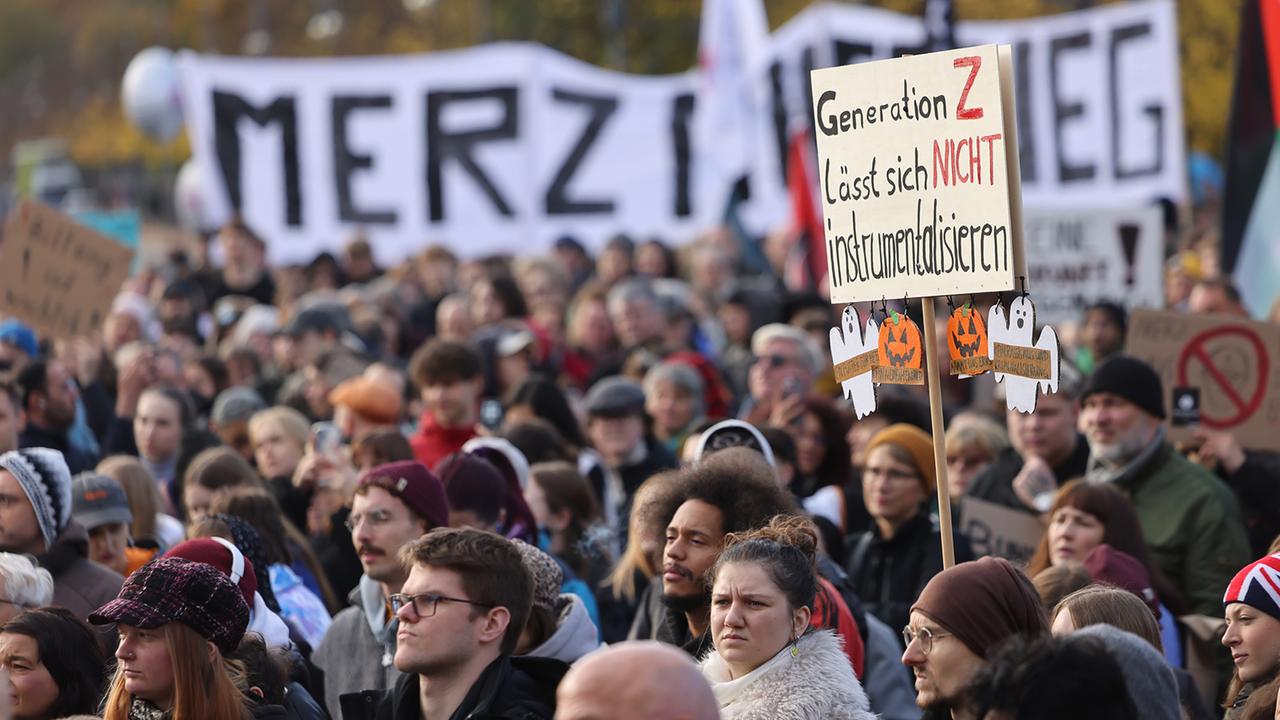
The promise of a mass mobilization that would shake the foundations of German politics fell short of its ambitious projections this week. The "Gen Z Regelt" (Gen Z Rules) initiative, which had initially claimed registrations for over 180,000 participants across the country, saw a significantly lower turnout as thousands took to the streets on October 31. While the protests were intended to serve as a unified clarion call for the grievances of a generation struggling with economic precarity, the narrative was quickly hijacked by scenes of violent unrest, property destruction, and a deepening rift between the youth movement and the political establishment.
The Reality of the Streets: Where the Movement Faltered
The "Gen Z Regelt" initiative had planned coordinated rallies in more than 30 German cities. While the core organizing committee focused on high-profile demonstrations in Berlin, Cologne, Frankfurt, and Munich, a patchwork of independent local organizations joined the call. By the end of the day, organizers reported approximately 120,000 participants nationwide—a figure that, while substantial in its own right, stood in stark contrast to the massive expectations fueled by months of viral social media campaigning.
In Berlin, the epicenter of the movement, the contrast between ambition and reality was palpable. While the initiative claimed a turnout of 10,000, police estimates placed the figure closer to 5,000 at the Brandenburg Gate. Kaja Schwab, a spokesperson for the movement, took to the podium to articulate the frustration of her peers. "We were told that if we only worked hard enough, our future would be secure," she stated. "Instead, we find ourselves unable to afford basic housing, and now we are told that the state expects us to serve in the military."
Protest researcher Nina Kolleck, who observed the events in Berlin, noted that while the movement successfully attracted a cross-generational base of support—with parents often accompanying their children—the turnout was dampened by two major factors: the fear of impending violence and the active decision of the Federal Student Conference (Bundesschüler*innenkonferenz) to withhold its support. By failing to secure the backing of established student bodies, the movement struggled to reach the broader student population, many of whom feared that the protests would devolve into the chaos that has recently characterized political demonstrations in neighboring France.
Chronology of Discontent: From Peaceful Protest to Urban Unrest
The day began with a spirit of collective expression, but as evening descended, the atmosphere in several major cities shifted dramatically. In Frankfurt, what started as a march of 8,000 participants turned into a scene of urban disorder. The march was repeatedly stalled as fringe groups within the crowd engaged in the use of pyrotechnics and deliberate face-covering—a precursor to the nocturnal escalation that saw shop windows shattered and businesses looted.
Similarly, in Cologne, the authorities were forced to terminate the demonstration prematurely, citing "targeted disturbances" by agitators who used the cover of the protest to ignite flares and challenge police lines. Similar patterns were observed in Hamburg and Essen, where the presence of radicalized elements forced security forces to intervene, ultimately overshadowing the original message of the demonstrators.
The night concluded with a wave of arrests and injuries across the country. In Frankfurt alone, police detained 54 individuals, with ages ranging from 13 to 29. The volatility reached a peak when, in several cities, police were pelted with bottles, fireworks, and in some instances, cobblestones. By the time the dust settled on the morning of November 1, the focus of the national discourse had shifted entirely from the economic demands of the youth to the security failures of the protest.
The Architecture of a Digital Movement
The "Gen Z Regelt" initiative remains an enigma to traditional political observers. Its organizational structure is intentionally decentralized, favoring horizontal, digital-first communication via Telegram, Instagram, and TikTok. According to the group’s publicly available information, the movement is spearheaded by a core team of five, most of whom operate anonymously to ensure their personal safety.
Akram Selo, an 18-year-old high school student identified in an interview with the Frankfurter Allgemeine Zeitung, serves as the public face of the group. Selo described the movement as a "swarm" of individuals, comparing the participants to squirrels—each working independently but toward a shared, survival-focused goal. This lack of a formal, hierarchical leadership structure, while effective for rapid mobilization, has proven to be a liability in terms of accountability and long-term political negotiation. Without a clear spokesperson or a formalized list of demands recognized by the state, the movement risks being treated as a disorganized collection of grievances rather than a cohesive political force.
Official Responses: A Divided Political Landscape
The reaction from the German government has been a mix of stern condemnation of violence and a cautious acknowledgement of the underlying social issues.
Bundesinnenminister Alexander Dobrindt (CSU) adopted a hardline stance, characterizing the riots as the work of "violent left-wing groups and opportunists from the migrant milieu." He praised the police for preventing the "excesses seen in Paris," asserting that the state would not tolerate the ransacking of city centers.
Conversely, Federal Education Minister Karin Prien (CDU) attempted to bridge the gap. While she unequivocally condemned the violence, she insisted that the legitimate grievances of the peaceful majority could not be ignored. "The concerns of these young people are valid and urgent," Prien stated. She argued that Germany’s systemic failures—specifically the link between socioeconomic origin and educational success—require deep, structural reform, including adjustments to pension and healthcare systems to ensure the sustainability of the future generation.
The SPD parliamentary group, represented by Dirk Wiese, echoed this sentiment, calling for a "national education summit" to address the erosion of the "ascent promise" that characterized the German social model in the 1970s. Meanwhile, Franziska Brantner of the Green Party emphasized that while the message of the youth is "unignorable," the acts of violence have fundamentally damaged the cause, making it easier for the government to dismiss the movement in its entirety.
Implications: The Road Ahead
The failure of the October 31 protests to remain entirely peaceful has left the "Gen Z Regelt" movement at a crossroads. The initiative has already announced further actions for the week of November 2–6, targeting schools and universities, and has expressed intent to join the International Youth Strike on November 20.
However, the movement faces a crisis of legitimacy. The decision by the Federal Student Conference to avoid coordination with "Gen Z Regelt" highlights a significant internal struggle: how does a movement maintain its radical, grassroots appeal while avoiding the "chaotic" label that alienates potential allies?
The removal of a specific date for future protests from the group’s website, replaced by a vague promise of "coming soon," suggests that the organizers are currently regrouping to assess their strategy. The coming weeks will be critical. If the movement cannot distance itself from the radical fringe elements that hijacked the October protests, it risks fading into a footnote of German social history.
If, however, they can pivot toward institutional dialogue—as suggested by the Education Minister—they may yet force the German government to confront the issues of educational inequality and economic instability that have left an entire generation feeling abandoned.
For now, the lesson is clear: in the digital age, it is easy to call a million people to the street, but it is infinitely harder to manage the consequences of that call once the cameras are rolling and the first brick is thrown. The "Gen Z Regelt" movement is learning the hard way that to rule, or even to lead, one must do more than just protest; one must possess the discipline to govern the message itself.