NÜRNBERG, Germany – The management transition at 1. FC Nürnberg (FCN) has officially concluded. The "Club," currently one of the most exciting projects in German football, has appointed Dieter Frey as the new Board Member for Sport. Frey, who previously served as the head of the club’s prestigious youth academy, succeeds Joti Chatzialexiou, who is departing for a new role at Eintracht Frankfurt.
The appointment marks a strategic commitment to continuity, signaling that the board of directors intends to maintain the club’s identity as a premier talent development hub. With the team performing strongly in the 2. Bundesliga, the transition comes at a critical juncture for the historic club.
The Strategic Shift: A New Era for the "Club"
The announcement, made public this Wednesday, brings clarity to a period of uncertainty that followed the news of Joti Chatzialexiou’s impending departure. In the modern landscape of German football, where sporting directors often rotate frequently, 1. FC Nürnberg’s decision to promote from within is a calculated move designed to preserve the organizational culture that has brought the club significant recent success.
Dieter Frey, 54, is no stranger to the inner workings of the Max-Morlock-Stadion. Having played for the club between 2001 and 2004, he possesses a deep-seated understanding of the expectations and the unique spirit that defines the nine-time German champions. His elevation to the Board of Sport is the culmination of a long-term progression through the club’s internal hierarchy.
A Chronology of Progress: How Dieter Frey Earned His Stripes
To understand the weight of this appointment, one must look at the trajectory of Dieter Frey’s career within the club. His rise is not the result of a sudden impulse, but rather a decade-long commitment to the FCN philosophy.
- 2001–2004: Active playing career with 1. FC Nürnberg.
- 2014: Joins the coaching staff, initially focusing on player development.
- 2019: Promoted to a full-time coaching role within the youth academy.
- August 2024: Named Sporting Director of the youth department. During this period, reports surfaced that the club had already approached him regarding the top sporting role, an offer he reportedly declined at the time to focus on his burgeoning youth project.
- February 2026: Assumes full leadership of the Nachwuchsleistungszentrum (NLZ) following the departure of Michael Wiesinger to FC Bayern Munich.
- November 2026: Formally appointed as the new Board Member for Sport.
This timeline highlights a man who has touched every level of the club’s development pipeline. By the time he was offered the Board position in late 2026, he had already proven his ability to navigate both the administrative and the sporting demands of a high-pressure environment.
The "Talent Factory" Model: Supporting Data and Economic Impact
Under the current management, 1. FC Nürnberg has transformed into one of the most successful talent incubators in Germany. The club’s ability to identify, nurture, and eventually sell high-potential players has provided a stable financial foundation that few other second-tier clubs can replicate.
The success of this model is evidenced by the lucrative departures of several young stars, all of whom passed through the systems that Frey helped oversee:
- Can Uzun: His transfer to Eintracht Frankfurt remains a benchmark for the club’s ability to develop elite attacking talent.
- Finn Jeltsch: A standout defensive prospect who secured a move to the Bundesliga’s VfB Stuttgart.
- Stefanos Tzimas: The striker’s move to Brighton & Hove Albion highlights the club’s international scouting and development reach.
- Caspar Jander: A key midfielder who successfully transitioned to the English Championship with Southampton.
These transactions are not merely financial windfalls; they are proof-of-concept for the "Nürnberg way." By appointing Frey, the board is ensuring that this revenue-generating pipeline remains uninterrupted.
Official Responses and Internal Dynamics
The transition has been handled with remarkable transparency and professionalism, a rarity in the often-volatile world of professional football.
Dieter Frey on the Challenge
In his first remarks following the announcement, Frey struck a tone of humility and focus. "I thank the supervisory board for the trust they have placed in me and for their support. We have moved in a very positive direction in recent years," Frey stated.
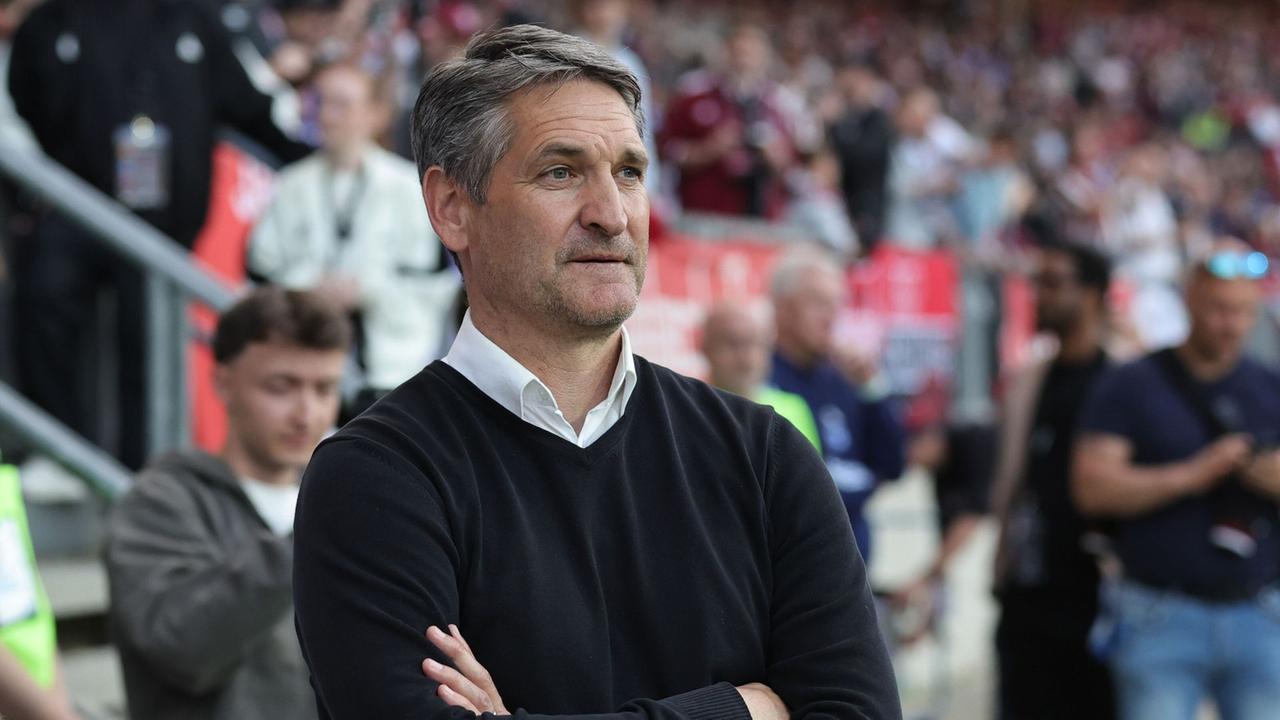
Regarding the transition phase, he emphasized his collaborative approach: "I am going to start by listening to a lot of people. I will certainly listen to Joti to understand his perspective on various matters. I want to build a clear picture for myself and ensure this transition period is as smooth as possible for the entire organization."
The Supervisory Board’s Perspective
Peter Meier, the Chairman of the Supervisory Board, was unequivocal in his support for the new appointment. "Dieter Frey is the logical and best possible solution for us," Meier said. "He has played a decisive role for years in ensuring that the club does outstanding work in youth development, that talents are nurtured, and that they eventually make it into the professional ranks."
The Klose Factor
A significant factor in this appointment is the endorsement of Head Coach Miroslav Klose. The legendary striker, now leading the FCN dugout, has been an integral part of the decision-making process. According to reports, Klose and Frey share a similar tactical and humanistic philosophy.
"Miro gave us very positive feedback and welcomed the fact that Dieter is taking over the office," Meier confirmed. The two have maintained a weekly exchange since Frey’s time as youth director, a rapport that the club hopes will translate into a seamless synergy between the sporting leadership and the coaching staff.
Implications: A Shortened Transition?
A key question remains: when will the official handover occur? Originally, Chatzialexiou was scheduled to remain until February 2027. However, with the appointment finalized, there is internal discussion regarding whether this departure can be accelerated.
The upcoming winter transfer window presents an ideal opportunity for a "handover in motion." If Chatzialexiou departs earlier, both he and Frey could navigate the winter market in their respective new roles, allowing for a cleaner break. While no official date has been set, the club’s leadership has indicated that they are in active discussions to resolve the timeline.
Frey himself remains diplomatic about the handover, characterizing his relationship with his predecessor as one of "open, hard, and constructive discussion." He noted, "We were not always of the same opinion, and that was the beauty of it. We could put different views on the table and debate them." Both parties intend to leverage this history of robust debate to ensure the club emerges from the transition stronger than before.
Looking Ahead: The Path for 1. FC Nürnberg
As the club continues to compete at the top end of the 2. Bundesliga, the appointment of Dieter Frey provides a sense of stability that the team can carry into the final months of the season.
The primary challenge for Frey will be twofold: maintaining the high performance of the current squad while simultaneously protecting the youth development infrastructure that has become the club’s heartbeat. His appointment is a clear message to the fans, the players, and the league: 1. FC Nürnberg is committed to the path it has chosen.
By prioritizing internal expertise over external upheaval, the club is banking on the idea that the best way to move forward is to build on the foundations already laid. With the support of the supervisory board and the alignment of the coaching staff, Dieter Frey takes the reins at a time when the "Club" is not just dreaming of a return to the top tier, but actively building the structure required to sustain it.
As the second half of the season approaches, all eyes will be on how this administrative shift influences the pitch. For now, however, the consensus in Nürnberg is one of cautious optimism—a belief that in promoting from within, the club has found the right leader for its next chapter.