


By Alexander Bühler (NDR) – October 16, 2026
For millions of parents worldwide, the morning ritual is predictable: a groggy descent into the living room, followed by the familiar, catchy theme songs of Peppa Pig or PAW Patrol. While these shows are often viewed by adults as mere background noise or colorful distractions, a deeper look reveals a more complex reality. For decades, children’s television has served as a battlefield for cultural values, often adopting a "subversive" stance that places the child’s perspective above the dictates of adult decorum. From the satirical jabs at Donald Trump in Sesame Street to the global censorship battles surrounding a British piglet, children’s media remains a surprisingly potent tool for challenging the status quo.
Main Facts: The Power of the Child’s Perspective
At its core, children’s television is rarely just about entertainment; it is about empowerment. Media researchers, such as Maya Götz, head of the International Central Institute for Youth and Educational Television (IZI) at Bayerischer Rundfunk, argue that the "provocation" adults often feel when watching these shows stems from a fundamental shift in viewpoint.
"What adults perceive as a subversion of norms is simply the series adopting the child’s perspective," says Götz. In programs like Peppa Pig, the world is viewed through the lens of a preschooler who is just beginning to understand social rules. When a character acts out, asks an "inappropriate" question, or rejects an adult’s suggestion, it mirrors the natural developmental behavior of the young audience. For children, this is validation. For adults who prioritize obedience and "functioning" children, it is often an irritant.
A Chronology of Conflict: From the "Grump" to Global Censorship
The tension between the innocence of children’s media and the sensibilities of those in power is not a new phenomenon.
- 1969–1971: Sesame Street launches in the U.S. and Germany, respectively, with a mission to bridge educational gaps for underprivileged children. It quickly establishes a tradition of using humor to explain complex, sometimes uncomfortable, realities.
- 1988–2005: The character "Ronald Grump" makes sporadic appearances on Sesame Street. Parodying a real-world real estate developer, the character—often portrayed as a caricature of greed—culminates in a 2005 appearance where he acts as a "trash billionaire" host of a The Apprentice-style show, famously telling characters, "You’re fired!"
- 2018: The Chinese government temporarily pulls Peppa Pig from the streaming platform Douyin. State-run media labels the show a "subversive" influence, citing concerns over "Western ideology" and the character’s alleged association with counter-cultural movements.
- 2017–Present: Following the political rise of Donald Trump in the U.S., the creators of Sesame Street faced significant political pressure. Critics within the Republican party labeled the production "subversive liberals," leading to efforts to curb public funding for the show, eventually forcing the series to pivot toward a streaming-first distribution model.
Supporting Data: Why "Subversive" Media Thrives
The success of shows like Peppa Pig, Teen Titans Go!, and the YouTube-based Salish and Jordan Matter suggests that children crave content that treats their agency with seriousness.
In Teen Titans Go!, the narrative focuses on four ageless superheroes navigating the trials of growing up without a single adult character present to dictate their lives. They manage their own conflicts, friendships, and existential crises. This lack of adult supervision is not a plot hole; it is the point.
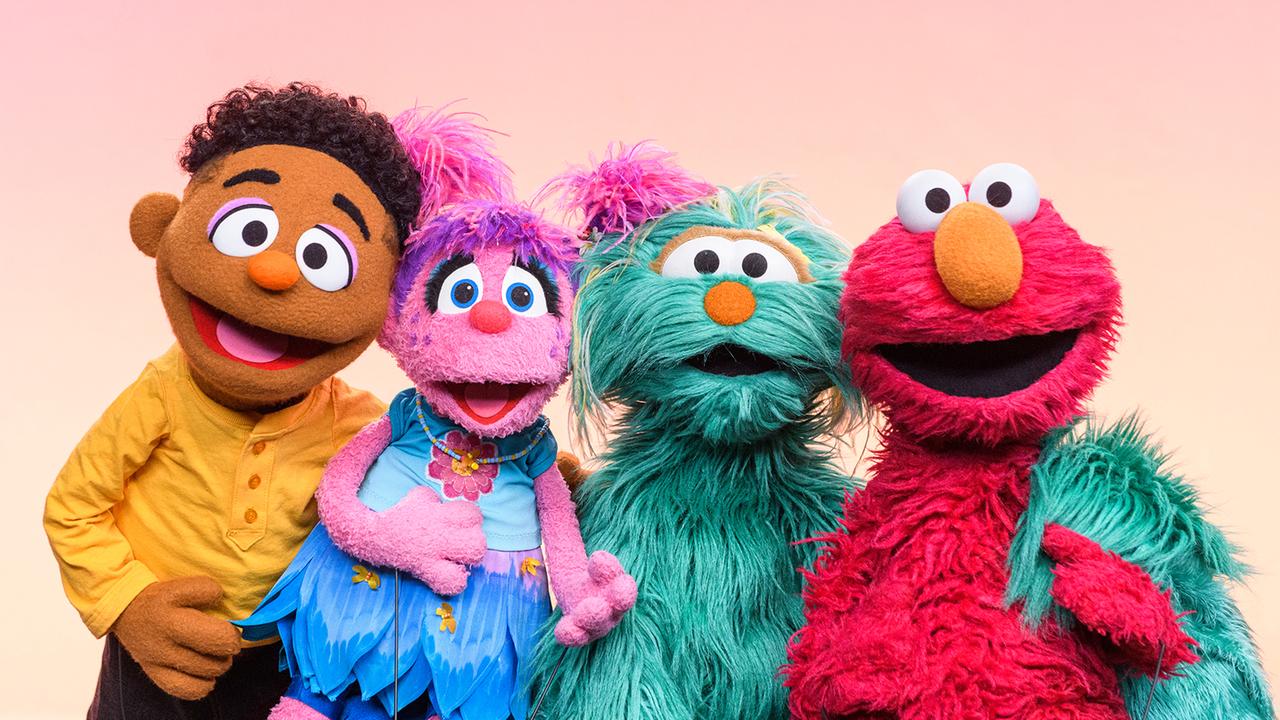
Similarly, the Salish and Jordan Matter series represents a modern evolution of the "parent-child battle." By framing mundane chores as high-stakes challenges, the show allows the child character, Salish, to consistently outsmart her father. It turns the traditional power hierarchy on its head, offering viewers a cathartic, subversive joy that mirrors the way children often dream of interacting with their own caregivers.
Official Responses and Media Analysis
The industry’s reaction to these trends has been mixed. While some conservative regulators attempt to block or censor content they deem "non-traditional," media scholars like Götz and Anke Lindemann, director of the Goldener Spatz children’s film festival, argue that this resistance is misplaced.
"When we look at the ‘subversive’ nature of these shows, it is really about the child playing the lead role," explains Lindemann. "It is about them deciding their own path and refusing to be steered by external forces."
The IZI’s research, which has analyzed everything from Harry Potter to the impact of reality casting shows on children, confirms that the most successful programs are those that provide a safe space for children to test the boundaries of authority. When a character ignores an adult’s command to "behave," the child viewer is not necessarily learning rebellion; they are learning autonomy.
The Implications: Why It Matters
The implications of this trend are significant for both parents and policymakers. By keeping the "child’s perspective" at the center, these programs act as a mirror.
- Identity Formation: For children, seeing characters who successfully negotiate with, ignore, or outsmart adults helps them form their own sense of self-efficacy.
- Parental Reflection: For parents, the irritation caused by a show like Peppa Pig or Salish and Jordan is actually an opportunity for introspection. It forces the adult to ask: Why does it bother me that a child character is saying ‘no’?
- Political Polarization: The fact that a children’s show like Sesame Street became a target for political defunding in the U.S. demonstrates that the "innocent" world of children’s media has become a front in the broader culture war. When political actors fear a puppet, it reveals how much they fear the influence of independent, critical thought among the next generation.
Ultimately, whether the show is a loud, chaotic cartoon or a quiet, observational study of a piglet’s family, the constant remains the same: the desire for children to be seen as individuals. As Maya Götz notes, "We put authorities under a little bit of pressure and have fun with it. In doing so, we verify our unity as a family."
In an era where children are increasingly exposed to global narratives and high-speed information, the "subversive" quality of their television acts as a necessary counterbalance. It reminds them—and their parents—that the world is not just a place to be told what to do, but a place to be explored, questioned, and occasionally, turned upside down.


