By Ferdinand Meyen, BR Zündfunk
Updated: October 31, 2026
The streaming landscape has undergone a radical transformation. Where once lighthearted sitcoms and procedural dramas dominated the top ten lists, the current cultural zeitgeist is being defined by a darker, more visceral force. From the telekinetic trauma of Carrie on Amazon Prime to the aquatic dread of Below on Netflix and the psychological wreckage of Crystal Lake on HBO Max, horror is no longer a seasonal niche—it is the dominant language of modern prestige television.
As of late October 2026, these three productions have held the top spot in their respective platform charts for weeks, accumulating hundreds of millions of viewing hours. The question occupying media analysts and cultural sociologists alike is: Why now? Are we merely a society desensitized by a relentless cycle of digital violence, or does this surge in long-form horror serve as a necessary mirror to our increasingly unstable reality?
The Shift from Screen to Stream: A Genre Reborn
For decades, the horror industry operated under a rigid assumption: the "communal scare" was the domain of the movie theater. The 90-minute runtime was the perfect container for a heightened, adrenaline-fueled experience. However, the last two years have obliterated that boundary.
While theatrical horror remains robust—evidenced by the success of films like Backrooms and Obsession, and the critical acclaim for genre-defying works such as The Substance and Blood & Sinners—the "horror series" has evolved into a different beast entirely. Unlike a film, which provides a concentrated shock, these series offer an immersive, slow-burn descent into terror. By extending the narrative arc, creators are no longer just delivering jump scares; they are building entire worlds of dread that reflect the anxieties of the 2020s.
Chronology of the Current Wave
The transition of horror from film to episodic television did not happen overnight, but rather followed a strategic pivot by major streaming platforms:
- Early 2025: The success of limited series experiments showed that subscribers were willing to commit to 8–10 hour horror narratives.
- Mid-2025: High-budget adaptations of classic literary horror began production, moving away from "slasher" tropes toward character-driven psychological narratives.
- Late 2025: The release of Below on Netflix proved that "Eco-Horror" could sustain a global audience, bridging the gap between thriller and environmental commentary.
- October 2026: The current "Triple Crown" of horror—Carrie, Below, and Crystal Lake—simultaneously dominated the charts, cementing the genre as the primary driver of subscription retention for the fall season.
The "Soul-Training" Theory: An Academic Perspective
Why are millions of viewers choosing to spend their leisure time navigating depictions of trauma, revenge, and existential threats? According to Mark Schmitt, a cultural scientist at the Technical University of Dortmund, the answer lies in the concept of emotional catharsis.
"In an era defined by poly-crises—from climate change to political polarization—the individual feels a constant, low-level hum of anxiety," says Schmitt. "We are living in a state of perpetual alarm. Horror series offer a controlled environment. By engaging with a fictional threat for several hours, the audience is essentially performing ’emotional training for the soul.’ It is a way to process the unfathomable horrors of the real world within a safe, bounded narrative."
Schmitt argues that because our daily reality feels increasingly chaotic, a 90-minute film is no longer enough to "burn off" the collective stress. Serialized horror allows for a deeper, more therapeutic engagement with fear.
Case Study: The Modernization of Carrie
Perhaps the most potent example of this shift is the new adaptation of Stephen King’s Carrie, helmed by visionary creator Mike Flanagan. By transposing the 1970s narrative into the digital age, the series transforms a story of telekinesis into a scathing critique of modern societal failure.
In this iteration, Carrie White is not just a victim of religious fundamentalism; she is a victim of the digital panopticon. When she arrives at a state-run high school after her father’s death, she finds herself the target of a hyper-connected mob. The series highlights the cruelty of social media, where a "fake" Instagram account—Carrie Red—becomes a weaponized engine of mass harassment.
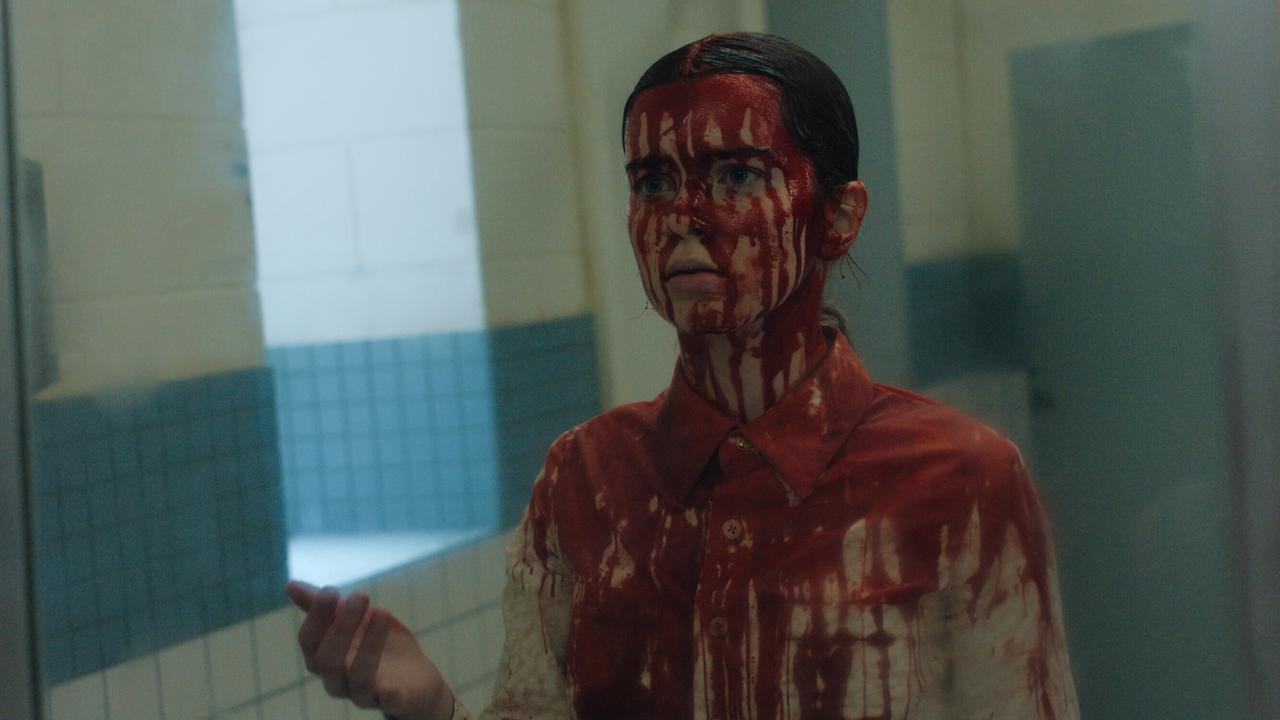
The show does not shy away from the institutional rot of the educational system, nor the complicity of adults who watch as children are destroyed by digital contagion. By grounding the supernatural in the very real, visceral pain of online bullying, the series becomes a horror story about the loss of empathy in a hyper-connected society.
Eco-Horror and the Displacement of Guilt
The Netflix hit Below represents another facet of this trend: the "Eco-Thriller." Set in a Newfoundland fishing village, the series centers on an ancient, monstrous entity emerging from the depths. However, the true monster in the narrative is the systemic environmental destruction that has poisoned the ecosystem.
Unlike traditional monster movies, Below focuses on the marginalized: the fishermen who have spent generations in harmony with the sea, only to be forced into a fight for survival against a force they did not create. It reflects the helplessness many feel regarding climate change, where the consequences of global industrialization are paid for by those with the least agency.
Supporting Data: The Anatomy of the Boom
The numbers back the trend. According to aggregated streaming analytics from Q3 2026:
- Genre Dominance: Horror-themed content accounted for 28% of all new "Top 10" entries across major platforms in October, an increase of 14% compared to the previous year.
- Demographic Shift: While horror was traditionally a younger demographic (ages 18–34), the current series boom shows a significant spike in viewership among the 35–55 age bracket, suggesting that the themes of societal critique are resonating with older viewers who are tired of standard dramas.
- Completion Rates: Series like Crystal Lake saw a 78% completion rate, significantly higher than the average for standard dramas, indicating that the "hook" of horror is exceptionally effective at driving user engagement.
The Socio-Political Mirror
The horror genre is proving to be the most efficient medium for discussing contemporary societal ills. Crystal Lake, which delves into the origin of Jason Voorhees, serves as a dark exploration of the marginalization of the disabled and the cyclical nature of community violence.
Similarly, the success of The Institute (available on public broadcaster platforms) highlights the loss of empathy during turbulent political eras, specifically drawing parallels to the erosion of democratic norms. Even Apple TV’s Widows Bay, an Emmy-sweeping sensation, uses the framework of a ghost story to examine the devastating effects of gentrification and over-tourism on small-town identity.
Implications: The Future of the "Scare"
What does this obsession with horror say about our future? Some critics argue that we are becoming "addicted to the adrenaline," but the data suggests something more profound. We are not just looking to be scared; we are looking for ways to name the ghosts that haunt our society.
Whether it is the surveillance culture represented in Carrie, the environmental neglect in Below, or the systemic exclusion in Crystal Lake, these series are doing the work of contemporary social realism under the mask of genre.
As we move toward the end of 2026, it is clear that the "Golden Age of Television" has transitioned into the "Age of Anxiety." If the goal of art is to hold a mirror up to society, then our current preference for horror is not a sign of our desensitization. Rather, it is a testament to our profound need to confront the darkness in the world—and to see, at the very least, that the characters on screen survive the night, even if the real-world threats remain.
The boom in serial horror is likely to continue, not because we are losing our minds, but because we are trying, frame by frame, to find a way to live with the fear that has become our constant companion. As Mark Schmitt concluded: "We watch to learn how to survive. In the end, that is what horror has always been about."