


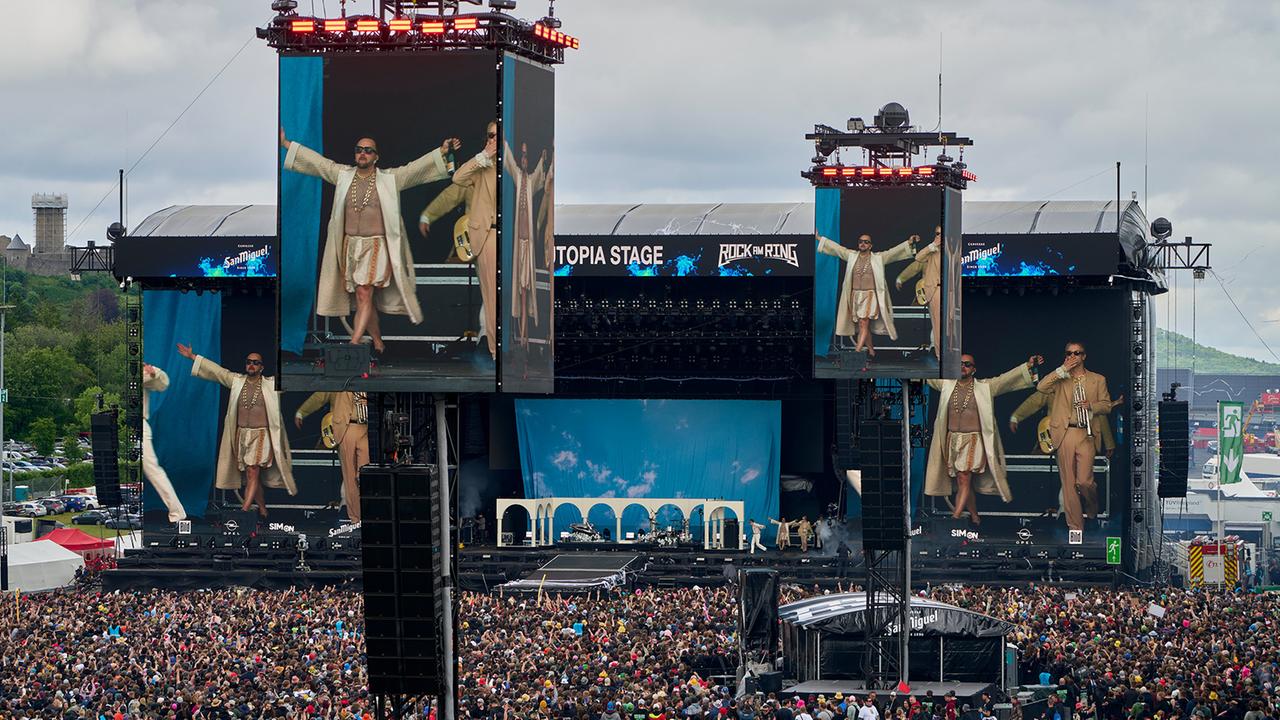
The landscape of live music is undergoing a quiet but profound transformation. What once began as a collection of grassroots initiatives, fan-driven gatherings, and cultural experiments has increasingly morphed into a multi-billion-euro industry dominated by a handful of global conglomerates. From the mud-soaked fields of Wacken to the iconic stages of Rock am Ring and the electronic beats of Parookaville, the power dynamics of the European festival circuit have shifted from independent visionaries to international financial investors.
This consolidation is not merely an administrative detail; it is a fundamental restructuring of how live music is produced, marketed, and consumed. As international groups such as Superstruct, CTS Eventim, Live Nation, and AEG tighten their grip on the market, the pressures on independent promoters are mounting, raising urgent questions about the future of cultural diversity and the soul of the festival experience.
A Historical Shift: From Passion Projects to Portfolios
The evolution of the "Wacken Open Air" serves as a poignant microcosm for this wider trend. When Thomas Jensen and Holger Hübner launched the event in 1990, it was a modest affair—an improvised stage in a small Schleswig-Holstein village, attended by approximately 800 metal enthusiasts. Over three decades, it transformed into a global pilgrimage site for the heavy metal community.
However, the "Wacken" brand is no longer just a labor of love for its founders. Following a series of divestments, the founding duo now holds only about five percent each of the organizing firm. The majority stake—nearly 90 percent—is now owned by the international festival group Superstruct, a conglomerate backed by massive private equity capital. This pattern is repeating across the continent. Festivals that were once synonymous with individual identity and local community spirit are being absorbed into diversified investment portfolios, where their cultural value is increasingly measured against quarterly earnings reports.
The Web of Influence: Consolidation by the Numbers
Recent research from European live music associations Live DMA and Reset! provides a sobering look at the extent of this market concentration. Their data reveals that more than 150 of the most significant festivals within the European Union are now controlled by just four major entities: Superstruct, CTS Eventim, Live Nation, and AEG.
The sheer scale of this influence is staggering. These corporations do not merely own the festivals; they own the ecosystem that supports them. This creates a vertical integration model that is nearly impossible for independent promoters to challenge.
The Multi-Layered Profit Machine
Consider the business model of CTS Eventim, which reported a staggering annual revenue exceeding three billion euros as of 2025. Their influence spans the entire value chain of live music:
- Production: They organize and fund the concert tours of major international acts.
- Infrastructure: They own or operate key venues, such as Berlin’s Waldbühne and Cologne’s Lanxess-Arena.
- Ticketing: They are one of Europe’s largest ticket retailers, controlling the primary entry point for millions of fans.
- Festival Management: Through various subsidiaries, they operate or hold stakes in the largest summer festivals.
This synergy allows a corporation to extract value at every stage. They can book a band for a tour, handle the ticketing, house the performance in a venue they own, and then slot the same artist into a festival they operate. This creates a self-reinforcing loop that provides the conglomerate with immense negotiating power and a near-monopoly on the most lucrative touring artists.
The Double-Edged Sword: Stability vs. Autonomy
To understand why festivals sell to these giants, one must look at the brutal economic reality of the live music industry. Modern festivals are high-stakes gambles. The costs of production, security, insurance, and logistics have ballooned, while artist fees have skyrocketed due to the "touring-first" economy.
Economic Resilience
When the COVID-19 pandemic brought the global music industry to a standstill, many independent festivals faced existential threats. Wacken’s founders, Jensen and Hübner, have noted that the financial backing provided by their corporate partners was instrumental in navigating the crisis. Corporate ownership offers a safety net: access to shared resources, centralized advertising, and bulk-buying power for technical equipment. These "economies of scale" can indeed keep a festival afloat when a bad weather season or a ticket sales slump would have otherwise spelled bankruptcy for a smaller promoter.
The Cost of Growth
However, this stability comes with a shift in priorities. While founders often retain a degree of creative control, long-term strategic decisions—such as expansion, site development, and international franchising—are now subject to the scrutiny of financial stakeholders. When the drive for consistent ROI (Return on Investment) clashes with the niche, "punk-rock" sensibilities of a festival’s origins, the culture inevitably begins to change.
The Squeeze on Independent Promoters
The most visible impact of this consolidation is the "displacement structure" noted by industry experts like Johanna Stark of the LiveMusikKommission. As corporate festivals set the industry standard for production values and artist fees, smaller, independent festivals find themselves in an impossible race.
The Wage Inflation Trap
Independent promoters report that they are increasingly priced out of the market. When a conglomerate offers an artist a package deal—guaranteeing them multiple slots across a chain of international festivals—a local or independent promoter cannot compete.
Furthermore, "exclusivity clauses" (territory protection) have become more aggressive. A large promoter might effectively bar a popular artist from playing at any other event within a 500-kilometer radius for a set period. Julian Reininger, from the independent Green Juice Festival in Bonn, has highlighted the struggle of trying to secure headliners when the vast majority of relevant acts are tied up in restrictive agreements with corporate-owned festivals.
Official Responses and Industry Defense
In response to these critiques, major players like Superstruct argue that their role is to preserve, not destroy. Their public stance is that by professionalizing the management and financial structure of festivals, they are ensuring the long-term survival of cultural institutions that might otherwise fade away. They contend that the "corporate" label is often unfairly applied to what is actually a necessary evolution of a maturing industry.
However, critics argue that the issue is not the existence of these companies, but the imbalance of the playing field. When regulators allow the same company to own the venue, the ticketing platform, and the concert itself, they argue, it creates a market environment where fair competition is effectively stifled.
Implications for the Future: What is at Stake?
What is at stake is not just the price of a ticket or the quality of a sound system. It is the cultural identity of music scenes that were built on the idea of shared experience, local engagement, and artistic discovery.
Festivals often act as the heartbeat of regional cultures. They are places where new bands are discovered, where local communities feel represented, and where young people forge their identity. When these spaces are standardized to fit a corporate template, the diversity of the musical landscape risks being flattened.
The "Homogenization" Risk
There is a growing fear that as festivals become more centralized, the lineups will become more homogenous. If the goal is to minimize risk and maximize profit across a network of festivals, promoters may lean toward "safe", mass-market acts that are guaranteed to sell tickets, rather than experimental or niche artists. This risks turning the vibrant, diverse festival landscape into a series of identical pop-up experiences.
A Call for Diversity
The ultimate question facing the industry is: Who should decide which voices get to be heard on the biggest stages? If the power remains concentrated in the hands of a few, the barrier to entry for independent, diverse, and unconventional voices will only rise.
As the 2026 festival season approaches, the music industry stands at a crossroads. The efficiency of the corporate model is undeniable, but so is the danger of cultural stagnation. For the fans, the artists, and the smaller promoters, the fight for the future of the festival experience is about ensuring that the stage remains a place of possibility—not just a line item on a corporate balance sheet. The challenge for the next decade will be finding a way to balance the financial realities of live music with the necessity of keeping the "grassroots" spirit alive in an era of global conglomerates.