


On October 14, 1926, the world was introduced to a "bear of very little brain" who would eventually capture the hearts of millions. A hundred years later, the stories of Winnie-the-Pooh continue to offer profound lessons on friendship, simplicity, and the human condition. As we celebrate the centenary of A.A. Milne’s masterpiece, we look back at the origins, the cultural impact, and the enduring legacy of the Hundred Acre Wood.
The Genesis of a Literary Icon
In the mid-1920s, Alan Alexander Milne was already a highly respected playwright and novelist in London. However, his lasting legacy would be forged in the quiet moments of fatherhood. Inspired by the stuffed animals belonging to his son, Christopher Robin—specifically a teddy bear named Winnie—Milne began crafting bedtime stories that blurred the lines between reality and imagination.
On October 14, 1926, these bedtime tales were officially published as Winnie-the-Pooh. The book was an instant success, not merely because it was a collection of whimsical adventures, but because of its unique narrative structure. Milne masterfully wove two layers into his storytelling: the meta-narrative of a father recounting stories to his son, and the internal, self-contained adventures of the characters within the Hundred Acre Wood.
Chronology of a Century
- 1921: Christopher Robin Milne receives a teddy bear from Harrods for his first birthday, which he names "Winnie" after a real-life black bear at the London Zoo.
- 1926: Winnie-the-Pooh is published by Methuen & Co., featuring illustrations by E.H. Shepard that become as iconic as the text itself.
- 1928: A follow-up collection, The House at Pooh Corner, is released, introducing the character Tigger.
- 1961: The Walt Disney Company acquires the licensing rights to the characters, beginning a new era of global popularity through animated films and merchandise.
- 1969: A distinct, beloved adaptation, Winnie Puch, is released in the Soviet Union, showcasing the character’s universal appeal.
- 1987: Translator Harry Rowohlt releases a new German version of the books, widely credited with capturing the wit and linguistic nuance that had been missing in previous translations.
- 2026: The world celebrates the 100th anniversary of the publication, solidifying Pooh’s status as a timeless literary fixture.
The Literary Architecture of the Hundred Acre Wood
Professor Thomas Kullmann, a specialist in English literature at the University of Osnabrück, suggests that the complexity of Milne’s structure is a pedagogical gift. "This literary game allows children to think about the nature of storytelling," Kullmann notes. "By having the father narrate to the son, Milne invites the reader to consider: What is a story? How is it constructed? To whom are we telling it?"
This layered approach is complemented by the characters themselves, who function as archetypes of human personality. The intellectual but fallible Owl, the anxious Piglet, the melancholic Eeyore, and the exuberant Tigger create a microcosm of society.
Emer O’Sullivan, a renowned scholar of children’s literature, points out that the books offer something for every age group. "Younger children engage with the visual charm and the surface-level antics," she explains. "Older readers and adults can look deeper into the character dynamics—the way the Owl prides himself on his wisdom, only to make glaring spelling errors, or the way the characters navigate their own limitations."
The Philosophy of "Little Brain"
Perhaps the most striking element of the Winnie-the-Pooh series is its rejection of the "heroic" narrative common in literature of the early 20th century. Pooh is not a knight, a conqueror, or a genius. He is, by his own admission, a "bear of very little brain."
This vulnerability is precisely what makes him a hero for the modern age. In the world of the Hundred Acre Wood, there is no war, no advanced technology, and no pressure to be the "best." There is only time—time to pursue honey, time to visit friends, and time to sit quietly.
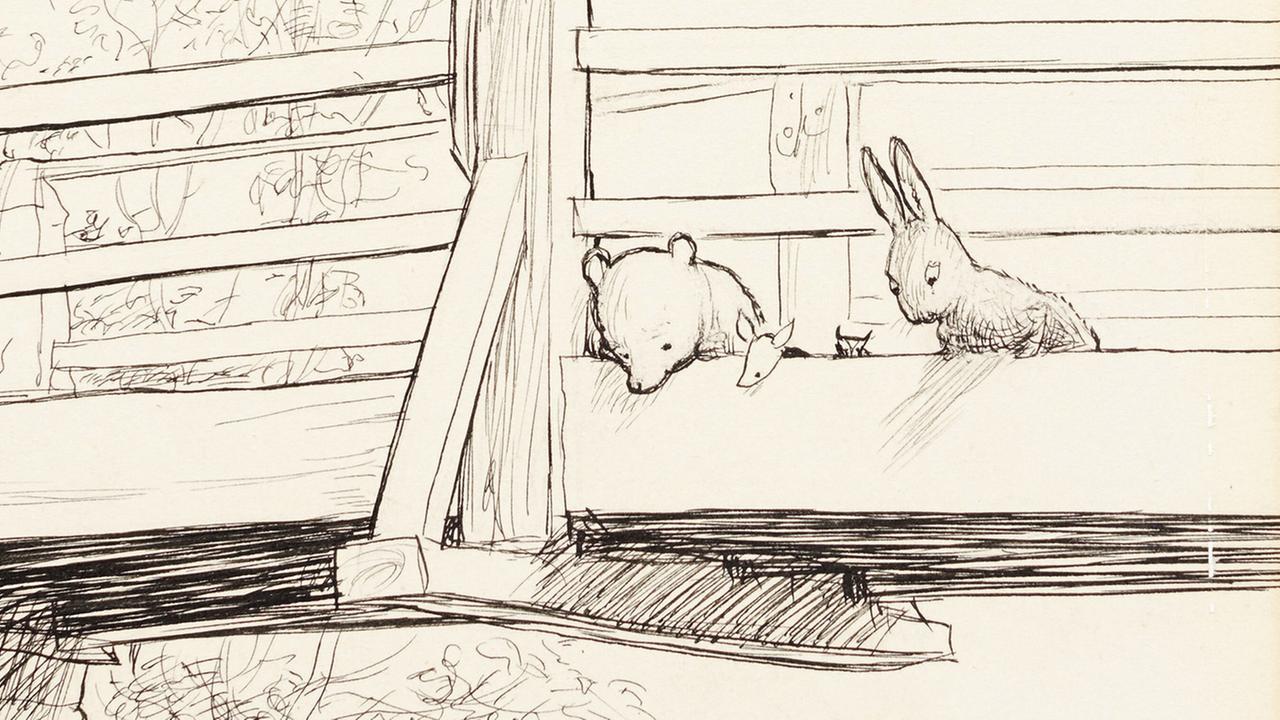
"For adult readers, the appeal is the absence of conflict and systemic violence," says O’Sullivan. "Milne created a space where people of very different temperaments can exist side-by-side. It is a portrait of a functioning, albeit eccentric, community that thrives not on competition, but on acceptance."
Global Reach and Linguistic Nuance
The success of Pooh is not confined to the English-speaking world. However, the translation of Milne’s work has proven to be a difficult task. The wit relies heavily on British linguistic quirks and wordplay.
For decades, many international editions failed to capture the subtle humor that made the books an adult favorite as well as a children’s classic. The 1987 translation by Harry Rowohlt for German-speaking audiences is often cited as the gold standard. Rowohlt managed to transpose the point-driven humor and the specific cadence of Milne’s prose, finally allowing non-English speakers to experience the "literary" side of the bear.
Furthermore, the Soviet adaptation Winnie Puch (directed by Fyodor Khitruk) offered a different, more minimalist take on the character. Despite the geopolitical tensions of the Cold War, the creators of the Soviet version and their Western counterparts eventually engaged in dialogue, proving that even in a divided world, the desire for a simple, friendly bear can bridge ideological divides.
Implications for Modern Society
As we move further into a digital, high-stress, and hyper-connected era, the relevance of the Hundred Acre Wood has arguably increased. The stories act as an antidote to the "hustle culture" that dominates contemporary life.
Why Pooh Matters Today:
- Acceptance of Imperfection: Pooh’s willingness to embrace his own shortcomings—and his friends’—teaches a vital lesson in self-compassion.
- The Importance of Community: Despite their "incompatibility," as Professor Kullmann puts it, the characters form a stable, loving unit. This serves as a model for modern social cohesion.
- Mindfulness: The characters often engage in "doing nothing," which in the context of the book, is a form of deep contentment and presence.
Conclusion: A Legacy Beyond the Page
While Walt Disney’s films brought the characters to a global mass audience, the source material remains the true fountain of wisdom. Winnie-the-Pooh sits alongside Alice in Wonderland and Peter Pan as a pillar of British literature, yet it feels more intimate than either.
One hundred years after that first book hit the shelves, Winnie-the-Pooh remains a testament to the idea that you do not need to be a giant to leave a massive footprint. By simply being "a bear of very little brain" who values friendship above all else, Pooh has secured his place in history—not as a hero, but as a friend to every reader who has ever felt that the world was just a little too fast, a little too loud, and in need of a bit more honey.


