


By Global Literary Correspondent
The announcement of the Nobel Prize in Literature is often a moment of quiet consensus, a time to canonize a voice that has long echoed through the corridors of global culture. This year, the Swedish Academy has chosen a figure who defies the traditional mold of the "authorial voice." Anne Carson, the 76-year-old Canadian poet, classicist, essayist, and performance artist, has been awarded the Nobel Prize in Literature—a recognition that celebrates a body of work defined not by the accumulation of certainties, but by the radical, liberating power of doubt.
To read Anne Carson is to enter a laboratory of thought. Her work does not merely exist on the page; it behaves like a living, breathing organism that shifts, breaks, and demands that the reader participate in its own creation. By blending the ancient with the ultra-modern, and the scholarly with the surreal, Carson has fundamentally altered the landscape of contemporary literature.
The Architecture of Uncertainty: Main Facts
At the heart of Carson’s work lies a profound skepticism toward the "finished" thought. In a recent interview with Norwegian novelist Linn Ullmann, Carson touched upon a seemingly minor philological detail regarding René Descartes’ foundational maxim, cogito, ergo sum ("I think, therefore I am"). Carson pointed out that in the original context, the statement is often truncated. "In reality," she noted, "it is Dubito, ergo cogito, ergo sum—’I doubt, therefore I think, therefore I am.’"
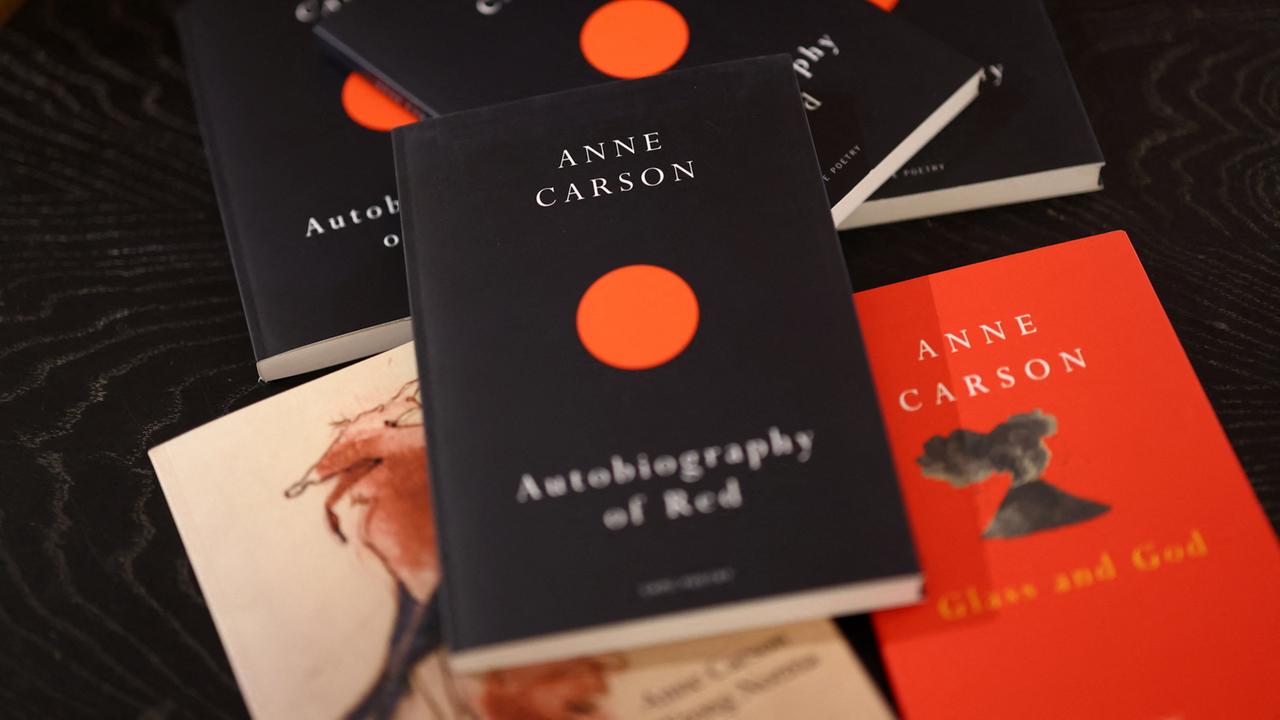
This is the bedrock of the Carsonian project. For the Nobel laureate, doubt is not a sign of weakness or intellectual failure; it is the essential engine of consciousness. If we do not doubt, we cannot think; if we cannot think, we cannot truly exist in the world as autonomous, questioning beings. This philosophy permeates her entire bibliography, from her dense, scholarly essays on Sappho to her genre-defying "novels in verse" like Autobiography of Red.
A Chronology of a Radical Mind
Carson’s path to the Nobel Prize was never linear. Born in Toronto in 1950, her early life was marked by a restlessness that would eventually become the hallmark of her intellectual style. Her academic career was characterized by a refusal to specialize in a single silo of thought; she flitted between classical studies, linguistics, and literature, absorbing the rhythms of the ancient world while critiquing the structures of modern life.
- The Early Years: Carson studied at St. Michael’s College in the University of Toronto, where she was initially discouraged from pursuing classics because of her gender. She left, returned, left again, and finally completed her doctorate, proving that her intellectual journey was dictated by personal discovery rather than institutional mandates.
- The Breakthrough: With the publication of Eros the Bittersweet (1986), Carson established herself as a formidable voice in the analysis of desire. She bridged the gap between the archaic Greek concept of glukupikron (bittersweet) and the contemporary psychological experience of longing.
- The Genre-Breaker: In 1998, she published Autobiography of Red, a novel in verse that reimagined the myth of Geryon and Herakles. By turning a mythological monster into a lonely, gay, modern teenager, she signaled a shift in how literature could handle the "classics."
- The Global Performer: Over the last two decades, Carson has become as much a performance artist as a writer. Her work has moved from the page to the stage, with collaborations and public readings that challenge the boundaries between author, text, and audience.
Supporting Data: The Anatomy of a Masterpiece
Carson’s work is supported by an almost obsessive attention to the "micro-narrative." While she is known for building vast, centuries-spanning arcs—linking the Greek poet Stesichoros to Michelangelo, or Marilyn Monroe to Helen of Troy—she is equally fixated on the smallest details.
In Autobiography of Red, she highlights a fleeting, seemingly insignificant moment in the myth of Herakles: the hero does not just kill the monster Geryon; he also kills Geryon’s small dog. For Carson, this act of unnecessary violence is where the story lives. She asks: Why the dog? It is in the pursuit of these granular, uncomfortable questions that Carson finds the "human" element of the ancient myth.
Her technical innovations are equally significant. She frequently breaks the physical structure of her books: lines bleed off the page, text is replaced by images, and narratives are abruptly severed. This is not mere stylistic flourish; it is a pedagogical tool designed to force the reader to confront the incompleteness of the text. As she once noted, the author’s duty is to pay attention to the "little things," because that is where the truth hides.
Official Responses and The "Punk-Philosopher" Persona
The literary community’s reaction to the Nobel announcement has been one of profound validation. The Swedish Academy’s citation highlighted her ability to "cross the boundaries of genre, time, and form."
Critics have long struggled to categorize her. She is frequently referred to as a "punk-philosopher" because she treats the solemnity of classical academia with a irreverent, razor-sharp wit. During a recent lecture in Berlin before a crowd of 700, she demonstrated this persona perfectly. She began a discourse on the creation of the universe by stating, "Before the galaxies were formed, I made a few notes," before launching into a performance that moved fluidly between the perspectives of a cloud, a pebble, and a confused divine entity.
Her influence extends deep into the theatrical world, where her translations of Sophocles, Euripides, and Aeschylus are not seen as dusty academic exercises, but as visceral, contemporary dramas. She strips the "classical" of its marble-white pedestal and presents it as something raw, bleeding, and intensely relatable.
The Implications: Why Carson Matters Now
Why does an author who focuses so intensely on 6th-century BC poets resonate so strongly in the year 2026? The answer lies in the nature of our current global condition. In an era of rampant misinformation, "fake news," and the demand for absolute certainty, Anne Carson offers an antidote.
1. The Politicization of Doubt
Carson’s work suggests that if we stop questioning our own assumptions, we become vulnerable to the manipulations of others. By teaching us to dwell in the "bittersweet" space of ambiguity, she encourages a form of intellectual resistance. She asks us to look at the "Lazarus" of our own lives—those parts of ourselves that have been dragged back into the light—and to wonder if we are truly ready to return.
2. The Deconstruction of the Hero
Through her "TV Men" series and her re-readings of Hektor and Antigone, Carson has dismantled the concept of the "Hero." She shows us that the great figures of history were, at their core, just as confused, frightened, and longing for connection as the modern person. This humanization of history is essential for a contemporary audience that is increasingly wary of traditional power structures and grand narratives.
3. The Future of Literacy
Finally, the Nobel recognition of Anne Carson signals a shift in what we value in literature. We are moving away from the era of the passive, omniscient narrator and into the era of the collaborative, experimental text. Carson proves that poetry is not a static object to be consumed, but a process to be experienced. Her success provides a roadmap for future writers who wish to ignore the artificial borders between prose, poetry, academic essay, and performance.
Conclusion: An Invitation to Think
Anne Carson’s Nobel Prize is not merely a lifetime achievement award; it is a challenge to the world. She has spent her life building a cathedral of questions, inviting us to walk through the doors and find our own way out. As she continues to write, teach, and perform, she reminds us that the most dangerous thing we can do is to be certain.
"I want to move people’s brains," she has said of her work. In an age of distraction, she invites us to slow down, to look at the smallest detail—the dog, the pebble, the missing word in a famous Latin quote—and to find the vast, terrifying, and beautiful world hidden within it. To read Anne Carson is to accept her invitation to doubt, and in that doubt, to finally, truly think.


