


The announcement of the Nobel Prize in Literature is more than just a cultural milestone; it is an economic earthquake that rattles the foundations of the global publishing industry. When the Swedish Academy declares its choice, the literary world reacts with a frenetic scramble to translate, print, and distribute works that, until hours earlier, may have been relegated to the quietest corners of independent bookstores.
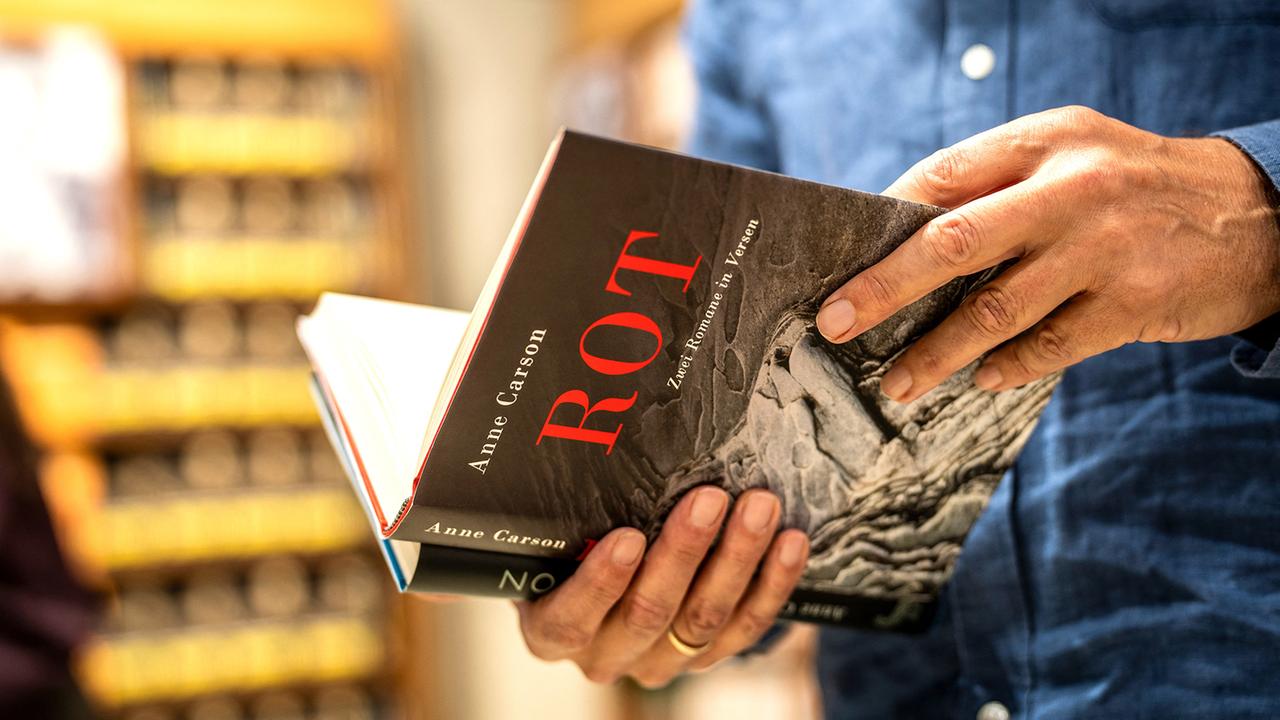
As the 2026 Nobel Prize for Literature was awarded to Canadian writer Anne Carson, the immediate reality for booksellers like Gibran Syed, floor manager for modern literature at Berlin’s prestigious Dussmann bookstore, was a logistical race against time. "If you are looking for Carson’s works right now, you had better be fluent in English," Syed noted, highlighting a common paradox: global acclaim often arrives faster than local supply chains can adapt.
The "Nobel Effect"—the sudden, explosive surge in interest and sales for a laureate’s bibliography—presents a unique set of challenges for publishers and retailers alike. While the honor serves as a supreme seal of quality, it also functions as a stress test for the mechanics of the book trade.
Chronology of a Literary Gold Rush
The timeline of the Nobel Effect is remarkably consistent and intensely compressed. It begins with the element of surprise. Because the Swedish Academy maintains a veil of absolute secrecy regarding its shortlist, publishers cannot prepare "just-in-case" print runs for the majority of candidates.
- The Announcement: The moment the laureate is named, digital and physical interest spikes. Internet search traffic for the author’s name skyrockets, and online retailers see a surge in pre-orders and "out of stock" notifications.
- The Procurement Scramble: Within hours, bookstore managers and national distributors begin checking warehouse inventories. As seen with the 2021 award for Abdulrazak Gurnah—who was relatively unknown in many European markets at the time—the immediate challenge is often the lack of translated editions.
- The Supply Chain Bottleneck: Small and medium-sized publishers, who often hold the rights to literary works, face the immediate pressure of massive, unexpected demand. Decisions on how many copies to reprint must be made under intense time pressure to avoid overstocking while maximizing the window of global attention.
- The Sustained Interest: Over the following weeks, the laureate’s backlist—not just their latest book—becomes the focus of literary discourse. As the prize date in December approaches, these books often transition into popular holiday gifts, sustaining the "Nobel Effect" into the new year.
Supporting Data: By the Numbers
The impact of the Nobel Prize is not merely anecdotal; it is quantifiable. Research conducted by the German market research firm Media Control, commissioned by RBB, provides a stark illustration of this phenomenon.
Following the 2025 award to Laszlo Krasznahorkai, sales figures for his works saw an extraordinary trajectory. In the four weeks following the announcement, his books sold nearly 400 times more frequently than they had in the twelve weeks prior. This surge was not limited to his most recent release; it encompassed his entire available bibliography.
Most significantly, the "Nobel Effect" possesses a "long tail." Even a year after the prize, Media Control noted that Krasznahorkai’s weekly sales remained 16 times higher than they were in the pre-award period. This data confirms that the Nobel Prize acts as a long-term catalyst for an author’s career, effectively cementing their status in the global canon and ensuring that their work remains in print for years to come.
The Burden of Success: Perspectives from Publishers
For publishers, the Nobel Prize is a "good problem to have," but one that requires immense operational agility. Andreas Rötzer of the German publishing house Matthes & Seitz, which holds the rights to four of Anne Carson’s titles, reflects on the logistical reality: "We are currently evaluating exactly how many copies to print and which specific titles to prioritize. It is a massive task for a smaller house to scale up this quickly."
The complexity of this task cannot be overstated. Unlike the Deutscher Buchpreis (German Book Prize), which focuses on a single, newly published work, the Nobel Prize celebrates a lifetime of achievement. This means publishers must manage the demand for a massive, diverse backlist.
Thedel von Wallmoden, founder of the Wallstein Verlag, recalls the experience of his author Herta Müller, who received the Nobel Prize in 2009. The award necessitated printing runs in the tens of thousands for titles that had previously been steady, niche sellers. For a publisher, this requires an immediate reallocation of resources, capital, and distribution capacity to meet a demand that was effectively non-existent the day before the announcement.
Implications: The Nuances of the Nobel Effect
While the prize is universally regarded as a career-defining honor, its impact is not uniform. Not all laureates experience the same level of market transformation.
The "Good Seal" vs. The "Unknown Factor"
Literature scholar Sandra Richter, director of the German Literature Archive in Marbach, notes that the prize functions as a "quality seal." For authors who were already established, such as Thomas Mann (1929), the Nobel Prize was a recognition of an existing global reputation rather than a sudden catalyst for fame. Conversely, for authors who were largely unknown in the West, the prize acts as a primary vehicle for international exposure.
Genre Constraints
The nature of the work itself plays a significant role. Gibran Syed notes that for an author like Anne Carson, who is celebrated for her profound work in poetry and essay-writing, the sales curve may look different than it would for a novelist. "Poetry and essays tend to reach a more specialized audience," Syed explains. "However, given Carson’s stature, we expect a very solid, sustained demand across her entire body of work."
The Temporal Limit
Despite the initial surge, the Nobel Effect is inherently finite. Professor Richter points out that the intensity of public interest typically wanes after one to two years. "The spotlight is designed to move," she notes. "The attention eventually shifts to the next laureate, and the market’s focus follows that cycle."
Conclusion: A Testament to Literary Vitality
The Nobel Prize in Literature continues to be the ultimate arbiter of literary relevance. While it presents a logistical challenge that can strain the capacities of independent bookstores and small publishers, the "Nobel Effect" is ultimately a positive indicator of the public’s appetite for serious literature.
As the literary world turns its eyes toward the award ceremony on December 10th, booksellers are busy curating their displays and preparing for the holiday rush. For authors like Anne Carson, the prize serves as both a culmination of a brilliant career and a new beginning—a chance to reach thousands of new readers who, driven by the prestige of the Nobel, are finally discovering the complexity and beauty of their life’s work. In the quiet, dusty corners of the world’s bookstores, the Nobel Effect ensures that the written word remains a vibrant, evolving, and highly sought-after commodity.


