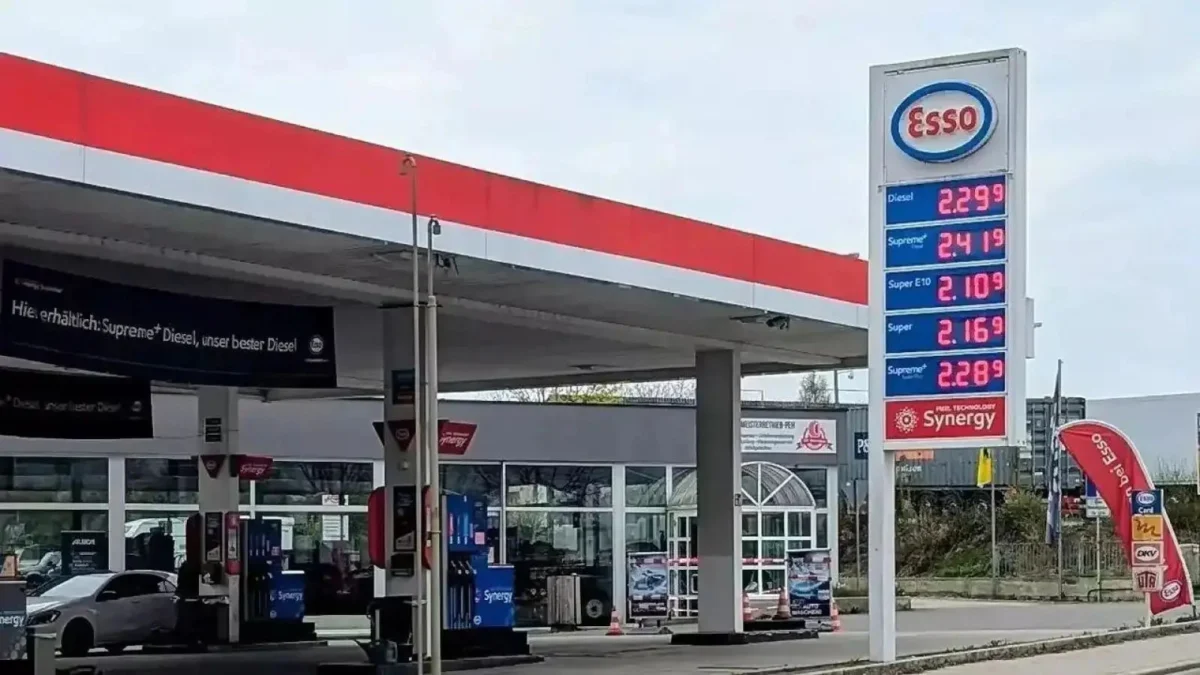
As the German government’s latest initiative to curb soaring fuel costs reaches its midway point, a striking disconnect has emerged between policy intent and public perception. While the state has slashed fuel taxes by nearly 17 cents per liter through the end of the year, a vast majority of drivers report that they feel no meaningful relief at the gas station.
The measure, intended to act as a financial buffer for households grappling with the high cost of living, appears to be failing the "smell test" of the average motorist. According to a recent representative study conducted by the polling institute Civey, seven out of ten drivers feel that refueling has not become noticeably cheaper since the policy took effect on October 1.
The Findings: A Failure of Perception
The survey, which polled 5,000 participants between October 10 and 19, 2026, reveals a stark reality: despite the state’s financial sacrifice, the "fuel rebate" is largely viewed as a phantom benefit. When asked if the tax reduction had made filling up their tanks tangibly cheaper, 69 percent of respondents answered with "No, absolutely not" or "Rather not."
Only a quarter (24 percent) of the participants reported feeling a noticeable relief in their wallets. A further 7 percent remained undecided. With a statistical margin of error of 2.6 percentage points, the results provide a clear snapshot of a public that feels the relief is either being absorbed by market forces or is simply too small to make a difference in their monthly budgets.
Chronology of the Policy
To understand the current frustration, one must look back at the rollout of the initiative. Following months of debate regarding the inflationary pressure of energy costs, the government implemented the tax cut on October 1, 2026. The goal was simple: reduce the tax burden on petroleum products by 17 cents per liter for a three-month duration, ending on December 31.
In the initial days of October, economists and policymakers watched the price boards at gas stations closely. By mid-October, research institutes like the Ifo Institute and the DIW (German Institute for Economic Research) began analyzing whether the tax cut was actually reaching the consumer or whether oil companies were pocketing the difference.
By October 15, the DIW concluded that only about two-thirds of the tax reduction had been passed on to consumers. The Ifo Institute, utilizing a slightly different methodology for the first 13 days of the month, estimated a slightly higher rate of pass-through. However, even by the most optimistic estimates, a portion of the state-funded relief is failing to materialize at the pump, leading to the perception of "missing" savings.
The Geography and Demographics of Discontent
The feeling of relief—or lack thereof—is not uniform across the German population. The Civey data highlights significant disparities based on where drivers live and how old they are.
The Urban-Rural Divide
In sparsely populated, rural regions, the frustration is most acute. Approximately 73 percent of motorists in these areas report no palpable relief. This is particularly significant, as rural residents are often more dependent on their vehicles for commuting and daily necessities, leaving them more exposed to fuel price fluctuations. In densely populated urban areas, where public transport infrastructure is more robust, 62 percent of respondents reported feeling no significant change.
Generational Perspectives
The generational divide is even more striking. Younger drivers (aged 18 to 29) are the only demographic group that reports a degree of optimism, with nearly 45 percent noting a "noticeable" price reduction. This could be attributed to different driving behaviors, lower annual mileage, or perhaps a lower baseline of expectations regarding fuel costs.
However, as the age of the respondent increases, the sense of relief drops precipitously. Among 30- to 39-year-olds, only 29 percent feel the tax cut. For the 40 to 64 age bracket—the core of the German workforce—this figure plummets to 18 percent. Among those over 64, only 19 percent feel the relief. This data suggests that those with the highest financial responsibility and the most frequent driving requirements are the least likely to feel that the state’s intervention has achieved its objective.
The Math Behind the "Meager" Relief
Beyond the optics, there is a hard mathematical reality that explains why many drivers might not "feel" the tax cut, even if they are technically paying less than they would have without it.
Data from the Federal Motor Transport Authority (Kraftfahrt-Bundesamt) indicates that the average German vehicle travels approximately 1,000 kilometers per month. Assuming an average fuel consumption of 7 to 8 liters per 100 kilometers, a vehicle requires roughly 70 to 80 liters of fuel per month.
When calculating the 17-cent rebate against this usage, the savings amount to roughly 12 to 14 euros per month. Over the three-month lifespan of the program, the total savings for the average combustion engine driver amount to approximately 32 to 36 euros.
For many households, 36 euros over a period of three months is statistically invisible. When compared to the broader inflationary pressures on food, electricity, and heating, this "rebate" appears as a drop in the ocean. While the tax cut is a multi-billion euro investment by the state, for the individual driver, it represents little more than the cost of one or two lunches. This discrepancy between the government’s massive fiscal expenditure and the individual’s trivial gain is the primary driver of public skepticism.
Implications: A Policy in Search of Impact
The findings raise significant questions about the efficacy of broad-based fuel subsidies. Critics have long argued that such measures are "scattergun" policies that do not account for the varying needs of citizens and do little to incentivize long-term changes in behavior or dependency on fossil fuels.
Economic Considerations
Economists point out that the pass-through of tax cuts is never 100 percent in a market with low competition at the retail level. If oil companies anticipate that demand will remain stable regardless of small price changes, they have little incentive to pass the full reduction to the consumer. Furthermore, the volatility of global crude oil prices often masks local tax interventions, making it difficult for the average person to discern whether a price drop is due to government policy or global market fluctuations.
Political Consequences
Politically, the results are a cautionary tale for the government. If a policy is expensive to implement but fails to be perceived as a benefit by the public, it becomes a political liability. The "missing" relief is being interpreted by many as proof of corporate greed or administrative incompetence, neither of which paints the government in a favorable light.
As the program approaches its December 31 expiration, the debate is likely to shift from "is it working?" to "was it worth it?" The government now faces the challenge of justifying the continuation of such measures in future budget cycles, especially as the data suggests that the public is not finding the relief sufficient to offset their broader economic anxieties.
Conclusion: The Perception Gap
In the final analysis, the German fuel tax experiment serves as a stark reminder that in the realm of economic policy, perception is just as vital as fiscal reality. Even if the government technically lowered the tax burden, the failure of that relief to manifest as a significant, tangible improvement in the daily lives of citizens has resulted in a widespread sense of disappointment.
For millions of Germans, the gas station remains a place of frustration rather than a venue of relief. As long as the savings remain in the range of a few euros per month—and are potentially being eroded by market dynamics—it is unlikely that the public perception will shift before the policy expires at the turn of the year. The government’s challenge remains: how to provide meaningful support to citizens without relying on measures that are ultimately too small to notice, yet too large to ignore.