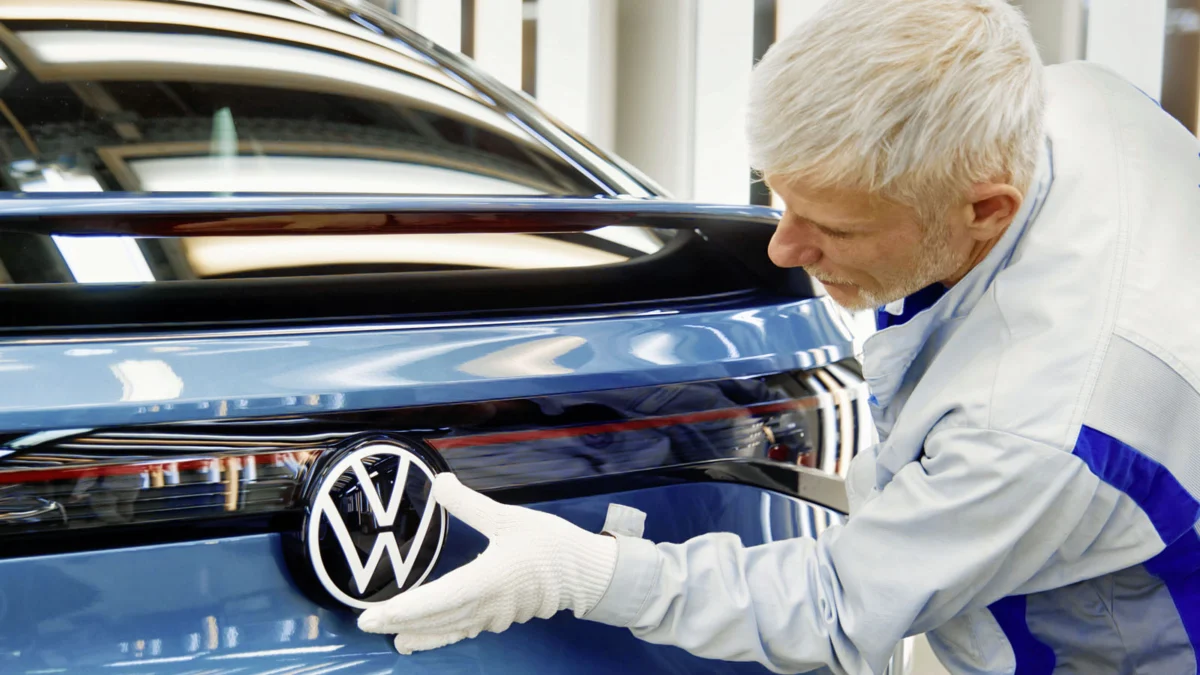
Volkswagen, the automotive titan that has long stood as the symbol of Germany’s industrial might, is currently navigating its most precarious period in recent history. Amidst a turbulent transition to electric mobility, fierce competition from agile Chinese rivals, and a cooling global demand for passenger vehicles, the group is bracing for a radical restructuring. According to recent internal documents obtained by the Süddeutsche Zeitung, the company is reportedly preparing a sweeping, global strategy to freeze wages for a significant portion of its 600,000-strong workforce until 2030.
This proposed austerity measure, which forms part of a broader "Group Target Picture" initiative, underscores the severity of the crisis facing CEO Oliver Blume. As the company fights to regain profitability, the prospect of a multi-year wage freeze has sent shockwaves through the global automotive sector, setting the stage for potentially historic confrontations between labor unions and management.
The Core Proposal: A Global "Zero-Round" Strategy
The internal documents, intended for the eyes of the company’s international top management, outline a new "realignment" of global collective bargaining. The core of this strategy is a directive to implement a "wage freeze until 2030." This terminology suggests a suspension of all salary increases, effectively imposing a "zero-round" policy across the group’s international subsidiaries.
The directive does not stop at base salaries. It encompasses a broad range of compensation components, including variable remuneration, special bonuses, and various fringe benefits. Furthermore, the documents hint at a wider strategy that includes targeted workforce reductions. While the exact scale of the cuts—and which specific brands, countries, or employee categories will bear the brunt—remains fluid, the directive signals a clear intention: every unit within the global group is expected to make an "appropriate" contribution to the company’s overarching savings goals.
It is important to note that this is not a blanket, uniform policy applied instantaneously. Rather, it serves as a set of strategic guidelines for future negotiations. Volkswagen is acutely aware that it cannot unilaterally impose such changes in many jurisdictions; the ultimate outcome on employee paychecks will remain subject to local labor laws, existing collective bargaining agreements, and the specific dynamics of regional labor markets.
Chronology of the Crisis: From "Zukunft Volkswagen" to Global Retrenchment
To understand the current proposal, one must look at the timeline of Volkswagen’s recent strategic pivots.
- December 2024: The company, alongside the IG Metall union and the works council, finalized the "Zukunft Volkswagen" (Future Volkswagen) package. This agreement was hailed as a critical step in stabilizing the German operations. It included a suspension of a 5.5% pay increase and the omission of a €600 one-time bonus, in exchange for a job security guarantee lasting until the end of 2030. This move alone was projected to relieve the company’s labor costs by roughly €1.5 billion annually.
- September 2024: The Volkswagen AG supervisory board approved the "Future Plan 2030." This ambitious roadmap envisions the elimination of approximately 50,000 positions globally—a quarter of which are management roles—and sets an aggressive target of an 8% to 10% operating margin by 2030.
- Late September 2024: Signaling its desperation to bypass rigid cost structures, Volkswagen took the unprecedented step of terminating nearly all of its existing collective bargaining agreements in Germany, effective December 31, 2026. This move effectively clears the deck for new, more restrictive negotiations.
- Current Phase: The disclosure of the "Group Target Picture" guidelines marks the transition from domestic cost-cutting to a comprehensive, cross-border austerity campaign.
Supporting Data: The Impact of Inflation and Cost-Cutting
The economic reality facing the average Volkswagen employee is stark. While a nominal wage freeze implies that the gross salary on a payslip remains constant, the impact of inflation cannot be ignored.
Economists estimate that a multi-year wage freeze could result in a significant loss of real purchasing power. If one assumes a modest inflation rate of 2% annually, the purchasing power of a static salary would erode by approximately 7.6% over a four-year period starting from 2026. If the period of stagnation is extended or if inflation spikes, that figure could quickly climb toward 10%.
The financial pressure on the group is equally significant. With an operating margin that has hovered around 3.8%—a level CEO Oliver Blume has publicly described as "more than critical"—the company argues that it lacks the liquidity to fund the massive investments required for the technological shift toward software-defined, electric vehicles. VW plans to invest roughly €135 billion between 2027 and 2031, a figure that requires drastic internal savings to achieve.
Official Responses and Stakeholder Positions
Volkswagen’s official stance remains one of controlled reticence. When approached for comment by the Süddeutsche Zeitung, the company declined to address "such speculations," stating that the upcoming bargaining rounds are the appropriate forum to discuss internal operational agreements. This calculated silence is typical of a corporation that is currently engaged in high-stakes brinkmanship.
The labor unions, particularly the IG Metall, have reacted with fierce opposition. The works council has explicitly described the board’s instructions for a global "zero-round" as "unrealistic" and has vowed to organize significant resistance. IG Metall chief Christiane Benner has previously characterized the management’s profitability targets as a "cuckoo-land" fantasy, arguing that the company’s salvation lies not in stripping employees of their livelihoods, but in better product strategy and management efficiency.
Legal experts point out that the company faces significant hurdles in enforcing these policies globally. In Germany, as in many other European nations, compensation is a matter of collective bargaining. A "directive" from headquarters cannot legally override a signed contract. Therefore, the company’s strategy appears to be one of "negotiated pressure," where the termination of existing contracts is used as leverage to force unions into accepting the new, lower-cost reality.
Implications: A New Era for Industrial Labor
The implications of Volkswagen’s proposed wage freeze extend far beyond the automotive sector.
1. The Erosion of the "German Model"
The "German Model" of social partnership, characterized by consensus between management and labor, is being pushed to its breaking point. If Volkswagen succeeds in forcing a long-term wage freeze, it may signal the end of an era where industrial stability was guaranteed by predictable, inflation-adjusted wage growth.
2. Global Competitiveness vs. Social Responsibility
Volkswagen is caught in a classic trap: the need to compete with Chinese manufacturers who benefit from lower labor costs and state-subsidized technological acceleration, versus the need to maintain a motivated, highly-skilled workforce in high-cost regions. The "Group Target Picture" reflects a prioritization of survival over the traditional commitment to employee welfare.
3. The Risk of Brain Drain and Industrial Unrest
By suppressing wages during a period of high inflation, Volkswagen risks a decline in employee morale, which could lead to a "brain drain" of top engineering talent to competitors. Furthermore, if the company pursues these cuts aggressively without clear, reciprocal guarantees of future growth and investment, it faces the risk of prolonged labor strikes that could further cripple production at a time when stability is most needed.
4. A Precedent for European Industry
Should the strategy prove successful, it is highly likely that other European industrial giants facing similar pressures will adopt similar tactics. The "zero-round" policy may become the new standard for multinational corporations struggling to balance the books in an era of global economic fragmentation.
Conclusion
As Volkswagen enters this new phase of "Group Target Picture" implementation, the company finds itself at a crossroads. The proposal to freeze wages until 2030 is a drastic, high-stakes gambit designed to preserve capital for the massive technological pivot required to survive in the coming decade. However, by alienating its workforce and challenging the foundations of collective bargaining, the company is playing a dangerous game.
The months ahead will reveal whether management can successfully navigate the complexities of international labor law and win the cooperation of its employees, or if the "zero-round" strategy will instead trigger a wave of industrial strife that could derail the very transformation it seeks to fund. For now, the Volkswagen workforce remains in a state of high uncertainty, waiting to see if their commitment to the brand will be met with a path to growth or a decade of stagnation.