In the high-stakes world of automotive luxury, timing is everything. Yet, Porsche recently found itself in the shadow of a rival’s disruptive spectacle. While Elon Musk once again dominated global headlines with the long-delayed, theatrical reveal of his latest Tesla Roadster, Porsche was attempting to steer the narrative toward a more nuanced, traditional vision of the future. The Zuffenhausen-based manufacturer unveiled its "Mission S" study—a vehicle designed not to signal a radical departure into the unknown, but to serve as a high-fidelity homage to the brand’s storied DNA.
For Porsche, the Mission S is more than a concept; it is a strategic manifesto. As the company grapples with cooling demand and a complex transition toward electrification, this design study serves as a bold statement on "technological openness"—a clear signal that while the world rushes toward battery-electric homogeneity, Porsche intends to keep the soul of the combustion engine alive in its most premium offerings.
Main Facts: A Study in Heritage
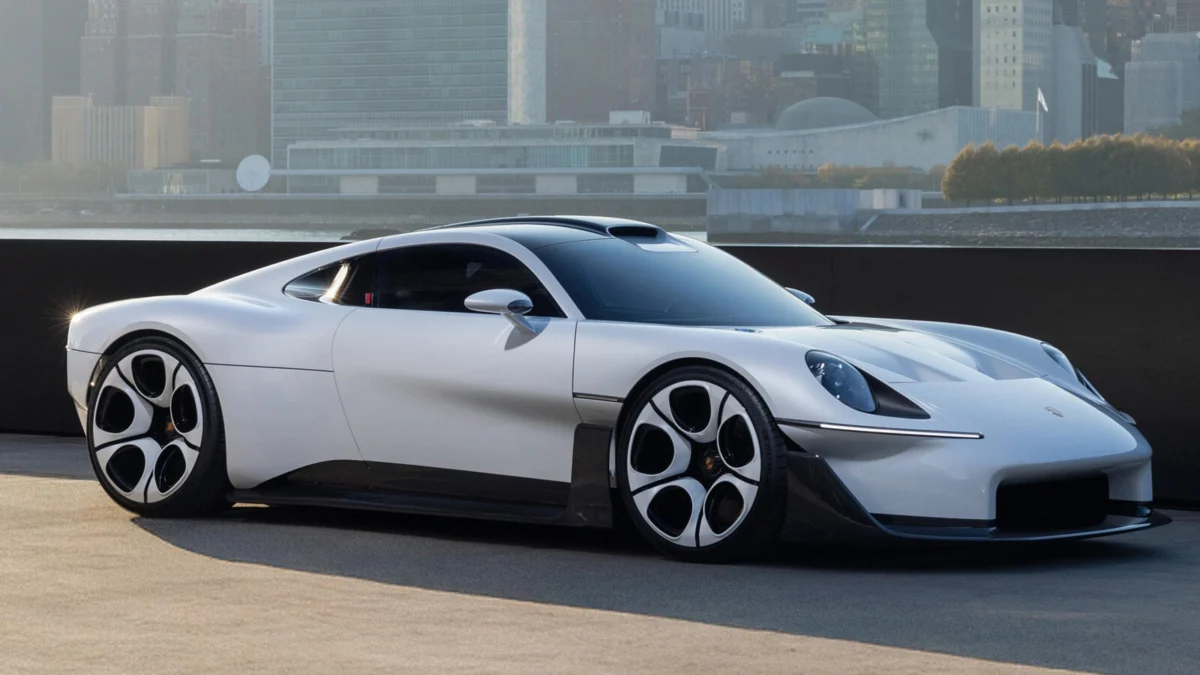
The Mission S is a masterclass in retrospective design. Unveiled at a pier in Queens, New York—the same symbolic location where the iconic 550 Spyder debuted in 1953—the concept car acts as a bridge between Porsche’s golden age and its uncertain future.
The exterior is a visual encyclopedia of the brand’s history. The front fascia retains the unmistakably aggressive yet elegant Porsche silhouette, while the rear features a continuous light bar and aesthetic flourishes reminiscent of the legendary 959 from the 1980s. Even the wheels, which boast a distinct "dial" design, are a direct nod to the 928 grand tourer that debuted in the late 1970s.
Inside, the philosophy of "less is more" takes center stage. In an era where vehicle interiors are increasingly defined by massive, distracting touchscreens, the Mission S pivots back to tactile instrumentation. The cockpit features nested analog-style circular gauges, with a prominent tachometer—the quintessential symbol of combustion performance—at the center. By eschewing a fixed center-stack display in favor of an integrated, MagSafe-compatible smartphone mount, Porsche is betting that its core demographic prefers a driver-centric experience over a digital lounge.

Chronology: A Path Defined by Persistence
The development of the Mission S follows a series of critical inflection points for the brand:
- 1953: The debut of the Porsche 550 Spyder in New York establishes the brand’s presence in the American market, setting the standard for the mid-engine sports car.
- Late 1970s/1980s: The release of the 928 and the 959 pushes the boundaries of performance and technology, creating the design motifs that the Mission S would later adopt as "classic" cues.
- Recent Months: Porsche CEO Michael Leiters makes a definitive declaration: the Porsche 911 will never transition to a fully battery-electric drivetrain, emphasizing the company’s commitment to internal combustion and synthetic fuels.
- The Present: Porsche announces its "Sportwagenschmiede 35" (Sports Car Forge 35) strategy, a pivot toward higher margins over sheer volume, coinciding with the reveal of the Mission S as a vision of the brand’s future portfolio.
Supporting Data: The Economic Reality
The backdrop for this reveal is undeniably challenging. Porsche’s financial health has shown signs of strain, with recent reports indicating a decline in sales and profitability. The "Sportwagenschmiede 35" strategy is the company’s corrective mechanism. The core logic is simple: sell fewer vehicles, but ensure that each unit is a high-margin masterpiece that commands a premium price.
Financial Chief Jochen Breckner has been candid about the outlook, warning that 2027 may prove to be even more difficult than the current year. Projections suggest that both sales volume and profit margins could dip below 2026 levels as the company retools its manufacturing processes and navigates a volatile global economy. The Mission S, therefore, is not merely a design exercise; it is the physical embodiment of a strategy intended to insulate the brand from the commoditization of the electric vehicle market. By doubling down on its heritage, Porsche hopes to reinforce the brand value that allows it to maintain the high pricing power necessary to survive the coming lean years.
Official Responses and Strategic Positioning
The messaging from Porsche’s leadership has been laser-focused. Michael Leiters, who took the helm with the mandate of modernizing the brand without losing its identity, has been clear: Porsche will not be a "me-too" EV manufacturer.
"We are defining the next era of Porsche by looking at what made us great in the first place," a company spokesperson suggested during the reveal. By opting for a traditional tachometer in the Mission S, the company is making a defiant choice in a digital-first industry. This decision is not an oversight of modern technology, but a deliberate rejection of the current trend toward "screen-ification."

The focus on the smartphone-as-interface is equally strategic. It acknowledges that digital ecosystems evolve faster than automotive hardware cycles. By allowing users to rely on their own devices for infotainment and navigation, Porsche avoids the trap of installing software that becomes obsolete in three years, thereby extending the perceived "timelessness" of the vehicle.
Implications: The Road Ahead
The arrival of the Mission S signals a bifurcated future for the automotive industry. On one side, we have the Tesla model: rapid, digital, mass-market, and entirely focused on electric disruption. On the other, we have the Porsche approach: evolutionary, tactile, exclusive, and fiercely protective of the internal combustion legacy.
1. The Survival of the Combustion Engine
The Mission S provides the strongest evidence yet that Porsche is playing the long game with synthetic fuels (e-fuels). By keeping the tachometer—and by extension, the combustion engine—at the heart of their vision, Porsche is signaling to its customer base that they have a future-proof path that does not rely solely on lithium-ion batteries.
2. Design as a Differentiator
In a market where electric drivetrains are becoming indistinguishable in terms of performance (acceleration, torque, charging speed), design has become the primary battleground. Porsche’s decision to mine its own history for the Mission S is a calculated move to offer "emotional value." For the Porsche buyer, the car is not just a tool; it is a piece of history. The Mission S reinforces the idea that a Porsche is an asset that appreciates in cultural value, unlike many of its tech-heavy competitors.
3. The Margin over Volume Mandate
The pivot to the "Sportwagenschmiede 35" strategy is a high-risk, high-reward move. By intentionally limiting production to protect brand exclusivity, Porsche is betting that the global luxury market will remain resilient despite macroeconomic headwinds. If the Mission S successfully transitions from a concept to a high-end production model, it could serve as the cornerstone of this new, leaner, and more profitable Porsche.

Conclusion
The Tesla Roadster may have won the day in the social media news cycle, but the Mission S is playing for the long term. It is a car that speaks to the purist, the collector, and the driver who finds joy in the mechanics of motion rather than the convenience of an autonomous app.
As Porsche enters one of the most turbulent periods in its history, the Mission S stands as a lighthouse. It reminds the market that while the future is inevitable, it does not have to be generic. By looking backward to go forward, Porsche is not retreating into the past—it is building a fortress around its brand identity, ensuring that no matter how much the industry changes, a Porsche will always feel like a Porsche.
Whether this strategy will be enough to offset the economic pressures of 2027 remains to be seen. However, for a brand that has survived over 90 years of industry upheaval, the bet on its own history is perhaps the most logical one it could make. The Mission S is more than a car; it is the reaffirmation that for Porsche, the heart of the machine is, and will always be, the driver.