Tesla’s financial results for the third quarter of 2026 paint a portrait of a company at a crossroads. As the electric vehicle (EV) giant faces a cooling market and intense global competition, CEO Elon Musk is betting the company’s future on high-stakes ventures into humanoid robotics and autonomous transport. However, the path to this "super-intelligent" future is currently paved with significant financial strain and operational hurdles.
Main Facts: A Sharp Decline in Profitability
In the third quarter of 2026, Tesla reported a significant contraction in its bottom line. According to US Generally Accepted Accounting Principles (GAAP), the net income attributable to common shareholders plummeted by approximately 43 percent year-over-year, falling to $787 million. While the company’s total revenue remained relatively stable at $28.05 billion—mirroring the figures from the same period in 2025—the underlying profitability metrics tell a more concerning story.
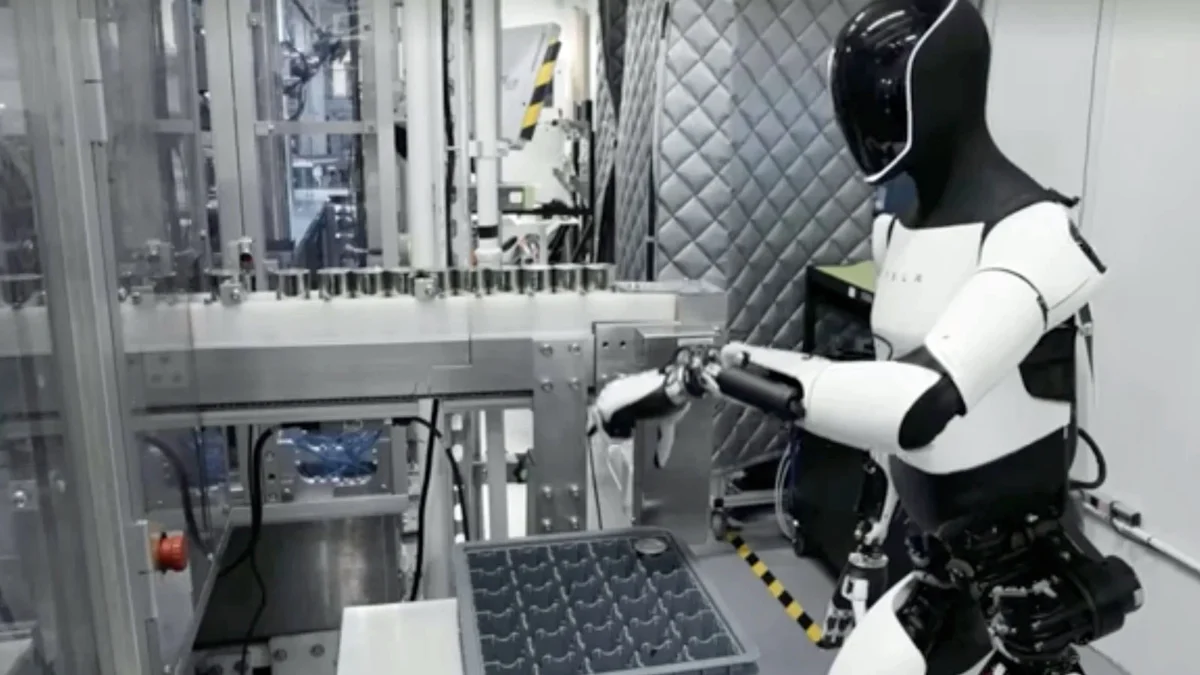
The core issue lies not in the gross margin, which actually saw a slight improvement from $5.05 billion to $5.49 billion. Rather, the culprit is a massive surge in operating expenses. Expenditures ballooned from $3.43 billion in the previous year to $4.78 billion. Research and Development (R&D) costs were the primary driver, nearly doubling to $2.76 billion. Tesla attributes these increased costs to the pursuit of "Super Intelligence," the development of the Optimus humanoid robot, and a substantial increase in stock-based compensation, which included Elon Musk’s contentious 2025 compensation package.
Consequently, Tesla’s operating profit cratered by 56 percent to $718 million, and the operating margin narrowed significantly from 5.8 percent to a thin 2.6 percent.
Chronology of the Quarter: The Road to Q3 2026
The third quarter of 2026 was defined by a shift in narrative from vehicle sales volume to long-term technological development.
- Early July 2026: Tesla begins scaling its "early" production phase of the Optimus robot at its Fremont facility, signaling a move toward serial manufacturing.
- Late August 2026: Internal reports suggest that while the Fremont line is being equipped for a nominal capacity of one million robots per year, actual output remains in the early, non-productive stages.
- September 3, 2026: Tesla officially integrates "Cybercabs"—vehicles devoid of steering wheels and pedals—into its active fleet in Austin, Texas.
- Mid-October 2026: Financial disclosures reveal the impact of the expiration of the $7,500 US federal EV tax credit, which had artificially bolstered sales numbers in the final months of 2025.
- Earnings Call (Late October 2026): Elon Musk pivots the conversation heavily toward robotics, acknowledging that reaching a production cadence of 20,000 units per week remains a long-term goal, likely at least a year away.
Supporting Data: The Financial Complexity
To understand Tesla’s true financial health, one must look beyond the GAAP headline numbers. The company’s balance sheet is heavily impacted by non-recurring items and valuation adjustments.
Valuation Distortions
Tesla’s bottom line was impacted by significant fluctuations in its asset portfolio. The company realized a $288 million pre-tax gain on its Bitcoin holdings and other digital assets. Conversely, its stake in SpaceX resulted in a $142 million unrealized loss—a stark contrast to the $1 billion gain that same holding provided in the second quarter.
When Tesla performs its own "non-GAAP" adjustment—stripping out these valuation effects and the $1.165 billion in stock-based compensation—the adjusted profit sits at $1.70 billion. By this metric, the year-over-year decline is a more manageable four percent. However, this figure is a management-provided perspective, not a standard accounting metric.
The Vehicle Business
Tesla delivered 486,532 vehicles, a two percent drop compared to the previous year. This decline is partially attributed to the "hangover" effect from the expiration of the $7,500 US federal EV tax credit in September 2025, which had triggered a massive pre-deadline buying surge. Automotive revenue dipped to $20.56 billion, exacerbated by a sharp decline in regulatory credit sales, which fell from $417 million to $113 million.
While Tesla maintains a strong liquidity position with $45.4 billion in cash and cash equivalents, the company’s capital allocation has shifted. Free cash flow has been cut in half over the past 12 months to $3.3 billion, while capital expenditures surged from $8.9 billion to $15.4 billion, reflecting the massive cash burn required to fund the "Optimus" and "Robotaxi" pipelines.
Official Responses and Strategic Outlook
During the recent earnings call, Elon Musk maintained a defiant optimism regarding the future of the company, specifically regarding the Optimus humanoid robot. Musk described the robot as potentially "the biggest product in the world," though he candidly admitted to the "tens of thousands of things that must go right" to achieve mass production.
Musk noted that the slowest bottleneck in the supply chain dictates the overall speed of the rollout. Design iterations for the robot’s hands and fingers remain an ongoing challenge, as do the fundamental requirements of long-term reliability and component durability. Despite the hype, Tesla has yet to provide concrete data regarding unit costs, external customer contracts, or the specific tasks these robots are performing in their own factories.
Implications: The High-Stakes Bet
The primary implication of Tesla’s current trajectory is that the company is transitioning from an automotive manufacturer into a robotics and artificial intelligence firm. The automotive business is currently serving as the "cash cow" that funds these R&D-heavy initiatives, yet that core business is showing signs of fatigue.
The Competitive Landscape
While Tesla dreams of its future, competitors are proving that humanoid utility is already achievable. BMW, for instance, has successfully utilized the Figure 02 robot at its Spartanburg plant to assist in the production of over 30,000 vehicles. Other firms, such as Agility Robotics and Schaeffler, are already deploying robots in logistics and manufacturing environments. Meanwhile, Chinese manufacturers like Unitree and UBTech are aggressive on price, threatening to commoditize the robotics market before Tesla has fully scaled its own offering.
Autonomous Transport (FSD and Robotaxis)
On the autonomous driving front, Tesla reports that its unmonitored miles have increased eightfold, totaling nearly two million miles. While the number of FSD (Full Self-Driving) subscriptions has reached 1.74 million, the system still requires active driver supervision. The recent expansion of FSD into nine European countries, including recent additions like Slovenia and the Czech Republic, is a positive regulatory milestone, yet the path to true, driverless autonomy remains legally and technically fraught.
Conclusion: The Road Ahead
Tesla is essentially attempting to "buy" its way into a new era. The current financial performance suggests that the company is betting its immediate profitability against the long-term potential of its robotic and AI endeavors. Investors are left waiting for "hard" evidence: consistent weekly production figures for Optimus, proof of a scalable business model for the Cybercab, and a demonstrable safety record that satisfies regulators.
Until these futuristic pillars become self-sustaining, Tesla must navigate a delicate balance: managing the decline of its traditional car sales while continuing to fund the most ambitious—and expensive—R&D projects in the tech industry. Whether this pivot leads to unprecedented market dominance or a period of prolonged financial erosion remains the defining question for the company’s leadership.