By Editorial Staff, MDR Kultur
The landscape of contemporary satire is shifting. As the line between political reality and absurdity grows increasingly thin, the role of the cabaret artist has transitioned from simple social commentator to a necessary guide through the madness of the modern age. It is against this backdrop of cultural turbulence that the 36th Leipziger Lachmesse—the premier festival for humor and satire in Eastern Germany—commences this week, bestowing its prestigious "Leipziger Löwenzahn" award upon the multi-talented pianist, songwriter, and comedian, Michael Krebs.
The festival, which runs from October 25 to November 1, 2026, serves as a vital platform for the cabaret scene, gathering icons and innovators alike. However, the spotlight remains firmly on Krebs, whose latest program, “Optimismus, stark reduziert” (Optimism, Heavily Discounted), captures the zeitgeist of a society grappling with a loss of old certainties.
The Core of the Recognition: Why Michael Krebs?
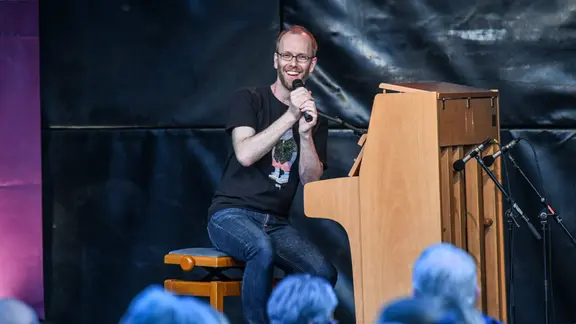
Michael Krebs is no stranger to the spotlight. A fixture of German television through formats such as Nightwash, Satiregipfel, the 3satfestival, and Pufpaffs Happy Hour, he has built a career on the intersection of high-brow musicality and sharp, self-deprecating humor. His resume is as diverse as his artistic approach: he has performed at the Wacken Open Air metal festival, collaborated with the Munich Chamber Philharmonic, and co-founded the satirical "Arbeitsgruppe Zukunft" alongside fellow heavyweights Marc-Uwe Kling and Julius Fischer.
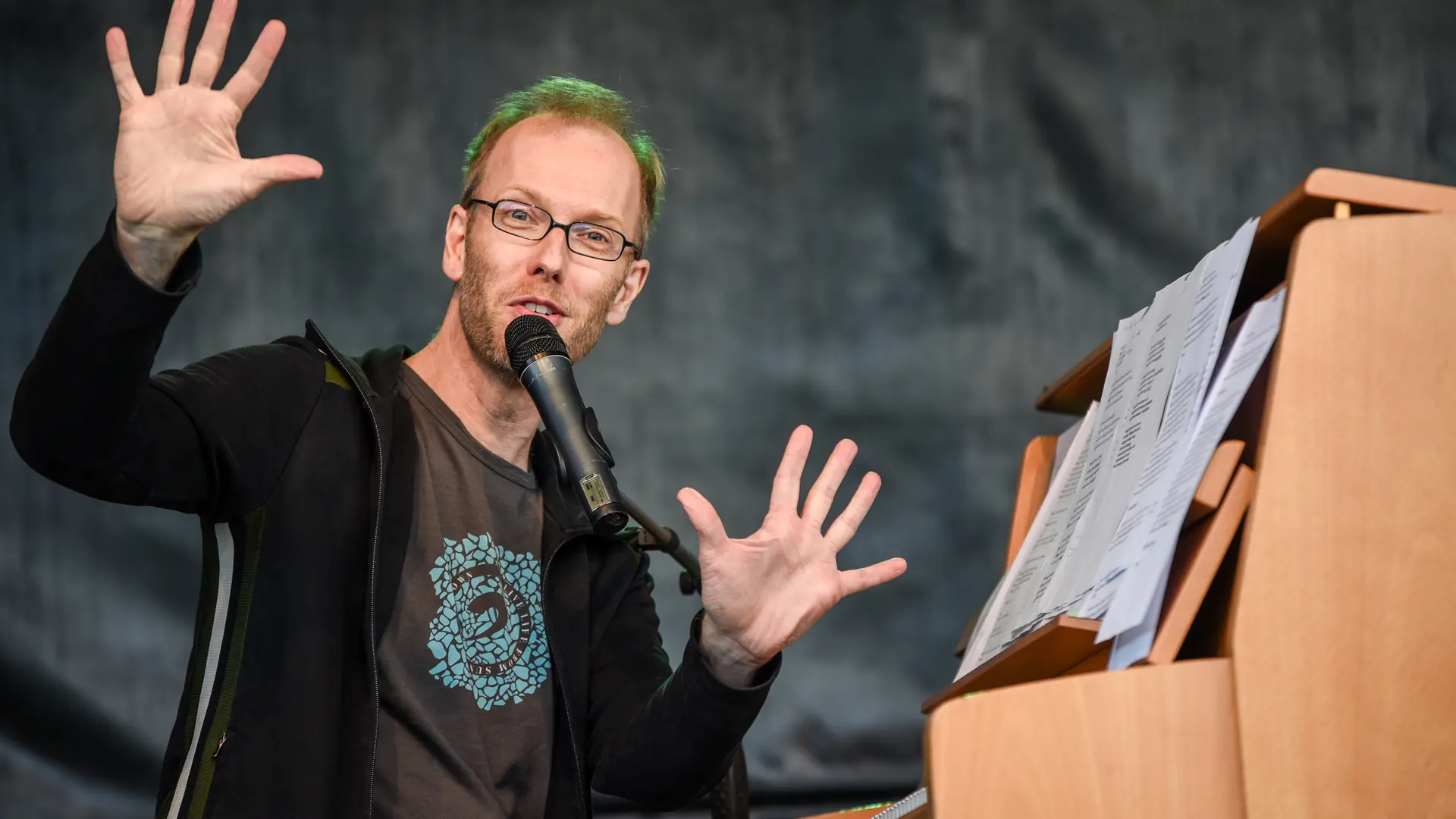
The "Leipziger Löwenzahn" committee recognized Krebs not merely for his technical prowess at the piano or his prolific songwriting, but for his ability to maintain a critical, humorous lens in an era where the public discourse feels increasingly fractured. His work challenges the audience to confront the absurdity of their own lives, using humor as a diagnostic tool rather than a mere anesthetic.
A Chronology of Artistic Evolution
To understand the weight of the current accolade, one must look at the trajectory of Krebs’ career. Emerging from the traditional cabaret circuit, he quickly distinguished himself by refusing to be boxed into a singular category.
- Early Career: Krebs began as a musician who found that the spaces between the notes offered a perfect stage for social critique. His early work was characterized by a dry, observational style that leaned heavily on the piano as an extension of his own voice.
- The Collaborative Phase: His involvement with the "Arbeitsgruppe Zukunft" allowed him to experiment with collective satire, bringing him into contact with the radical, absurdist humor of Marc-Uwe Kling. This phase sharpened his writing and pushed his performance style toward more narrative, long-form structures.
- The Current Era: With “Optimismus, stark reduziert,” Krebs has reached a point of maturity where he openly debates the nature of hope. By framing "optimism" as a commodity—one that is currently on sale because demand has plummeted—he effectively satirizes the pervasive nihilism of the 2020s.
Supporting Data: The State of the Industry
The Leipziger Lachmesse remains a barometer for the health of the German cabaret scene. With over 150 events and performances, the festival highlights a critical question: Can theater still influence political discourse in the age of digital echo chambers?
According to festival organizers, the 2026 program features a mix of traditional political satire and experimental performance art. The lineup includes legends such as Gardi Hutter and Wladimir Kaminer, alongside contemporary voices like Micky Beisenherz and Fee Badenius. This blend is intentional. It represents a bridge between the historical tradition of East German cabaret—which often relied on coded language to bypass state censorship—and the current necessity to navigate the "post-truth" landscape of social media.
Data from the industry indicates that while ticket sales for live cabaret have remained resilient, the content of the performances has become significantly more polarized. Artists like Krebs are bucking this trend by refusing to offer "comforting" political confirmation. Instead, they demand that the audience engage with complexity, a task that remains difficult in a media environment that rewards short, provocative soundbites.
Implications: The Stage as a Sanctuary of Truth
In an exclusive interview with MDR KULTUR, Michael Krebs offered profound insights into the psychological state of the performer today. He confessed that for years, he used the piano as a literal and metaphorical barrier between himself and the audience. The piano was his armor.
"The stage is a place of freedom," Krebs noted. "But it is a fragile freedom."
His concern, however, extends beyond the stage. He expressed a tangible worry about the current political climate, particularly in states like Saxony-Anhalt, where he questioned whether future artists might be denied the stage due to their political stance. "If I were living in certain regions, I would genuinely fear for the future of my craft," he remarked, noting the rising pressure on cultural institutions to adhere to specific, often narrow, political agendas.

Challenging the "One Cannot Say Anything Anymore" Narrative
One of the most frequent refrains in modern discourse is the claim that "one cannot say anything anymore." Krebs dismisses this as a simplistic deflection. For him, the problem isn’t the restriction of speech, but the reaction to it.
"Humans are consumers," he argues. "They want their worldview confirmed. When they get that, they feel good. But the unintended consequence is that they become narrower in their thinking."
Krebs uses his shows to highlight the contradictions of everyday life—such as the parent who teaches a child not to lie, only to force the child to lie for them when a stranger knocks at the door. By exposing these small, personal hypocrisies, he invites the audience to examine their own moral inconsistencies, thereby creating a space for genuine discussion that social media, by its very architecture, prohibits.
Official Responses and Festival Outlook
The opening of the 36th Lachmesse, marked by the awarding of the Löwenzahn, sets a tone of intellectual rigor mixed with irreverent joy. The festival organizers emphasized that the choice of Krebs was unanimous. "He represents the best of what we do," a festival representative stated. "He is technically brilliant, deeply human, and utterly fearless."
As the festival moves into its week-long run, attendees can expect performances that push the boundaries of what is acceptable. The schedule includes a diverse array of events, ranging from the linguistic gymnastics of the "Sächsische Mundartpflege" by Tom Pauls to the biting political analysis of Max Uthoff.
A Final Reflection on "Stark Reduziert"
The title of Krebs’ winning show, “Optimismus, stark reduziert,” is more than a punchline. It is a diagnosis. If, as he suggests, optimism is currently "on sale" in the aisles of our collective lives, it is perhaps because we are currently in a period of intense inventory-taking. We are checking what remains of our democracy, our discourse, and our empathy.
Michael Krebs, through his music and his wit, is not trying to sell us a new, shiny optimism. He is asking us to look at the discounted, slightly damaged version of hope we have left and decide whether it is worth keeping. For the duration of the Leipziger Lachmesse, the answer seems to be a resounding yes.
Festival Highlights at a Glance
- Dates: October 25 – November 1, 2026.
- Key Performers: Gardi Hutter, Michael Vogel, Wladimir Kaminer, Jürgen Becker, Max Uthoff, Simone Solga, Katrin Hart, Chin Meyer, Horst Evers, Micky Beisenherz, Ill-Young Kim, Florian Wagner, and Fee Badenius.
- Closing Gala: Featuring the legendary Irmgard Knef (Ulrich Michael Heissig), guiding the audience through the final evening of celebration.
For those interested in the full program, the festival’s official website provides a comprehensive guide to the performances, workshops, and discussions that define this year’s installment of the Leipziger Lachmesse. In a world that often feels like it is running out of reasons to laugh, the festival stands as a testament to the enduring power of the stage to clarify, provoke, and, most importantly, provide a space for the truth.