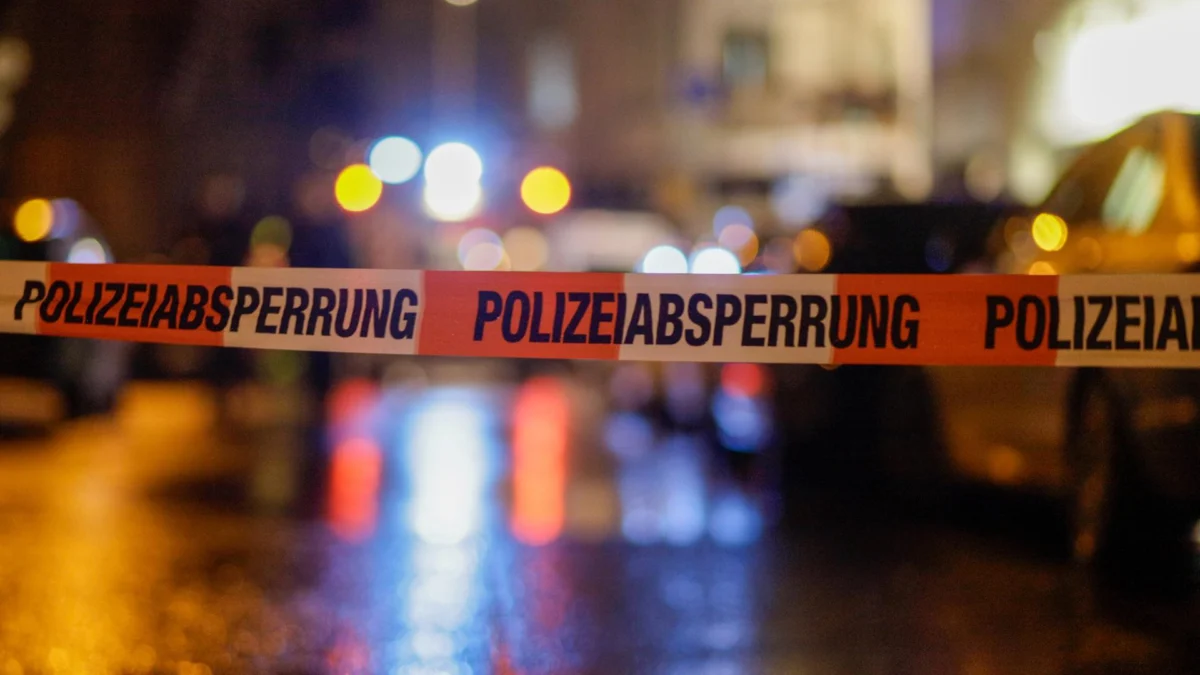
OBERURSEL, GERMANY — What began as a routine emergency response to aid an injured individual on a public street in Oberursel, Hochtaunus, transformed into a high-stakes standoff late Friday evening. A 48-year-old man, found in a state of severe intoxication and visible physical distress, turned his aggression toward the very responders who arrived to provide life-saving care. The incident has once again ignited a national conversation regarding the safety of emergency personnel in the field.
The Incident: From Compassion to Confrontation
The situation unfolded on a quiet street in the suburban town of Oberursel. Local residents, noticing a man lying helplessly on the pavement, exhibited civic duty by calling emergency services. The individual appeared to be both injured and suffering from extreme alcohol intoxication.
When medical personnel arrived at the scene, their primary objective was to assess the man’s condition and provide necessary medical stabilization. However, as the responders approached, the atmosphere shifted dramatically. Rather than accepting assistance, the 48-year-old individual reached into his clothing and brandished a weapon that, at first glance, appeared to be a standard firearm. He proceeded to aim the object toward the sky, effectively creating a perimeter of fear around the medical team.
The responders, prioritizing their own safety and the safety of the public, retreated to a secure distance and immediately alerted law enforcement. This interruption of medical care turned a welfare check into a potential crime scene.
Chronology of the Event
The timeline of the evening demonstrates the rapid volatility often faced by first responders:
- Late Evening: Concerned passersby discover the man lying on the ground, seemingly incapacitated.
- Emergency Call: Residents place a distress call to emergency services, describing a man who is both injured and intoxicated.
- Arrival of EMS: Paramedics and medical personnel arrive on the scene to assist the individual.
- The Confrontation: The suspect produces a firearm-like object and directs it in a threatening manner, forcing a halt to medical aid.
- Police Deployment: Armed officers arrive to contain the scene and manage the suspect.
- De-escalation: Through tactical negotiation, officers successfully convince the suspect to relinquish his weapon.
- Medical Intervention: The weapon is identified as a pepper-spray pistol; the suspect is taken into custody without further physical struggle.
- Aftermath: A breathalyzer test confirms a blood-alcohol content of 2.69 per mille. The man is subsequently transferred to a psychiatric facility for evaluation.
Supporting Data and Forensic Details
The subsequent police investigation revealed a high level of impairment. A breath-alcohol analysis conducted by authorities shortly after the suspect’s arrest yielded a reading of 2.69 per mille. In medical and legal terms, this level of alcohol concentration is considered severe, often leading to significant impairment of motor skills, cognitive function, and emotional regulation.

The weapon recovered from the scene was a "pepper-spray pistol"—a device designed for animal defense that mimics the appearance of a lethal firearm. While these devices are legal in many jurisdictions for self-defense, their use against emergency responders carries significant legal consequences. The threat posed by such a device is not merely the potential for physical harm from the irritant, but the psychological impact on responders who must make split-second decisions regarding whether a threat is lethal or non-lethal.
Official Responses and Legal Implications
The police department of the Hochtaunus district issued a formal statement on Saturday morning, confirming that an investigation into the incident has been opened. The primary charge against the 48-year-old is that of "threat" (Bedrohung), a serious offense under German penal law.
"Emergency personnel are there to save lives, not to be treated as targets," a spokesperson for the local police department remarked. "The presence of a weapon, regardless of its ultimate capability, creates an unacceptable risk to those who have committed their lives to public service."
Given the suspect’s erratic behavior and the severity of his intoxication, the responding officers determined that a traditional holding cell was not the appropriate environment for his immediate care. He was transferred to a psychiatric clinic, where he is currently undergoing professional assessment. This measure serves two purposes: ensuring the suspect receives medical stabilization for his alcohol abuse and providing a mental health evaluation to determine if further underlying conditions contributed to his violent outburst.
The Broader Implications for Emergency Services
This incident in Oberursel is not an isolated event; it is part of a growing trend across Germany that has seen an increase in verbal and physical assaults against police, firefighters, and paramedics. For years, labor unions representing these sectors have campaigned for better protection and stricter penalties for those who obstruct or threaten emergency teams.
The Psychological Toll on Responders
The psychological impact of being threatened while trying to perform one’s duty cannot be overstated. Paramedics often operate in high-stress, unpredictable environments. When the subject of their care turns into a source of danger, the professional "safety bubble" required to function effectively is shattered. This leads to increased rates of burnout, post-traumatic stress disorder (PTSD), and a higher turnover rate within the profession.

The "Weaponized" Misunderstanding
A recurring issue highlighted by this case is the visual ambiguity of non-lethal defense weapons. To a police officer arriving at a scene, a pepper-spray pistol is indistinguishable from a lethal handgun at a distance or in low-light conditions. This creates a "lethal force dilemma," where officers may be forced to draw their own weapons to neutralize what they perceive to be an imminent, deadly threat. The fact that the suspect in Oberursel chose to comply after negotiations is viewed by local authorities as a "best-case scenario," but they emphasize that the situation could have easily resulted in a fatal police shooting.
Policy and Future Prevention
Lawmakers are frequently urged to address the ease with which individuals can obtain devices that resemble lethal weapons. While the law allows for self-defense, the misuse of these items in public spaces—especially when the user is heavily intoxicated—poses a significant challenge to public order.
Discussions are currently ongoing regarding:
- Public Awareness Campaigns: Educating the public on the consequences of threatening emergency workers.
- Increased Protective Gear: Evaluating whether paramedics should carry body cameras or other protective measures during nighttime calls.
- Enhanced Mental Health Outreach: Strengthening the link between emergency response teams and psychiatric crisis intervention units to better handle individuals suffering from acute substance-induced mental health crises.
Conclusion
The residents of Oberursel were fortunate that the events of Friday night did not result in bloodshed. The quick thinking of the rescue workers in retreating, combined with the professional de-escalation tactics of the arriving police officers, prevented a tragedy.
However, the incident remains a stark reminder of the vulnerability of those who operate on the front lines of public safety. As the investigation into the 48-year-old continues, the community is left to contemplate how to better protect the people who, at a moment’s notice, are tasked with stepping into the middle of someone else’s worst night. Whether through legislative reform or improved crisis response training, the mandate remains clear: those who provide aid must be allowed to do so without the fear of being held at gunpoint.