The highly anticipated launch of the iPhone Duo, Apple’s maiden foray into the foldable smartphone market, was meant to be a technological watershed moment. For years, the industry waited for the Cupertino giant to perfect the form factor that its competitors have explored for half a decade. However, barely days into its retail availability, the device is already embroiled in a controversy that threatens to overshadow its engineering prowess. Early reports of structural failure, dust ingress, and "Crackgate" allegations have left early adopters and industry analysts questioning whether the premium price tag translates into premium durability.
The Reality Check: Dust and Structural Integrity
At the heart of the iPhone Duo’s marketing campaign was its IP68 certification—a standard that promises complete protection against dust and prolonged immersion in water. For the foldable category, this was a bold claim; historically, the "hinge gap" has been the Achilles’ heel of foldable technology, allowing debris to compromise the mechanical movement and the delicate inner display.
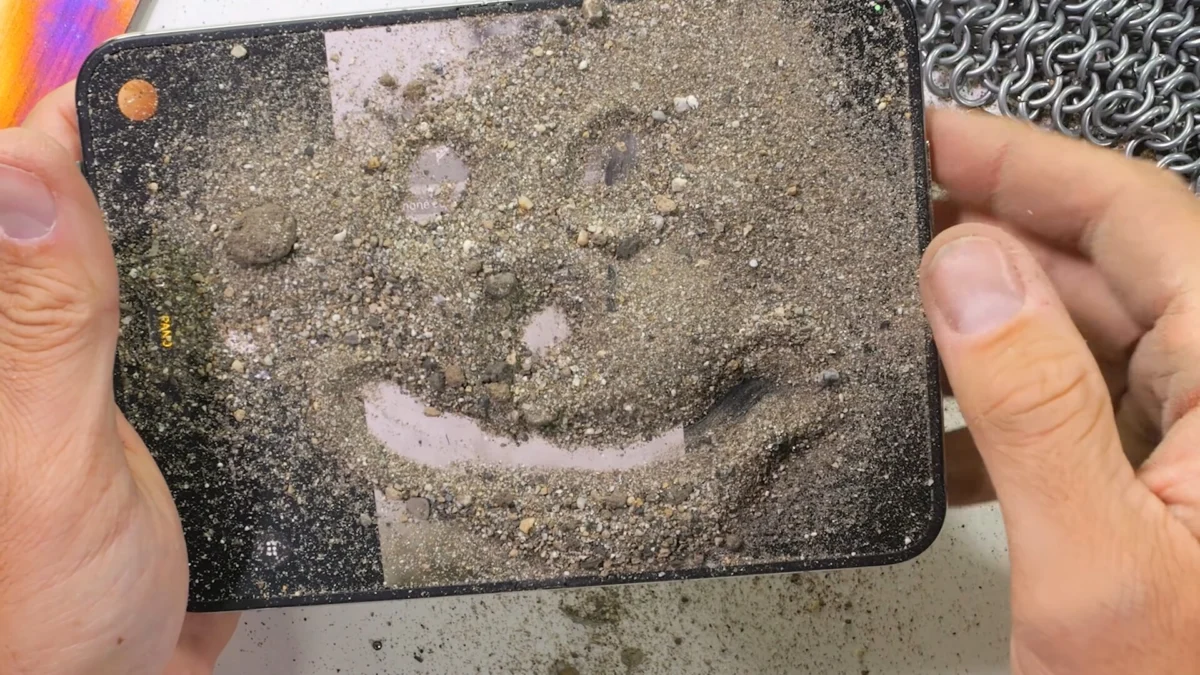
However, the empirical evidence provided by independent testing—most notably by the tech durability channel JerryRigEverything—paints a starkly different picture. During a controlled stress test, the iPhone Duo was exposed to a moderate amount of loose dirt and particulate matter. Despite the IP68 rating, the device failed to maintain its operational integrity. The fine dust effectively acted as an abrasive, finding its way into the hinge mechanism and preventing the device from folding completely flush. This not only challenges the efficacy of Apple’s dust-sealing gaskets but raises questions about the long-term viability of the device in real-world environments like beaches, workshops, or even daily pockets prone to lint accumulation.
The "Crackgate" Phenomenon: A Chronology of Failure
The launch week, which began with excitement, quickly turned into a PR crisis. Reports began surfacing on platforms like MacRumors and various social media channels, documenting instances where the internal 7.6-inch foldable display suffered catastrophic failure along the crease—the exact point of maximum mechanical stress.
The Timeline of Concern:
- Day 0 (Launch Day): The iPhone Duo arrives in the hands of global pre-order customers. Initial reactions are overwhelmingly positive regarding the industrial design and software fluidity.
- Day 1: The first reports of "dead pixels" along the spine of the device appear on enthusiast forums.
- Day 2: Influencers and reviewers release long-form stress tests. The "JerryRigEverything" test video goes viral, showing the hinge seizing up under dust exposure.
- Day 3: The term "Crackgate" begins trending. Users share photos of visible fractures appearing across the center of their inner displays, often after only a few dozen opening and closing cycles.
- Day 4-Present: Apple support channels report an influx of inquiries regarding display anomalies. While Apple has yet to issue a formal recall, the frequency of these reports suggests a pattern rather than an isolated manufacturing defect.
Whether these failures are due to a design flaw in the hinge tension or a sensitivity in the ultra-thin glass (UTG) layer remains to be determined. At this stage, experts suggest that while many reports may be genuine hardware failures, some could potentially be attributed to the "learning curve" of handling a foldable device, though this defense is wearing thin among frustrated consumers who paid thousands for the hardware.
Comparative Durability: Outer vs. Inner
The iPhone Duo features a dual-screen setup: a robust 5.4-inch outer display and a delicate 7.6-inch inner foldable screen. In scratch tests, the outer display performs as one would expect from a modern iPhone, showing resilience against everyday objects and only succumbing to deeper, permanent scratches at Level 7 on the Mohs hardness scale.
The inner display, however, is a different animal. To protect the OLED panel during the folding process, Apple has applied a proprietary screen protector. While this layer prevents deep gouges from debris, it is exceptionally soft. Fingernails can easily leave indentations in the surface. While these marks are largely invisible when the screen is illuminated, they serve as a stark reminder of the fragile nature of current foldable technology. Apple has indicated that the protective film can be removed, but doing so voids the warranty and leaves the display exposed to the harsh realities of daily use.
The Economic Burden: The High Cost of Fragility
Perhaps the most contentious aspect of the iPhone Duo’s launch is the "hidden" cost of ownership. If the device fails, the financial impact on the user is staggering.

According to the official Apple service fee schedule, the replacement of the internal display is priced at an eye-watering €1,149. Even more alarming is the scenario where dust ingress leads to hinge failure. Because Apple does not offer component-level repairs for the hinge, the entire device must be replaced, resulting in a staggering repair cost of €1,719.
These figures place the iPhone Duo in a precarious position. For many, the cost of a potential repair exceeds the cost of a brand-new flagship smartphone from any other category. This has led to a surge in the adoption of AppleCare+. While an additional €20.99 per month may seem like a high recurring cost, it effectively acts as "damage insurance." Given the current failure rates and the extreme repair costs, analysts are suggesting that for the iPhone Duo, AppleCare+ is not an optional add-on, but a mandatory necessity for anyone who intends to own the device for longer than a few months.
Implications for the Foldable Market
The "Crackgate" situation forces the industry to confront a difficult reality: the foldable form factor is still in its infancy, regardless of the brand name attached to it. When Apple, a company known for its meticulous quality control and supply chain dominance, struggles with the fundamental physics of a folding hinge, it suggests that the technology itself has not yet reached the maturity required for mainstream mass-market adoption.
The implications are twofold:
- Technological Stagnation: If manufacturers cannot guarantee structural integrity beyond a few thousand cycles, the push for "mainstream foldables" may stall. Consumers who were "on the fence" are likely to revert to traditional, slab-style devices, which offer superior durability and lower total cost of ownership.
- Regulatory Scrutiny: As repair costs reach nearly 70% of the original purchase price, consumer advocacy groups are likely to increase pressure on Apple to provide more sustainable, repairable solutions. The "replace, don’t repair" policy for hinge issues is increasingly out of step with global trends favoring the "Right to Repair."
Looking Ahead: The Verdict
The coming weeks will be crucial for the future of the iPhone Duo. As more devices enter the wild, Apple will have to address the failure rate with more than just silence. Whether this is a hardware manufacturing defect that can be corrected in subsequent production batches, or a fundamental flaw in the device’s architectural design, remains to be seen.
For now, the iPhone Duo stands as a beautiful, ambitious, and incredibly fragile piece of engineering. It is a device that demands care, patience, and a very deep wallet. For the early adopters, it is a statement piece. For the average consumer, however, the current verdict is clear: wait for the second iteration. The technology is undeniably impressive, but until the "Crackgate" concerns are resolved, the risks—both functional and financial—far outweigh the novelty of the folding screen.
Apple has built a reputation on the concept of "it just works." With the iPhone Duo, the company faces its greatest challenge yet: proving that its latest innovation works not just in the sterile environment of a laboratory, but in the unpredictable, dusty, and accident-prone world of its users. Until then, the foldable dream remains under a cloud of uncertainty.