The landscape of mobile gaming is undergoing a seismic shift. For years, the dream of playing high-fidelity, AAA PC titles on a smartphone or tablet was tethered to the limitations of cloud streaming services like GeForce Now or the tedious workarounds of emulators. However, a new software solution named DroidDeck is effectively bridging the gap between mobile hardware and the expansive library of PC gaming, offering a "Steam Deck-like" experience without requiring users to wipe their devices or install custom operating systems.
By leveraging sophisticated compatibility layers such as Valve’s Proton and the FEX emulator, DroidDeck allows Android users to run Windows-based Steam games natively on Snapdragon-powered devices. This development marks a significant milestone in the convergence of mobile and desktop gaming architectures.
The Mechanics: How DroidDeck Functions
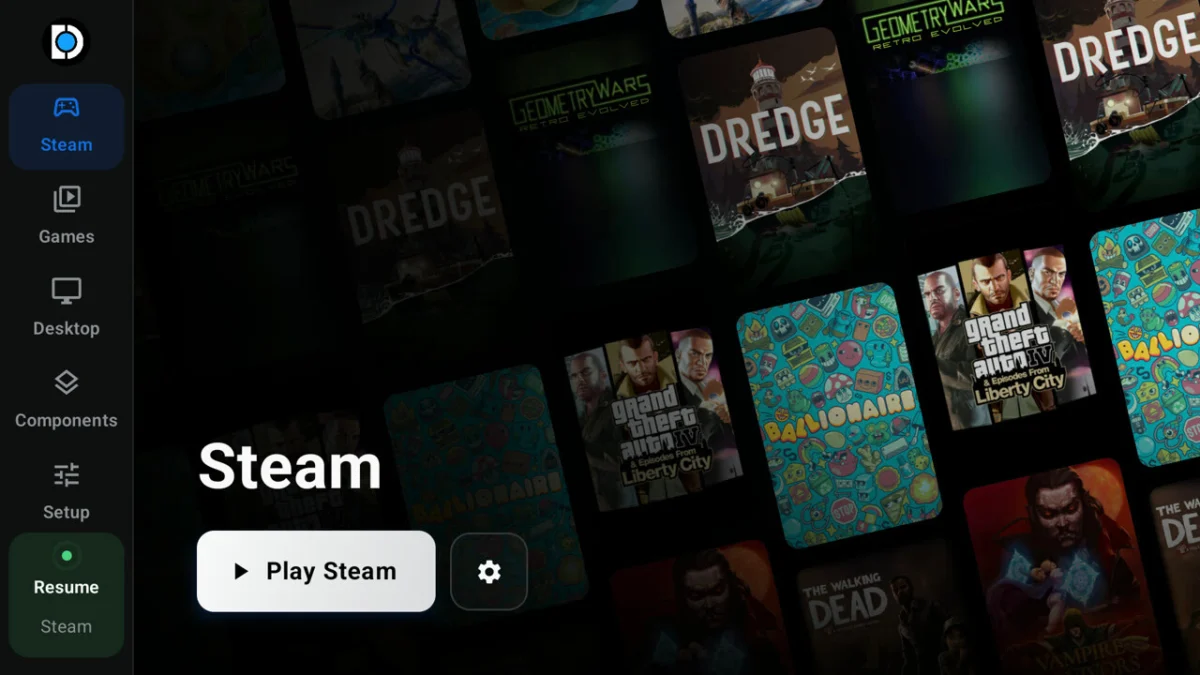
At its core, DroidDeck is an application that functions as a sophisticated bridge. Unlike alternative solutions such as GameNative or GameHub, which rely on custom-built interfaces to manage and launch games, DroidDeck integrates Valve’s official Steam client directly into the Android environment.
The secret behind its success lies in the synergy of two powerful technologies:
- Proton: Developed by Valve, Proton acts as a compatibility layer that translates Windows-based API calls into commands that Linux can understand. Since Android is built on a Linux kernel, this layer is essential for running the majority of the Steam library.
- FEX (FEX-Emu): Because most PC games are written for x86 architecture (Intel/AMD) and mobile devices rely on ARM64 chips, a translation is required. FEX serves as a high-performance emulator that allows x86 applications to run on ARM-based hardware.
By running the Arm64 version of the Linux Steam client, DroidDeck provides a familiar interface—the Steam Big Picture Mode—directly on a smartphone. Because this runs as an app, it requires no "rooting" or dangerous modifications to the Android OS, making it accessible to a much wider demographic of users.
Chronology of Development: From Concept to Versatility
The evolution of DroidDeck has been remarkably rapid, moving from a niche proof-of-concept to a robust gaming platform in a matter of months.
The Foundation (Initial Launch)
When DroidDeck first debuted, it focused solely on establishing a stable environment where Steam games could launch. It required Android 9.0 or higher and, crucially, a device equipped with an Adreno 730 GPU or better to handle the graphical translation overhead. Early adopters were tasked with sideloading the APK, as the project was (and remains) independent of the Google Play Store’s restrictive distribution policies.
Version 0.4.0: Expanding the Horizon (October 2026)
The update to version 0.4.0 in October 2026 was a watershed moment. It introduced broad support for third-party storefronts, including GOG, the Epic Games Store, and Amazon Games. Users gained the ability to sign into these accounts directly, access their libraries, and manage cloud saves—functionality that was previously siloed within the individual launchers.
The technical overhaul also saw the replacement of the LXQt desktop environment with KDE Plasma 6.7. This shift was strategic, as Plasma 6.7 provides a layout nearly identical to SteamOS, complete with a "Game Mode" toggle, integrated web browsing via Firefox, and file management via Dolphin. This version also introduced native Steam Controller support and multi-controller functionality for up to four players, effectively turning a smartphone into a couch-co-op console.
Version 0.6.0: The PC Game Pass Era (Late October 2026)
Just weeks later, the release of version 0.6.0 brought the "holy grail" of modern gaming: native PC Game Pass support. By allowing users to log into their Microsoft accounts, DroidDeck enabled the download and execution of Game Pass titles and titles purchased via the Microsoft Store. This update also introduced itch.io integration and significantly optimized performance for Adreno-based GPUs, addressing complaints about loading times on SD cards and general session-start latency.
Supporting Data and Benchmarks
The viability of DroidDeck is not merely theoretical; it is backed by empirical testing on current-gen hardware. Tech analysts, including the renowned YouTube creator ETA Prime, have put the software through its paces.
Using a device equipped with the Snapdragon 8 Elite (Gen 5) chipset, performance benchmarks show promising results. For example, The Elder Scrolls V: Skyrim Special Edition—a benchmark for mid-range PC performance—runs at a stable 60 frames per second at a resolution of 1280×720 pixels on medium settings.
The developers maintain a rigorous compatibility database on the DroidDeck website, categorizing devices into three tiers:
- Tier 1 (Verified): Devices that offer the full, uncompromised experience.
- Tier 2 (Playable): Devices that run most titles well but may require graphical compromises.
- Unsupported: Hardware that lacks the necessary thermal headroom or GPU power for stable emulation.
This transparency allows users to manage expectations before attempting to run demanding titles.
Implications: The Death of the "Mobile Gaming" Stigma?
The emergence of DroidDeck has profound implications for the industry. For years, mobile gaming has been dominated by "Gacha" titles and microtransaction-heavy experiences. DroidDeck fundamentally changes this by proving that mobile hardware is now powerful enough to handle desktop-grade software, provided the translation layers are efficient enough.
Impact on Hardware Manufacturers
We may soon see a surge in "Steam-ready" Android tablets and phones. If manufacturers begin to optimize their drivers for DroidDeck-style emulation, the lines between a dedicated handheld (like the Steam Deck or ROG Ally) and a flagship smartphone will blur completely. The inclusion of native support for Foldable devices—where the UI automatically adjusts during screen orientation changes—signals that developers are thinking about the future of mobile form factors.
The "All-in-One" Device
The biggest implication is the potential for the "all-in-one" device. A user could theoretically use their phone for professional work, communication, and media, and then, with the snap of a controller accessory, transform it into a portable gaming PC. This consolidation of hardware could disrupt the market for dedicated portable gaming consoles, as the cost-to-value ratio of a high-end smartphone increases when it gains access to the entire PC gaming ecosystem.
Challenges and Future Outlook
Despite the success, DroidDeck faces significant hurdles.
- Thermal Management: Running an emulation layer like FEX in tandem with Proton is thermally intensive. Prolonged gaming sessions can lead to significant heat buildup, which triggers thermal throttling on most smartphones, resulting in frame rate drops.
- Anti-Cheat Compatibility: Many modern competitive titles use Kernel-level anti-cheat software (such as Easy Anti-Cheat or BattlEye). Because DroidDeck runs through a translation layer on Android, these anti-cheat systems often detect the environment as "unauthorized," preventing these games from launching. This remains the biggest barrier to playing popular multiplayer titles like Apex Legends or Rainbow Six Siege.
- Legal and Distribution Hurdles: As an APK-only project, DroidDeck remains outside the walled garden of the Google Play Store. While this gives the developers freedom to update quickly, it limits the reach of the software to tech-savvy users comfortable with manual installation.
Conclusion
DroidDeck represents the democratization of high-end gaming. By effectively porting the Steam experience to the ubiquitous Android ecosystem, the developers have unlocked the potential of existing hardware in ways that manufacturers were slow to address.
While it is not yet a perfect replacement for a dedicated desktop or a Steam Deck, the rapid iteration from version 0.4.0 to 0.6.0 demonstrates a development pace that is difficult to ignore. As Snapdragon chips continue to close the performance gap with traditional x86 processors, and as the DroidDeck developers continue to refine their translation efficiency, the smartphone in your pocket is fast becoming the only gaming machine you will ever need. The future of gaming isn’t just in the cloud—it’s in your hands.