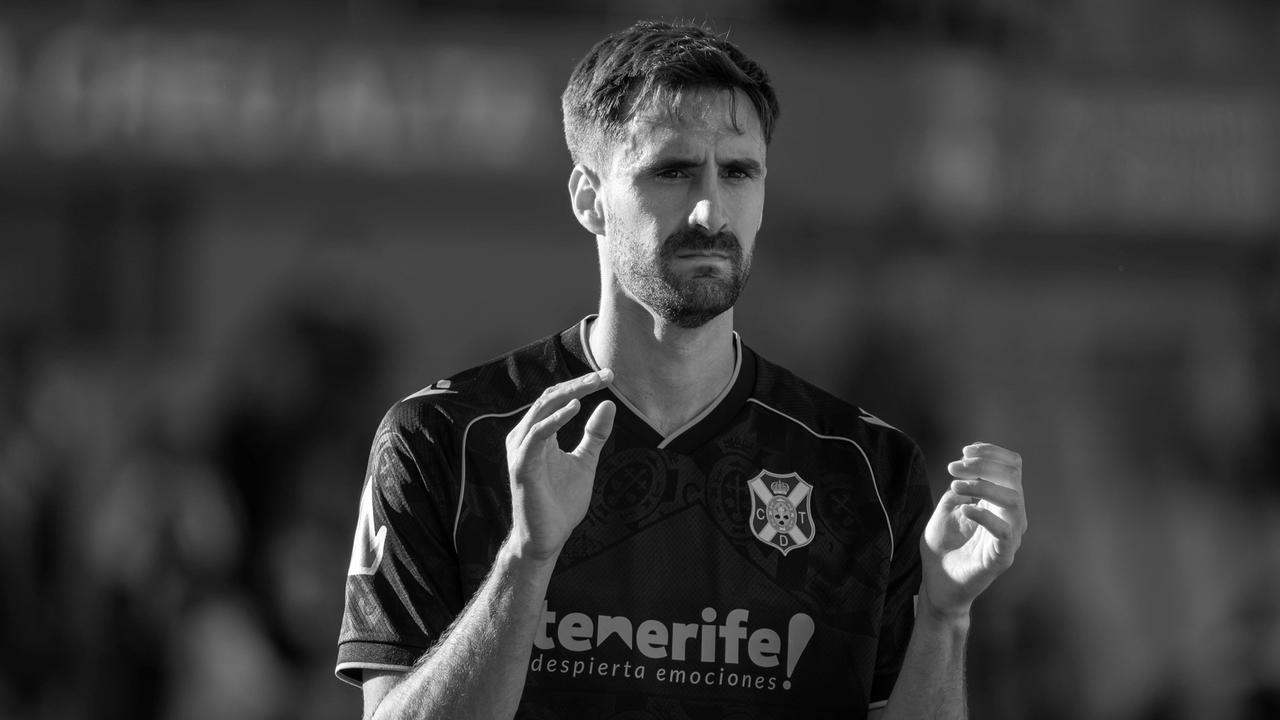
The football world is in deep mourning following the tragic death of Jesús de Miguel, a 30-year-old striker for the Spanish second-division club CD Tenerife. His passing, which occurred after a catastrophic collision during a match against FC Andorra, has sent shockwaves through the sporting community, prompting widespread tributes, official investigations, and a total suspension of domestic cup competitions in Spain.
A Routine Play Turns Fatal: The Incident
On the evening of Monday, November 2, 2026, a routine Segunda División fixture between CD Tenerife and FC Andorra took a harrowing turn that would ultimately claim a life. In the dying minutes of the match, with the score deadlocked at 2-2, a long ball forward prompted a race between Jesús de Miguel and the visiting goalkeeper, Jesús Owono.
As the ball hung in the air, both players committed to the challenge. In a split second, the intensity of the pursuit resulted in a devastating aerial collision. Owono, leaping to punch the ball away, struck De Miguel with his upper body. The impact was violent and immediate. De Miguel collapsed to the turf, losing consciousness before he even hit the ground.
Medical staff rushed onto the pitch, and for several minutes, the stadium fell into an eerie, suffocating silence. It quickly became clear that the situation was dire. Reports later confirmed that paramedics were forced to perform life-saving resuscitation efforts on the pitch and during the frantic ambulance transit to the Nuestra Señora de Candelaria University Hospital.
The referee, witnessing the severity of the injury and the profound psychological distress of the players, made the only possible decision: the match was abandoned. Jesús Owono, visibly distraught, was issued a red card for the collision, though the disciplinary action felt entirely secondary to the life-or-death struggle unfolding on the pitch.
A Chronology of the Tragedy
The timeline of the tragedy reflects the rapid deterioration of a situation that initially offered a glimmer of hope.
- Monday Evening: The collision occurs in stoppage time. The match is abandoned. Initial reports from the club suggest De Miguel is in a "serious but stable" condition.
- Tuesday Morning: CD Tenerife issues a somber update. De Miguel’s neurological condition has significantly deteriorated, and he is fighting for his life in intensive care.
- Tuesday Midday: Roughly four hours after the morning update, the club confirms the unthinkable: Jesús de Miguel has passed away at 8:00 AM.
- Wednesday: The process of repatriating the body to his hometown of Navahermosa in the province of Toledo begins. The Royal Spanish Football Federation (RFEF) officially suspends all cup matches.
- Thursday: The funeral takes place in Navahermosa, attended by teammates and club leadership. Jesús Owono breaks his public silence, expressing his profound anguish.
- Saturday: A massive public memorial service is scheduled to take place at the Heliodoro Rodríguez-López Stadium in Santa Cruz, inviting fans to pay their final respects.
Official Investigations and Legal Implications
The loss of a professional athlete in the prime of his career due to an on-field collision has naturally triggered a formal inquiry. The homicide division of the National Police in Santa Cruz de Tenerife has launched an investigation into the circumstances surrounding the death.
In legal terms, such investigations are standard procedure in Spain when a death occurs under unusual or non-natural circumstances. Investigators will analyze match footage, medical reports, and witness testimonies to determine if there were any factors beyond the inherent risks of a high-contact sport. While the collision appears to be an accident occurring during the normal course of play, the police mandate requires a thorough review to ensure transparency and to rule out any external factors.
The Human Cost: Owono’s Anguish
The role of FC Andorra goalkeeper Jesús Owono has been a focal point of the public discourse. On Thursday, the 25-year-old issued a heartbreaking statement, describing the event as the "darkest days of his life."
"It is difficult to find words, and it is very difficult for me to even grasp what has happened," Owono stated. His words resonated with a footballing public that often forgets the psychological toll taken on players involved in such incidents. Owono acknowledged the reality of the ongoing investigation, noting that he understands there are "many questions to be answered," while emphasizing that his heart remains with De Miguel’s family and loved ones.
The Institutional Response: A Unified Stand
The reaction from the football establishment has been one of total solidarity. The Royal Spanish Football Federation (RFEF) issued a statement expressing that the "entire Spanish football family is united in grief." In a rare and poignant move, the federation ordered the immediate cancellation of all matches in the Spanish Cup (Copa del Rey) scheduled for Tuesday, Wednesday, and Thursday, citing "respect and solidarity."
On the international stage, UEFA confirmed that a minute of silence would be observed at every single European competition match—including the Champions League and Europa League—held throughout the week. Television cameras captured somber scenes in Istanbul and across Europe, as players and fans stood in unison to honor the memory of the fallen striker.
CD Tenerife’s Period of Mourning
For CD Tenerife, the loss is visceral. The club has declared a six-day period of mourning, halting all operations for its men’s, women’s, and youth teams. The match against FC Granada, originally scheduled for Saturday, has been officially postponed.
Club officials have been working tirelessly to support De Miguel’s family, emphasizing the need for privacy while preparing for the public memorial. The decision to hold a ceremony at the Heliodoro Rodríguez-López Stadium at 19:00 CET on Saturday is a testament to the bond between the club and its community. It will serve as a space for fans, who have been leaving scarves, jerseys, and flowers at the stadium gates since Tuesday, to collectively process the loss of a player who represented the club’s colors with pride.
The Broader Implications for Sports Safety
The death of Jesús de Miguel has reignited the conversation regarding player safety and the inherent dangers of professional football. While football is a contact sport, the frequency of head-to-head or body-to-body collisions at high speeds continues to pose a significant risk.
Medical experts have begun to discuss whether current protocols for on-field head injuries and chest impacts are sufficient. While no amount of regulation can eliminate the risk of an accidental collision, the sporting world is now forced to look at the "golden hour"—the critical window of time between an injury and specialized hospital care. The speed at which De Miguel received care, despite the severity of the trauma, will likely be a major point of discussion in the coming months as the RFEF and medical committees review safety standards.
Final Reflections: A Legacy of Passion
Jesús de Miguel was more than just a striker; he was a husband, a father, a teammate, and a symbol of the dedication required to reach the professional ranks. His journey to the second division was built on the same spirit he displayed in his final match: tenacity, drive, and a commitment to his team.
As the football world prepares to return to the pitch, the absence of De Miguel will be felt deeply. His death serves as a stark reminder of the fragility of life and the intensity with which these athletes play the game they love. Whether in the quiet streets of Navahermosa or the crowded stands in Santa Cruz, the memory of the striker will endure—not just as a tragic statistic, but as a person whose final act of effort was in the service of the sport that defined his life.
The tragedy in Tenerife is a somber chapter in the history of Spanish football, one that has brought rivals together, silenced stadiums, and forced a national reflection on the risks taken in the name of sport. As the investigation continues and the family mourns, the football world stands united in a singular, mournful vow: to remember Jesús de Miguel, and to ensure that his legacy of passion is never forgotten.