

The global race for artificial intelligence supremacy has entered a precarious phase. While the public narrative remains focused on breakthroughs in large language models (LLMs) and automated productivity, a much darker reality is brewing beneath the surface of the world’s most powerful technology companies. A massive accumulation of "shadow debt"—financial obligations hidden from traditional balance sheets—has surged to $3.2 trillion among the industry’s five largest players. As of late 2026, this mountain of debt has nearly doubled since March, signaling a structural imbalance that threatens to destabilize the tech sector and rattle global financial markets.
The Mechanics of Shadow Borrowing: Off-Balance-Sheet Engineering
At the heart of this financial phenomenon is a sophisticated form of "shadow borrowing." Companies like Alphabet, Microsoft, Amazon, Meta, and Oracle have found themselves trapped in a paradox: they must spend hundreds of billions on data centers, high-end GPU clusters, and energy infrastructure to remain competitive, yet reporting these expenditures as direct debt would cripple their credit ratings and trigger alarm bells among investors.
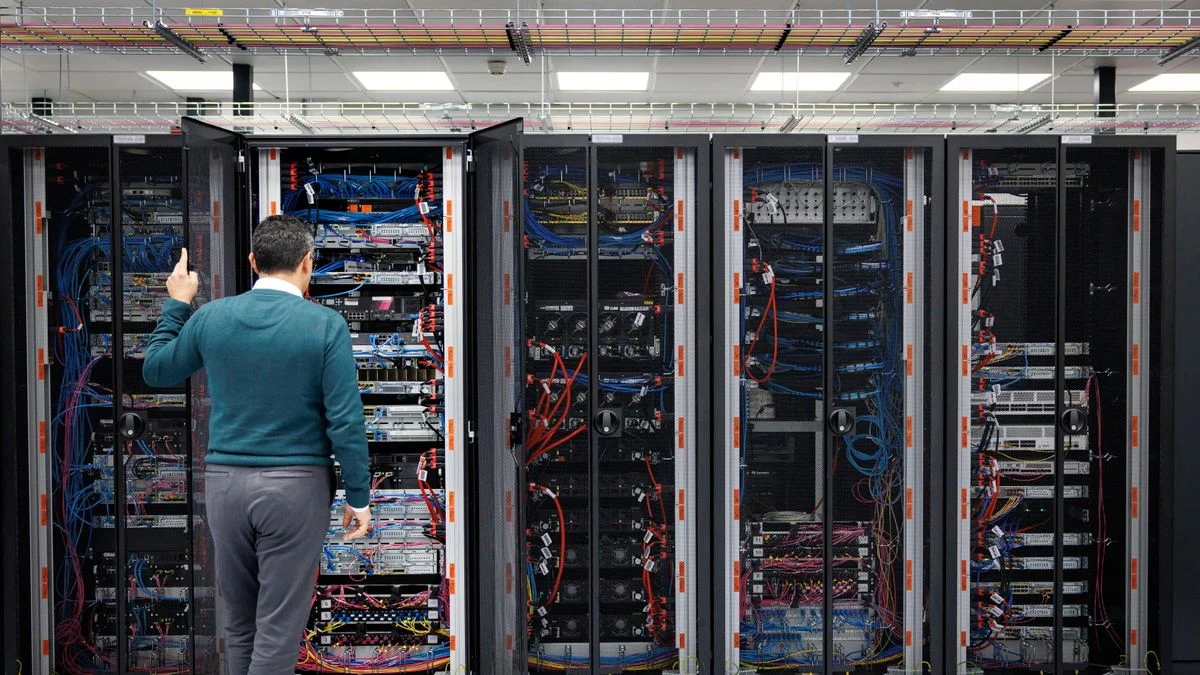
To circumvent this, these giants are utilizing Special Purpose Vehicles (SPVs) and complex leasing structures. By establishing independent entities—often in partnership with infrastructure developers—to finance the construction of massive data centers, these tech giants effectively outsource the debt. The tech firm then enters into long-term service agreements or lease contracts with these entities.
Because these commitments are often structured as operational expenses rather than direct corporate debt, they remain "off-balance-sheet." This allows the parent companies to maintain a veneer of pristine creditworthiness while, in reality, they are tethered to multi-trillion-dollar obligations that must be serviced regardless of whether their AI products actually turn a profit.
A Chronology of Escalation
The trajectory of this debt surge reveals the breakneck speed at which the AI arms race has forced corporate financial strategies to pivot.
- Pre-2025: Tech giants relied primarily on cash reserves and standard capital expenditure (CapEx) to fund cloud expansion.
- March 2026: Initial reports began to circulate regarding the ballooning scale of off-balance-sheet commitments. At this stage, the combined shadow debt of the "Big Five" was roughly $1.6 trillion.
- July 2026: Nikkei Asia first brought mainstream attention to the systemic risks of these hidden liabilities, noting that the infrastructure build-out was outpacing revenue growth by a factor of four.
- October 2026: Following the release of lackluster Q3 earnings reports, the markets began to react. Investors realized that the promised "AI ROI" was not materializing fast enough to cover the mounting lease and purchase obligations. This triggered a widespread sell-off of tech stocks, as shareholders grew wary of the sustainability of the current growth model.
Supporting Data: The Anatomy of $3.2 Trillion
The sheer scale of these obligations is difficult to comprehend. The $3.2 trillion figure represents a staggering 80% of the combined total assets of Alphabet, Microsoft, Amazon, Meta, and Oracle.
According to financial analysts, the debt is composed of two primary pillars:
- Purchase Obligations (60%): Binding contracts to buy chips, servers, and power capacity that have not yet been delivered or fully integrated.
- Future Lease Commitments (40%): Long-term agreements to pay for the usage of data center capacity that is either under construction or in early operation.
Alphabet currently leads the pack with approximately $1.05 trillion in hidden liabilities—an increase of 160% in just six months. While Alphabet argues that changes in accounting methodologies partially explain this surge, the underlying reality remains unchanged: the cost of powering Google’s AI ecosystem is rapidly approaching the company’s entire valuation. Following Alphabet, the ranking of debt exposure includes Meta, Microsoft, Amazon, and Oracle, each scrambling to secure energy and compute capacity at any price.
The Collapse of the "Coreweave" Illusion
The nervousness surrounding Big Tech is compounded by the recent volatility in the specialized cloud provider market. Companies like Coreweave, which acted as a harbinger for the sector, have faced significant financial distress as their debt-to-equity ratios soared.
While the "Big Five" possess significantly deeper pockets than smaller, independent cloud providers, the fear among institutional investors is that the contagion is spreading. If the tech giants are forced to consolidate their shadow debt onto their official balance sheets, the resulting impact on their credit ratings would be catastrophic, leading to higher interest rates and a potential liquidity crunch that could halt the development of next-generation AI models.

Official Responses and Corporate Strategy
Publicly, the tone from Silicon Valley remains one of "cautious optimism." Executives argue that these investments are foundational—akin to the construction of the transcontinental railroad or the early internet backbone. They contend that the current debt load is a necessary "bridge" to an era of autonomous productivity where the revenue generated by AI will render these debts trivial.
However, behind closed doors, CFOs are reportedly scrambling to renegotiate lease terms and extend the duration of their debt instruments. There is an increasing push for "asset-light" models, where tech companies seek to partner with utility companies and sovereign wealth funds to offload the physical burden of data center ownership. Whether regulators will allow this continued off-balance-sheet maneuvering remains an open question, as watchdogs in the US and Europe begin to scrutinize the systemic risks these liabilities pose to the broader economy.
Market Implications: The End of the AI Honeymoon?
The implications of this shadow debt bubble are far-reaching:
1. The IPO Chill
The upcoming IPO of Anthropic, once touted as the most anticipated tech debut of the decade, is now being viewed through a lens of skepticism. Investors are asking: if the giants building the infrastructure are struggling with debt, what does that mean for the AI model providers who rely on that infrastructure? The valuation expectations for AI startups are being slashed, as the market shifts from prioritizing "growth at all costs" to "sustainability and margins."
2. A Shift in Capital Allocation
Expect to see a massive pivot in 2027. Tech companies will likely be forced to slow down their hardware acquisition cycles to manage their cash flows. This "AI Winter" of sorts—not in terms of research, but in terms of capital deployment—could actually be a healthy correction, forcing companies to optimize existing algorithms rather than simply throwing more compute at problems.
3. Regulatory Scrutiny
Financial regulators are likely to demand greater transparency regarding these SPVs. If the SEC or similar bodies force these companies to disclose the full extent of their off-balance-sheet liabilities in their 10-K filings, the sudden transparency could lead to a massive repricing of tech stocks.
Conclusion: A Reckoning on the Horizon
The "AI Shadow Debt" is no longer a hidden secret; it is the elephant in the room of the modern tech economy. While the technology itself holds transformative potential, the financial architecture built to support it is currently standing on a foundation of sand.
The tech industry is at a crossroads. It can continue to hide behind complex accounting maneuvers, hoping that a miracle in AI productivity will save the day before the debt matures. Or, it can embrace a period of fiscal discipline, acknowledging that the era of "limitless growth" funded by "hidden debt" is coming to a close. For the investors and employees of these titans, the coming quarters will be defined not by the latest model release, but by the cold, hard math of their balance sheets. The bubble hasn’t burst yet, but the air is beginning to hiss out of the valves.