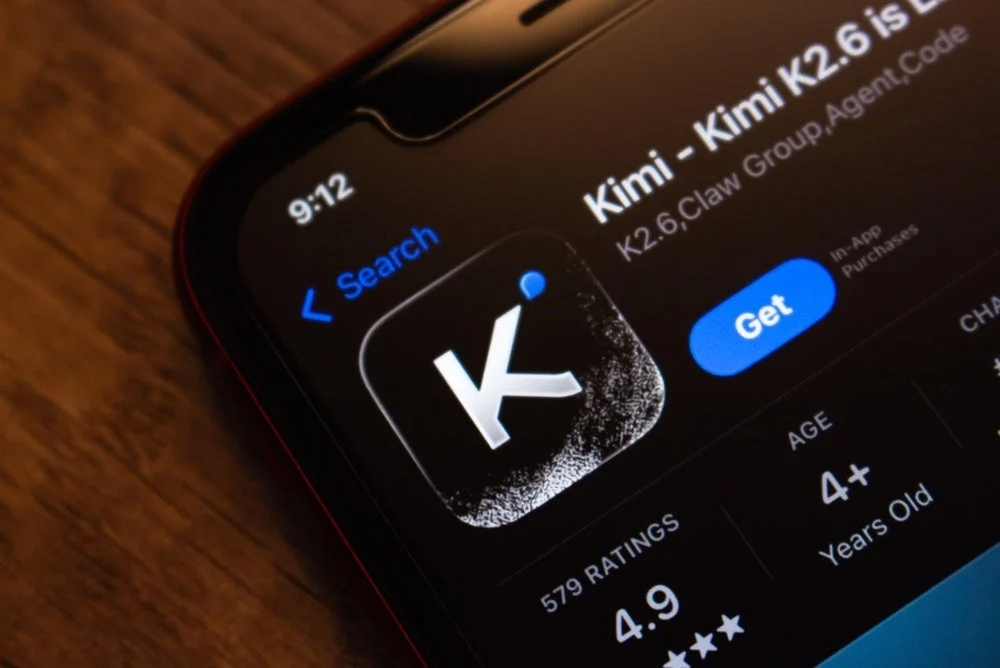
The global race for Artificial General Intelligence (AGI) has entered a precarious, high-stakes phase. For years, the narrative of the AI revolution was defined by a clear hierarchy: US-based labs like OpenAI, Anthropic, and Google held the keys to the most powerful, "frontier" models, keeping their weights under tight lock and key. That status quo has been shattered by Beijing-based Moonshot AI.
With the launch of Kimi K3.1 Pro, the Chinese startup has not only closed the gap in technical performance but has also introduced a disruptive distribution model that threatens to upend the business strategies of its Western counterparts. As Moonshot AI prepares to release the full weights of its model by November 4, 2026, the international tech community is grappling with a difficult question: Does this democratization of high-end intelligence represent a victory for open science, or a dangerous gamble that invites catastrophic cyber threats?
The Main Facts: A New Benchmark in Performance
Kimi K3.1 Pro is a heavily fine-tuned, advanced iteration of its predecessor, Kimi K3. According to independent benchmarking platform Artificial Analysis, K3.1 Pro currently stands as the most capable "open-weight" model in existence.
In rigorous testing, the model demonstrated performance parity—and in some metrics, superiority—to industry titans like OpenAI’s GPT-6 Astra and Anthropic’s Claude Opus 5.5. Specifically, in the Terminal Bench 4.0, K3.1 Pro achieved a score of 65.7 percent, placing it firmly ahead of GPT-6 Astra. While it remains slightly behind Claude Opus 5.5, its ability to compete at this level, combined with its accessibility, has sent shockwaves through Silicon Valley.
Beyond pure logic, the model excels in specialized domains including complex programming, 3D modeling, and high-frequency financial analysis. Artificial Analysis noted that the model is unusually verbose, generating 150 million tokens during its evaluation phase—nearly double the median of 81 million tokens observed in similar high-tier models. This verbosity, while potentially inefficient, signals a deep capacity for reasoning and detailed output generation.
The Chronology: How China Caught Up
The "AI gap" between the US and China has been narrowing at an accelerating pace. In March 2026, the Stanford University AI Index Report revealed that the lead held by US laboratories had shrunk to a mere 2.7 percent.
The trajectory of this convergence can be traced through a series of rapid-fire developments:
- Early 2026: China’s investment in domestic compute clusters begins to pay dividends, allowing startups like Moonshot AI to scale training runs without reliance on restricted high-end NVIDIA hardware.
- July 2026: The release of the original Kimi K3 catches US analysts off guard. Fortune reported that few in Washington expected a Chinese model to reach the performance tier of Anthropic’s Fable 5 so quickly.
- September 2026: President Donald Trump creates the "Super Intelligence Force," a federal initiative designed to reclaim the US lead in AI, labeling previous safety-based development pauses as a "scam" designed to let China overtake American innovation.
- October 2026: Moonshot AI officially unveils Kimi K3.1 Pro, signaling its intent to release the weights publicly.
This timeline underscores a shift in geopolitical strategy: whereas the US has oscillated between internal regulatory debates and aggressive state-backed acceleration, China’s AI sector has focused on rapid iteration and aggressive product deployment.
Supporting Data: Intelligence vs. Cost
The economics of Kimi K3.1 Pro are as disruptive as its technical capabilities. Moonshot AI has priced the model at $2 per million input tokens and $10 per million output tokens. This is significantly cheaper than the premium APIs offered by the major Western players, creating an immediate economic incentive for enterprises to pivot toward Chinese-backed infrastructure.
| Model | Intelligence Index | Pricing (Input/M) | Access |
|---|---|---|---|
| Kimi K3.1 Pro | 55 | $2.00 | Open-Weight |
| Claude Opus 5.5 | 58 | ~$15.00 | Closed (API) |
| GPT-6 Astra | 54 | ~$12.00 | Closed (API) |
The data shows that while Claude Opus 5.5 remains marginally ahead in the Intelligence Index, the cost-to-performance ratio of Kimi K3.1 Pro makes it a superior choice for many developers and startups. Furthermore, the "open-weight" nature of the model means that once the weights are released, users can host the model on their own infrastructure, eliminating the monthly subscription and usage fees associated with proprietary APIs.
Official Responses and The Regulatory Tug-of-War
The prospect of releasing the weights of a model this powerful has triggered intense debate. Moonshot AI has publicly stated that they have implemented "safety rails," specifically limiting the model’s proficiency in offensive cyber-warfare tasks while preserving its general coding and analytical capabilities.
The Western Perspective
US labs, including OpenAI, have consistently lobbied against the public release of frontier model weights. In a formal submission to the NTIA, OpenAI argued that because the future application of these models is impossible to predict, the only secure path is to maintain them behind closed APIs. This allows providers to monitor for abuse, patch vulnerabilities in real-time, and, if necessary, shut down access for bad actors.
The Chinese Perspective
Moonshot AI, and by extension the broader Chinese tech ecosystem, views the "safety" argument as a form of gatekeeping. By releasing the weights, they are positioning themselves as the champions of "open science," arguing that the benefits of widespread innovation outweigh the theoretical risks.
President Trump’s recent rhetoric further complicates the international landscape. By dismissing safety concerns as a "swindle," the US administration has effectively signaled that it will not prioritize the same restrictive safety protocols that Anthropic and others previously adhered to, potentially sparking a "race to the bottom" regarding AI safety standards.

Implications: The End of Managed AI?
The impending release of Kimi K3.1 Pro’s weights on November 4 marks a turning point in the history of the digital age. Several long-term implications are already emerging:
1. The Erosion of Control
Once the weights are public, they cannot be retracted. Even if Moonshot AI attempts to implement security patches, the community can fork the model and remove those restrictions. We are moving toward a world where highly capable AI models will exist in the "wild," running on private servers beyond the reach of any government or corporation.
2. The Cyber-Security Paradox
While Moonshot AI claims to have limited the model’s offensive capabilities, the nature of Large Language Models (LLMs) makes "surgical" safety impossible. If a model is smart enough to write secure code, it is inherently smart enough to identify the vulnerabilities in that same code. By making the model open-weight, they are essentially handing a powerful "Swiss Army Knife" of digital reconnaissance to every hacker, state-sponsored or otherwise, with a decent GPU.
3. The Future of the API Economy
The traditional business model of selling "AI as a Service" (AIaaS) is under direct threat. If businesses can run a model as powerful as K3.1 Pro on their own local hardware, they will no longer be dependent on the high-margin APIs of OpenAI or Google. This could lead to a massive migration of data and infrastructure away from Western cloud providers.
4. Geopolitical Realignment
The race for AI supremacy is no longer just about who has the fastest supercomputer; it is about who sets the standards for model deployment. If China succeeds in establishing the open-weight standard, they effectively define how the world interacts with the next generation of intelligence, leaving the US to rely on its closed, proprietary, and increasingly expensive ecosystem.
Conclusion
Kimi K3.1 Pro is more than just a piece of software; it is a manifestation of the shift in the global balance of power. By opting to release the full weights of its model, Moonshot AI has challenged the fundamental premise of AI safety as practiced by Silicon Valley.
As we approach the November 4 deadline, the global tech community finds itself at a crossroads. The promise of an open, democratized future for artificial intelligence is tantalizing, but it comes at the cost of the guardrails that have thus far kept the most dangerous capabilities of these models under wraps. Whether Kimi K3.1 Pro becomes the foundation for a new era of global innovation or the catalyst for a new, uncontrollable wave of digital insecurity remains to be seen. What is certain, however, is that the era of the "guarded frontier" is over.