While the average consumer remains tethered to the slow progress of commercial drone delivery—often limited by local regulations and battery constraints—the United States military is looking toward the stars to revolutionize logistics. In a landmark demonstration that bridges the gap between aerospace innovation and tactical supply chain management, the US Air Force Research Laboratory (AFRL) has successfully executed the first-ever "Rocket Cargo" mission. By utilizing a SpaceX reentry vehicle, the military has proven that essential equipment can be delivered to any point on the globe with unprecedented speed and precision, marking a pivotal moment in the history of military logistics.
The Core Concept: Redefining "Point-to-Point" Delivery
The "Rocket Cargo" project is not merely an experiment in spaceflight; it is a strategic initiative designed to solve the age-old military dilemma of rapid replenishment. In combat or disaster-relief scenarios, traditional logistics—relying on slow-moving cargo ships, long-range transport aircraft, or ground convoys—are often vulnerable to interference, environmental hazards, or sheer geographical distance.
The vision behind Rocket Cargo is "Point-to-Point" (P2D) delivery. The goal is to leverage heavy-lift orbital launch vehicles to transport cargo into suborbital or orbital trajectories, re-entering the atmosphere to land a payload within minutes or hours rather than days. This capability could potentially allow the military to deliver life-saving medical supplies, specialized weaponry, or critical infrastructure components to remote, contested, or inaccessible regions of the world at hypersonic speeds.
Chronology of the Mission: From Cape Canaveral to the Pacific
The path to this successful test was years in the making, involving a complex orchestration of public and private sector collaboration.
June 2026: The first public acknowledgment of the "Starfall" capsule—a compact, puck-shaped reentry vehicle developed by SpaceX—occurred when it was launched aboard a Falcon 9 rocket. At the time, information was scarce, and SpaceX maintained a characteristic level of secrecy regarding the capsule’s specifications and mission objectives.
October 20, 2026: The definitive test mission commenced. A SpaceX Falcon 9 rocket launched from Cape Canaveral, carrying the Starfall capsule. The objective was to test the vehicle’s ability to handle the extreme rigors of launch and reentry while protecting a variety of sensitive military-grade payloads.
October 26, 2026: The AFRL officially announced the recovery of the Starfall capsule from the Pacific Ocean. The recovery confirmed that the cargo had not only survived the flight but had remained intact during the high-velocity reentry and water landing, a critical requirement for any future deployment of delicate equipment.
Supporting Data and Cargo Specifications
The payload contained within the Starfall capsule was intentionally diverse to test the vehicle’s versatility. According to reports from the AFRL, the mission was designed to simulate the real-world needs of a forward-deployed unit.
The cargo included sophisticated diagnostic instruments designed to measure:
- Thermal Dynamics: Monitoring how the internal environment changes during the intense heat of reentry.
- Vibrational Stress: Assessing the structural integrity of the payload under the violent forces of launch and atmospheric descent.
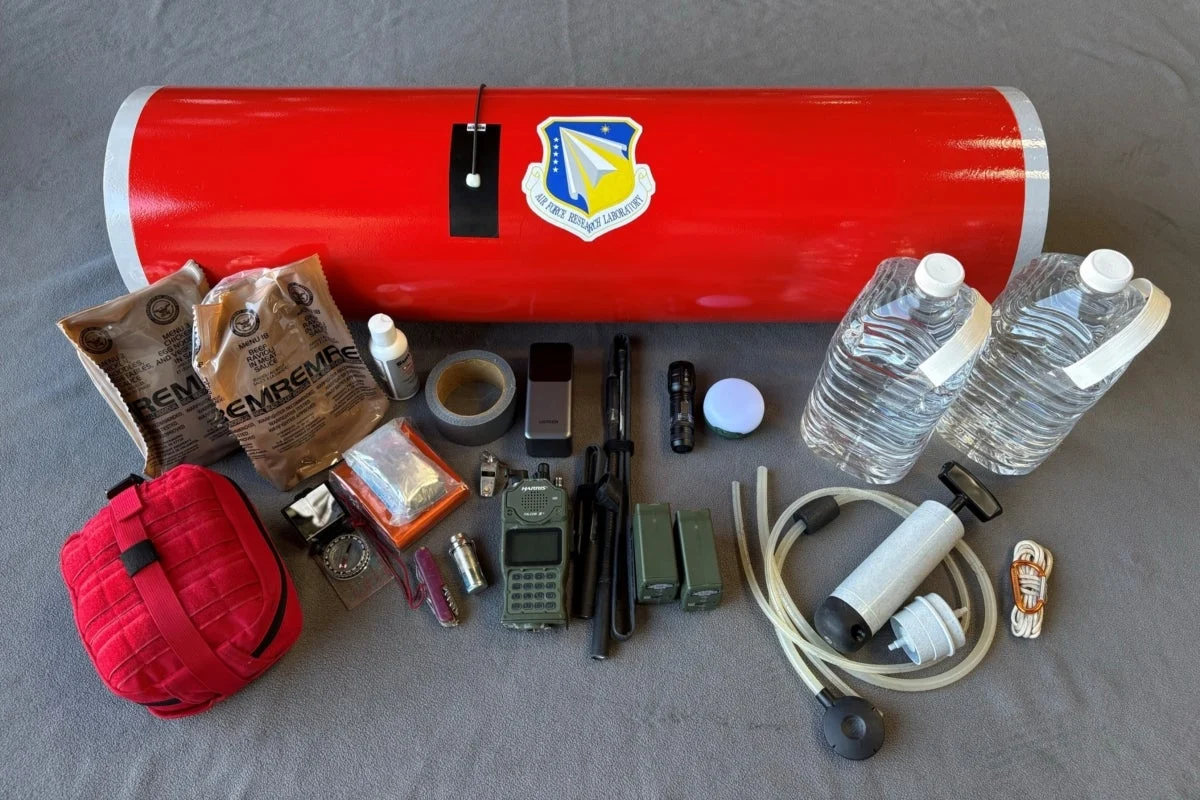
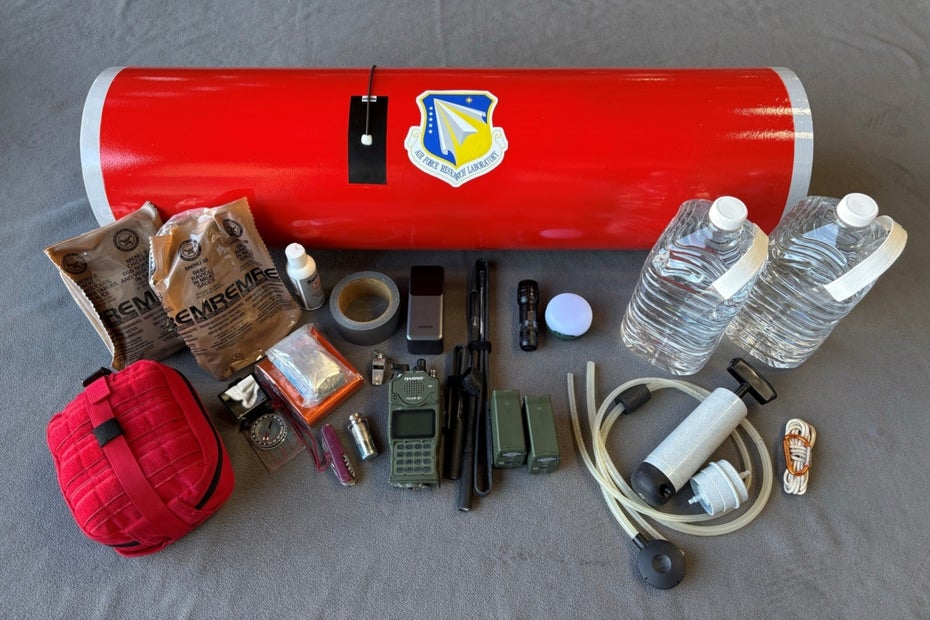
- Operational Equipment: A "representative" manifest that included a satellite communications terminal, high-capacity batteries, a reverse osmosis water desalination system, and various medical emergency kits.
The Starfall capsule itself is a marvel of miniaturized logistics. Measuring approximately three meters in diameter, it is designed to carry up to one metric ton of payload. This size is optimized for "high-value, low-volume" items—the kind of mission-critical equipment that can change the outcome of an engagement or a humanitarian crisis but is currently hindered by the speed of traditional air-bridge logistics.

The Broader Industrial Ecosystem
The success of Rocket Cargo is not solely a SpaceX achievement. The AFRL has established a robust collaborative network, signaling that the Pentagon is looking to build a resilient, competitive market for orbital logistics. Current partners in this effort include a mix of industry titans and agile newcomers:
- SpaceX & Blue Origin: Providing the heavy-lift capacity and launch infrastructure.
- Rocket Lab & Sierra Space: Contributing expertise in specialized reentry and small-to-medium payload management.
- Anduril, Inversion Space, and Outpost Space: Firms specializing in autonomous systems and advanced materials, which are essential for ensuring that the cargo reaches the ground safely without the need for a dedicated, multi-person recovery team.
This "commercial first" approach is a departure from historical military procurement. By relying on private vendors, the Department of Defense (DoD) can tap into the rapid innovation cycles of the private sector, significantly reducing development costs and deployment timelines.
Implications for Global Security and Logistics
The implications of a functional Rocket Cargo capability are profound, touching on military doctrine, geopolitical influence, and even the future of commercial shipping.
1. Tactical Superiority
If the US military can drop a ton of medical supplies or spare parts anywhere on Earth within two hours, the "tyranny of distance" is effectively neutralized. This changes the calculus of forward basing. Instead of maintaining massive, vulnerable, and expensive supply depots in every region of the world, the military could move toward a "just-in-time" model, keeping inventory at home and "shooting" it to where it is needed only when the requirement arises.
2. Humanitarian Assistance and Disaster Relief (HADR)
Beyond the battlefield, the technology has immense potential for disaster relief. In the wake of an earthquake or tsunami, infrastructure (like runways and ports) is often destroyed, making traditional aid delivery impossible. A rocket-delivered pod, capable of landing in the ocean or on a cleared patch of earth, could bypass destroyed logistics hubs to deliver water purifiers, medicine, and power systems directly to the disaster zone.
3. The Future of Commercial Shipping
While the current costs of rocket launches remain prohibitively high for shipping consumer goods (like the items mentioned in the context of the average online shopper), the Rocket Cargo program acts as a pathfinder. As launch costs continue to plummet due to reusability—a hallmark of the Falcon 9 and the emerging Starship architecture—the gap between "orbital military logistics" and "premium commercial shipping" will narrow. Just as the internet began as a military project (ARPANET) before transforming the global economy, Rocket Cargo could be the precursor to a future where express international shipping is measured in minutes rather than days.
Official Responses and Strategic Outlook
The AFRL has been measured but optimistic in its public statements. "The goal is to demonstrate that we can move critical supplies on a timeline that was previously considered science fiction," noted a project spokesperson.
However, critics and analysts point to the massive technical hurdles that remain. Managing the heating profile of a cargo pod is one thing; ensuring it lands with precision in a variety of weather conditions without causing collateral damage is another. Furthermore, the environmental impact of frequent rocket launches is a subject of growing scrutiny, one that the DoD will need to address as the program scales.
Conclusion: A New Frontier
The success of the Starfall test in October 2026 represents more than just a successful rocket flight; it signifies the formal integration of space into the terrestrial supply chain. As the US Air Force continues to refine the Rocket Cargo initiative, the focus will shift from "can we do it?" to "how can we do it affordably and repeatedly?"
For the logistics industry, this serves as a warning and an opportunity. The world is getting smaller, and the sky is no longer the limit—it is the next highway. Whether this technology leads to a more secure world or simply opens a new theater of competition remains to be seen, but one thing is certain: the era of orbital logistics has officially arrived.