

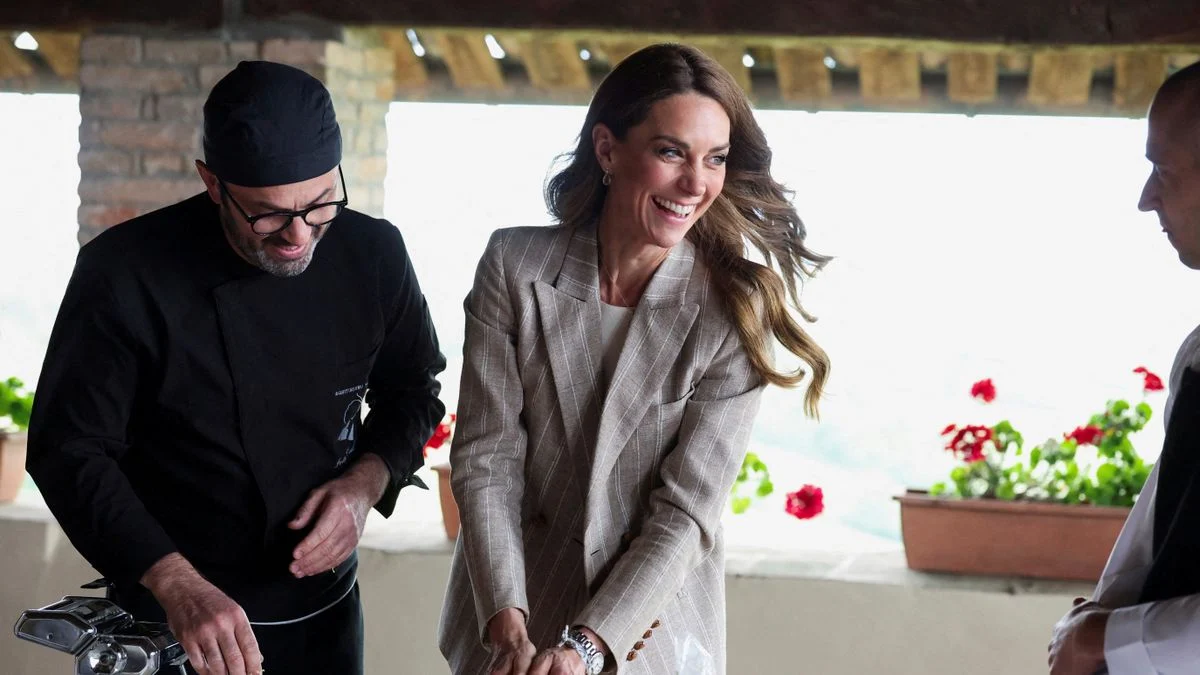
In the quiet, rolling hills of Italy’s Emilia-Romagna region—a landscape famously dubbed the "Food Valley"—the Princess of Wales, Catherine, recently traded the formal grandeur of royal engagements for the tactile, flour-dusted reality of a traditional Italian kitchen. During a high-profile visit to the area between Reggio Emilia and Parma, the Princess participated in a hands-on culinary workshop, offering a rare, intimate glimpse into her ability to bridge the gap between royal protocol and the everyday experiences of the public.
While the visit was framed by the culinary traditions of Northern Italy, the imagery captured by the world’s press sparked a flurry of discourse, ranging from the intricacies of kitchen hygiene to the symbolic weight of the jewelry worn by one of the world’s most scrutinized figures.
Main Facts: A Hands-On Royal Engagement
The Princess of Wales visited the renowned Al Vigneto agriturismo in Northern Italy on Thursday, an institution dedicated to the preservation of authentic regional cooking. The engagement was centered on the art of making Tortelli, a delicate, stuffed pasta native to the region. Guided by local Chef Ivan Lampredi, the Princess demonstrated surprising dexterity, kneading dough and carefully filling pasta parcels.
The visit was not merely a recreational excursion; it served as a component of her broader advocacy for early childhood development, a cause that has defined her royal platform. By integrating herself into the local culture—specifically the culinary heritage that is central to Italian identity—the Princess underscored the importance of community, tradition, and the domestic arts in fostering strong social foundations.
Chronology of the Visit
The day began with a series of meetings at a local center for early childhood education, where the Princess engaged with local educators and families to discuss the importance of the formative years of a child’s life. Following these formal discussions, the itinerary transitioned to the culinary segment of the tour.
- 10:00 AM: The Princess arrived at the educational facility, participating in discussions regarding the "Food Valley’s" approach to communal health and social development.
- 1:00 PM: Arrival at Al Vigneto. The Princess was greeted by Chef Ivan Lampredi, who led her into the kitchen.
- 1:30 PM: The "Pasta Masterclass" commenced. Under the watchful eyes of the international press, the Princess donned an apron and began the labor-intensive process of preparing Tortelli.
- 2:30 PM: A tasting session followed, where the Princess sampled the fruits of her labor, alongside traditional regional accompaniments.
- 4:00 PM: Departure, concluding a day that successfully blended professional advocacy with accessible, human-interest storytelling.
The Ring Controversy: A Study in Royal Protocol
A significant portion of the public discourse surrounding the visit focused on a detail that might seem trivial to some, yet proved captivating to royal watchers: the Princess’s choice to keep her engagement ring on while handling raw dough.

The ring in question—the iconic sapphire and diamond piece that once belonged to Diana, Princess of Wales—is arguably one of the most valuable and historically significant items in the British royal collection. For many, the sight of a priceless heirloom coming into contact with flour, eggs, and raw filling was a moment of suspense.
While the average home cook is often taught to remove jewelry before engaging in kitchen work for reasons of hygiene and protection, the Princess opted to keep the ring securely on her finger. Royal observers suggest this choice was deliberate, reflecting a desire to remain "on brand" even during casual activities. The image of the ring glinting against the backdrop of rustic Italian pasta dough became an instant symbol of the duality of her life: a synthesis of aristocratic heritage and the mundane, approachable reality of motherhood and domesticity.
Supporting Data: The Culinary Heritage of Emilia-Romagna
The choice of Tortelli was not coincidental. The Emilia-Romagna region is widely recognized as the gastronomic heart of Italy. UNESCO recently recognized the Italian culinary tradition as an "Intangible Cultural Heritage," a status that emphasizes the role of food in maintaining social cohesion.
- The Dish: Tortelli traditionally feature a filling of ricotta and fresh herbs, though variations including spinach, pumpkin, or artichokes are common depending on the season.
- Economic Impact: The agriturismo sector in this region contributes significantly to local tourism. Establishments like Al Vigneto provide a platform for preserving agrarian traditions that would otherwise be lost to industrialization.
- Accessibility: Despite the royal visit, the restaurant maintains a modest pricing structure, with main courses averaging approximately 20 Euros. This reinforces the message that the Princess’s visit was intended to highlight accessible, community-based culture rather than high-end, exclusive luxury.
Official Responses and Public Reception
The reaction from the palace and local authorities has been overwhelmingly positive. A spokesperson for the Princess noted that she was "delighted to learn the intricacies of such a celebrated regional craft," emphasizing her appreciation for the warmth and hospitality shown by the local community.
Chef Ivan Lampredi, in a brief statement following the visit, praised the Princess’s "genuine curiosity and willingness to learn." He noted that while royal visits often involve strict security and distancing, the Princess made a concerted effort to interact directly with the staff, even joking about the challenge of maintaining the perfect, uniform distance required for professional Tortelli filling.
Public reception on social media was largely focused on the Princess’s style and demeanor. The Vogue coverage of her "azure blue" ensemble—a nod to the aesthetic trends popularized by modern cinema—drew as much attention as the cooking itself. The synergy between her fashion choices and the vibrant, rustic setting of the Italian countryside provided a masterclass in modern royal branding.

Implications: Soft Power and Diplomatic Engagement
The visit to the "Food Valley" is a textbook example of "soft power"—the use of cultural attraction and public diplomacy to foster positive relations. By engaging with the fundamental traditions of an ally nation, the Princess of Wales successfully projected an image of accessibility and respect for global cultures.
1. The Humanization of the Monarchy
The ability to knead pasta while wearing a historical crown jewel serves as a potent visual metaphor for the modern monarchy’s challenge: maintaining the mystique of the institution while appearing relatable in an increasingly democratic world. The Princess’s ability to handle such moments with grace reinforces her popularity and strengthens the institution’s image.
2. Cultural Advocacy
By drawing attention to the UNESCO-recognized culinary traditions of Italy, the Princess leveraged her global platform to shine a light on local artisans and the importance of preserving intangible heritage. This aligns with her broader goals of supporting community-based initiatives, proving that her reach extends far beyond the borders of the United Kingdom.
3. Future Engagement Strategies
This visit likely signals a shift in royal engagement strategy. Rather than limiting themselves to ribbon-cutting ceremonies and formal banquets, members of the Royal Family are increasingly seeking out "immersive" experiences that allow for genuine, unscripted human connection. The success of this visit suggests that the public responds more favorably to these moments of "authentic" interaction than to traditional, staged appearances.
In conclusion, the Princess of Wales’s foray into the Italian kitchen was more than just a culinary lesson; it was a carefully curated engagement that reinforced her role as a bridge between tradition and modernity. Whether she was kneading dough or discussing the nuances of childhood development, Catherine demonstrated that the most effective form of diplomacy often happens at the intersection of a shared meal and a common, human experience. The ring stayed on, the pasta was served, and the image of the Princess as a approachable, yet regal, figure was firmly solidified in the public imagination.






















Leave a Reply