Distance, it is often said, provides perspective. When we visit friends or relatives after long absences, we immediately notice the subtle markers of time: a few extra pounds, the deepening lines of age, or the exhaustion brought on by a new career. In our daily lives, however, these shifts remain invisible. We live in the steady, rhythmic tide of the present, rendering the drama of gradual change almost imperceptible.
This phenomenon is increasingly applying to our travel habits. As the annual post-summer ritual of asking, "How was your vacation?" takes hold between mid-August and early September, the answers have shifted. For decades, the discussion revolved around the weather—the luck of a sunny week or the nuisance of a rainy day. Today, however, travelers return from their "best time of the year" with a new, unsettling sentiment: a mix of disillusionment and genuine alarm.
While not every localized weather event can be immediately attributed to climate change, the aggregate data tells a different story. The climate crisis is manifesting not just in abstract global statistics, but in the tangible transformation of our landscapes and the increasing frequency of extreme, localized catastrophes.

Sweden: The Desiccated Forest
The sense of safety that once accompanied a trip to the cool, lush forests of Southern Sweden has evaporated. Before one recent trip, reports of wildfires across Southern Europe felt distant—a tragic, yet geographically removed concern. But the illusion of safety was shattered even before the journey began.
The rental host sent an urgent message: a severe water shortage was in effect. Use the washing machine only in emergencies. No campfires. High risk of forest fires. It felt like an over-cautious reaction—until the first steps were taken on the forest floor.
The moss, usually a soft, damp carpet, crunched like glass underfoot. Chanterelles, which in previous years were gathered by the bucketful, were nowhere to be found. If a mushroom was spotted, it was already withered and dried, clinging to the parched earth. In the lake outside the cabin, the water level had receded so dramatically that new rock formations appeared daily. The reality of the drought was undeniable, turning a relaxing getaway into a state of constant, low-level vigilance against every stray spark from a grill. Regional authorities in Skåne were so concerned about the bone-dry soil that they requested firefighting aircraft before a single blaze had even broken out.

France: The Constant Anxiety of the "Red Zones"
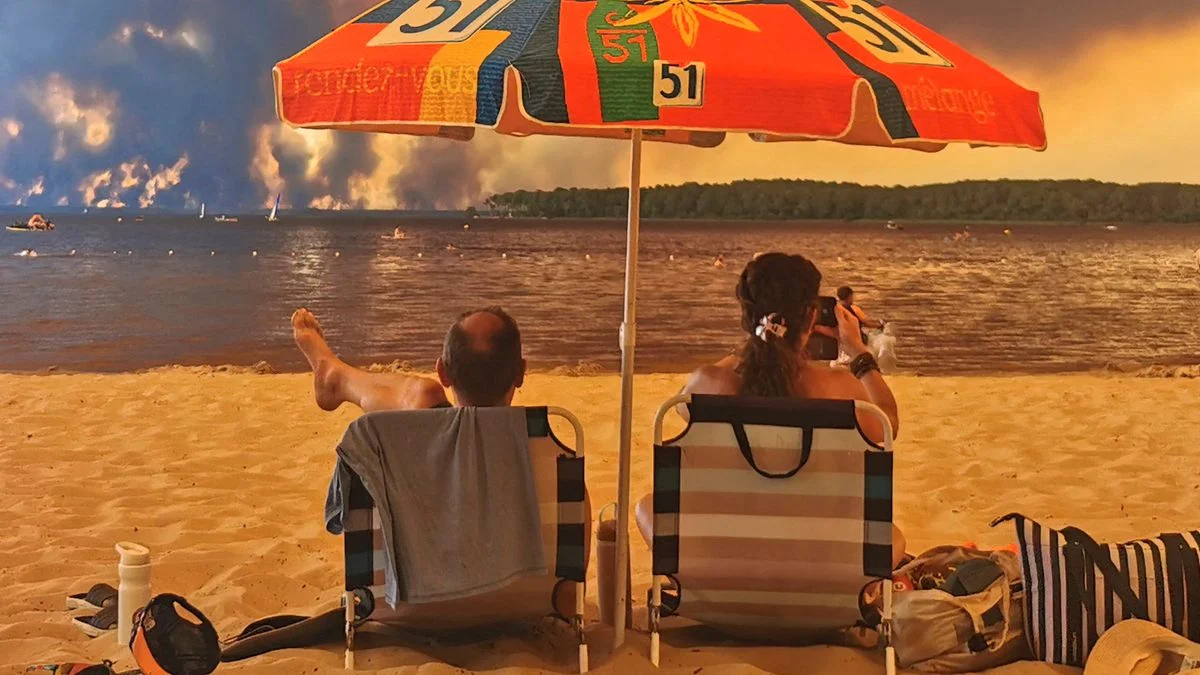
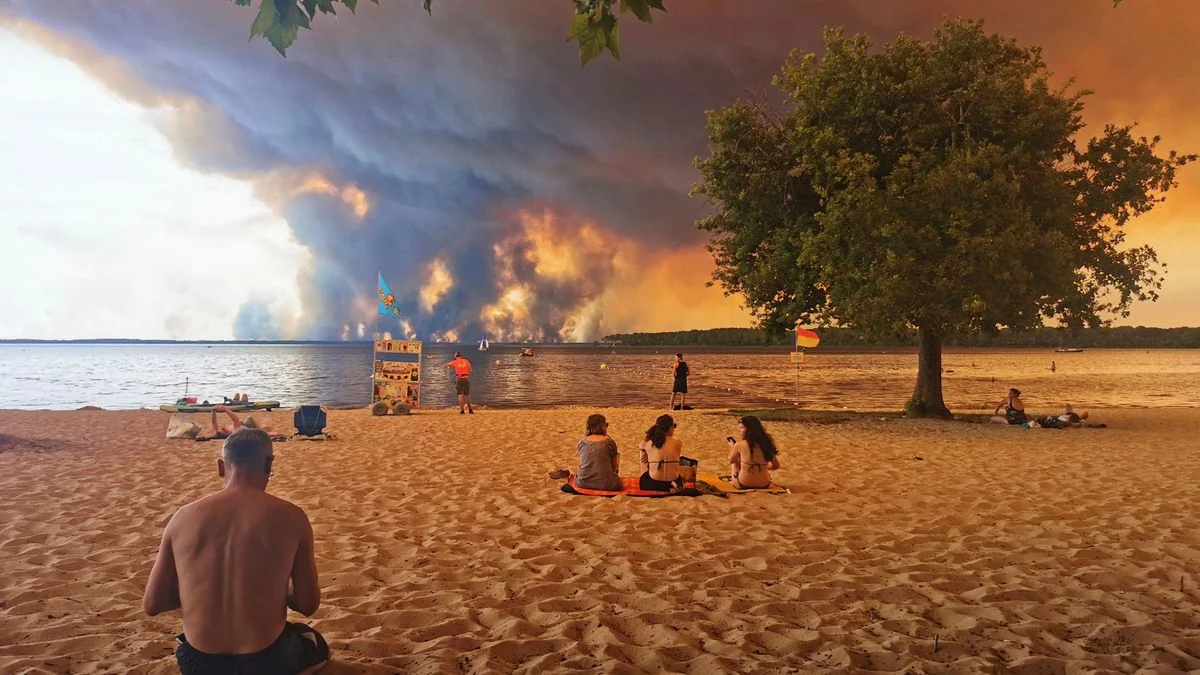
Vacations on the French Atlantic coast once promised the comforting consistency of nature: the scent of pine needles, the taste of moules-frites, the ebb and flow of the tide. But this stability was upended when the fires came.
While one camp was evacuated entirely, others nearby watched the sky turn grey with smoke. The vacation experience shifted from relaxation to a digital hunt for safety. "Where is the wind blowing?" "How far has the fire spread?" "What does the wildfire map say?" The screens of smartphones became the primary focus, revealing vast swathes of "red zones."
The experience forces a painful question: What is a vacation worth when it is dictated by the fear of a shifting wind? For the tourist, there is the privilege of packing a bag and fleeing to safety—a final baguette jambon-fromage on the road to normalcy. But for the local inhabitants and the decimated ecosystem, the damage is permanent.

Italy: The "Warm Broth" of the Salento
In the Salento region of Italy, the local dialect has evolved to describe the sea with an almost poetic precision, matching the infinite variations of the water’s color and temperament. Yet, in recent years, a new, chilling phrase has entered the lexicon: na sciotta.
It refers to a lukewarm, lifeless broth. Many locals use it with a sense of disgust or weary resignation. The sea, once the lifeblood and pride of the coast, is changing. The influx of toxic algae and invasive, stinging marine life is turning the once-pristine waters into a hostile environment. Where tourists once sought the refreshing embrace of the Mediterranean, they now find water temperatures that feel more like a heated pool, stripped of its cooling power. For those who remain in the region, the sight of the water is no longer a source of joy, but a reminder that the ecosystem is failing.
South Africa: The Cost of the Bucket List
In January, families and travelers often flock to South Africa for its stunning coastlines and wildlife. However, the souvenir photos of this era contain more than just scenic vistas; they are increasingly populated by the scars of a changing climate.

An album from a recent trip might include the picturesque image of a sunset, followed immediately by the haunting sight of charred earth from a bushfire in Franschhoek. The experience is punctuated by radio reports of where the next fire is burning, the sight of water bombers circling while tourists dine in restaurants, and the sobering news of declining wildlife populations in the Kruger National Park. The words of Nobel Peace Prize laureate Wangari Maathai echo in this context: "We must heal the wounds of the world to heal our own." Yet, the traveler is left wondering if their presence is part of the healing or part of the wound.
The Rheingau: A Childhood Memory Burned
The personal impact of climate change is often most profound when it strikes the places we call "home." In the Rheingau region of Germany, a visit to a beloved local park—a place of childhood memories and cool, shaded walks—was interrupted by the flashing lights of police cars.
"We must leave the forest!" was the instruction. The area, usually a refuge from the summer heat of the Rhine, had become a tinderbox. The park, with its natural springs and dense foliage, was closed off due to immediate wildfire risk. In the days surrounding that incident, over 30,000 square meters of forest in the vicinity of Bad Schwalbach were reduced to ash. The park was lucky; it survived. But the realization that the local landscape, once thought to be impervious to such destruction, is now in the crosshairs of climate reality, is a difficult lesson to process.

Implications: The End of "Business as Usual"
The consensus among climatologists is clear: the frequency of these extreme events—droughts, wildfires, and ocean warming—is not an anomaly. It is the new baseline.
Chronology of Recent Climate Impacts on Travel:
- The Winter Droughts: A pattern of low rainfall in winter months (as seen in Sweden) is now leading to dry springs, leaving vegetation vulnerable to ignition as soon as temperatures rise.
- The "Red Zone" Migration: Tourism is increasingly dictated by real-time safety apps and government evacuation warnings, transforming leisure travel into a state of semi-permanent anxiety.
- The Marine Degradation: Rising sea temperatures are altering local ecosystems, rendering traditional tourist destinations less hospitable and environmentally degraded.
Official Responses and Data
Environmental agencies across Europe and beyond are shifting their rhetoric. The focus is no longer just on "sustainability," but on "adaptation." Regional governments are investing in specialized equipment—water bombers, improved early-warning sensors, and fire-resistant urban planning—to cope with the reality that the traditional summer vacation environment is becoming dangerous.
The Moral Dilemma
The central question for the modern traveler is no longer just "Is it safe?" but "Is it ethical?" As we traverse the globe, we are witnessing the physical erosion of the very beauty we seek to enjoy. We are spectators to a slow-motion catastrophe.

When we ask, "How was the trip?", we are increasingly forced to grapple with the dissonance between our desire for leisure and the reality of a burning world. We are left with a fundamental choice: to continue our travels with the knowledge that we are contributing to the pressures on these landscapes, or to fundamentally rethink our relationship with the world.
As one traveler recently put it, "I enjoyed the trip, and I am grateful for the experience. But was it right?" The answer to that question remains elusive, but the necessity of asking it has never been more urgent. The world is changing, and our postcards from the edge are starting to look like warnings.