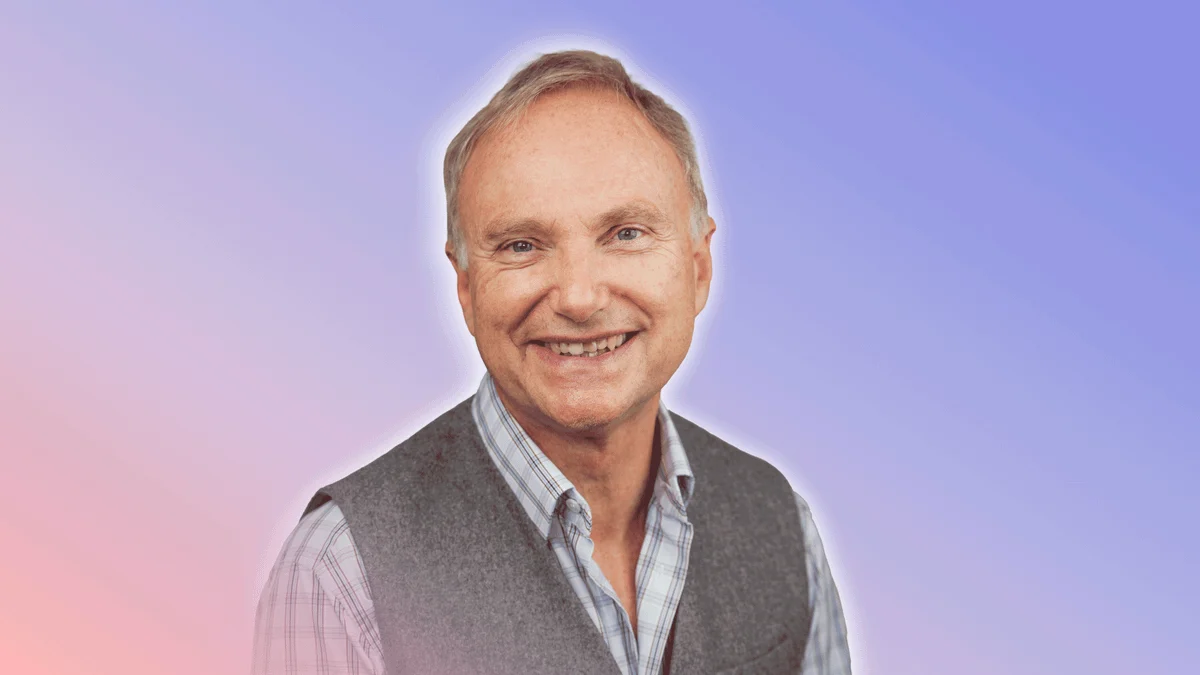
The landscape of clinical psychology has undergone a seismic shift in the last two decades. Once viewed primarily through the lens of deficits and behavioral pathology, autism spectrum disorder (ASD) is increasingly being understood as a form of "neurodivergence"—a fundamental difference in how the brain processes information. Among the most prominent voices in this paradigm shift is Dr. Tony Attwood, a world-renowned clinical psychologist who has spent over 40 years working with autistic individuals.
In a recent discussion regarding the evolving perception of the autistic experience, Attwood explored the nuanced ways in which neurodivergent individuals interact with a world designed for the neurotypical. This article examines the core tenets of his recent discourse, the historical context of these shifts, and the profound implications for society.
Main Facts: Redefining the Spectrum
The central theme of Dr. Attwood’s recent work is the move away from the "medical model" of autism toward a "neurodiversity model." For decades, the diagnostic criteria for autism were focused on what individuals could not do: lack of social reciprocity, repetitive behaviors, or sensory sensitivities. Attwood argues that this framing is fundamentally flawed.
Instead, he posits that the autistic brain is characterized by a different cognitive architecture. Key takeaways from his current perspective include:
- Pattern Recognition and Systematizing: Autistic minds often excel at identifying underlying patterns and rules in complex systems—whether those systems are mathematical, mechanical, or social.
- The Sensory Filter: Autistic individuals often experience sensory input with greater intensity. What is background noise to a neurotypical person can be an overwhelming, painful stimulus to someone on the spectrum.
- The "Double Empathy" Problem: Attwood highlights the work of researchers like Damian Milton, noting that social difficulties are not solely an "autistic deficit" but a mismatch in communication styles between autistic and non-autistic individuals.
Chronology: From Kanner to Neurodiversity
To understand why Attwood’s current perspective is so revolutionary, one must look at the timeline of autism research.
1940s: The Early Classifications
Leo Kanner and Hans Asperger independently described children who displayed what we now recognize as autism. At the time, these behaviors were viewed through a strictly clinical and, at times, stigmatizing lens. Kanner’s focus was on "infantile autism," while Asperger observed "autistic psychopathy," emphasizing social withdrawal.
1980s–1990s: The Rise of Asperger’s Syndrome
Dr. Tony Attwood emerged as a leading authority during this era, specifically helping to formalize the understanding of Asperger’s Syndrome. His work provided a framework for recognizing individuals with average to high intelligence who struggled with the social nuances of their peers. This era was critical for validation, yet it still relied heavily on identifying "what was missing" in social functioning.
2010s–Present: The Neurodiversity Paradigm
The shift began in the early 2010s, bolstered by the self-advocacy movement. The internet allowed autistic adults to share their lived experiences, effectively challenging the clinical assumptions held by researchers. Today, the focus has shifted toward "strengths-based" therapy, which seeks to support the individual’s unique cognitive style rather than attempting to "normalize" them.
Supporting Data: The Cognitive Reality
What makes an autistic mind tick? Attwood points to several cognitive domains where neurodivergent individuals often show unique capabilities:
Hyper-Focus and "Special Interests"
While traditional psychiatry has often labeled deep, specialized interests as "obsessive," Attwood argues they are actually a form of deep-flow cognition. When an autistic individual is engaged in their area of interest, they reach levels of concentration and data synthesis that are rare in the general population.
Fluid Intelligence vs. Crystallized Knowledge
Data suggests that while many autistic individuals struggle with the "fluid" nature of social interaction (where rules change depending on context), they excel in "crystallized" systems where rules are consistent. This explains why autistic individuals are often over-represented in fields like computer programming, engineering, and music theory.
Sensory Processing Challenges
According to recent clinical surveys, over 70% of autistic adults report significant sensory processing differences. These are not merely "quirks"; they represent a biological difference in how the brain filters sensory information, leading to either sensory seeking or sensory avoidance behaviors.
Official Responses and Clinical Shifts
The medical community has been forced to adapt. The DSM-5 (Diagnostic and Statistical Manual of Mental Disorders) consolidated various labels (Asperger’s, PDD-NOS, Classic Autism) into a single "Autism Spectrum Disorder" diagnosis. While this was controversial, it signaled a move toward recognizing the spectrum as a fluid, individual experience.
Dr. Attwood’s clinical approach now emphasizes:
- Co-occurring conditions: Addressing the anxiety and depression that stem from living in a society that doesn’t accommodate neurodivergent needs.
- Self-advocacy training: Empowering autistic individuals to explain their own sensory and communication needs to employers and educators.
- Parental guidance: Shifting the focus for parents from "fixing" their child to "understanding" their child’s unique worldview.
Implications: Building an Inclusive Future
The implications of adopting a neurodiversity-informed view of the world are profound, touching on everything from public education to corporate recruitment.
Education Reform
If we accept that the autistic brain learns through logical patterns rather than rote social imitation, the traditional classroom—with its emphasis on collaborative group work and noisy environments—must change. Schools are beginning to implement "quiet zones" and flexible learning environments that acknowledge the reality of sensory overload.
The Workplace
Companies like SAP and Microsoft have already begun implementing "Autism at Work" programs. They have realized that the autistic tendency for deep focus and detail-oriented work is an asset, not a liability. The implication here is that inclusion is not just an act of charity; it is a competitive advantage.
Social Acceptance and the "Masking" Epidemic
Perhaps the most significant implication is the focus on "masking." Many autistic individuals, particularly women, spend an immense amount of cognitive energy attempting to mimic neurotypical behavior to fit in. Attwood and other researchers note that this constant performance leads to extreme burnout. A more neuro-inclusive society would reduce the pressure to mask, allowing individuals to operate in their natural, more efficient cognitive states.
Conclusion: A New Horizon
Dr. Tony Attwood’s dialogue serves as a reminder that the human brain is not a monolith. Our history is marked by a desire to categorize and normalize, but our future should be defined by an appreciation for the variety of ways in which humans perceive, process, and interact with their environment.
By moving away from the deficit-based models of the past and embracing the diversity of human cognition, we do more than just improve the lives of autistic individuals. We enrich our collective understanding of intelligence, creativity, and the human experience itself. As Attwood suggests, the goal is not to change the autistic mind to fit the world, but to create a world that is expansive enough to accommodate the full spectrum of human capability.
The conversation is far from over, but for the millions of neurodivergent individuals across the globe, the shift in perspective is a necessary step toward true equity. As we move forward, the challenge for researchers, policymakers, and the public is to listen—not to the clinicians defining autism from the outside, but to the voices of those who live the autistic experience every day.
For those seeking to delve deeper into the complexities of the neurodivergent experience, further exploration into the works of Dr. Tony Attwood and the evolving literature on the autism spectrum remains a vital resource for educators, parents, and clinicians alike.