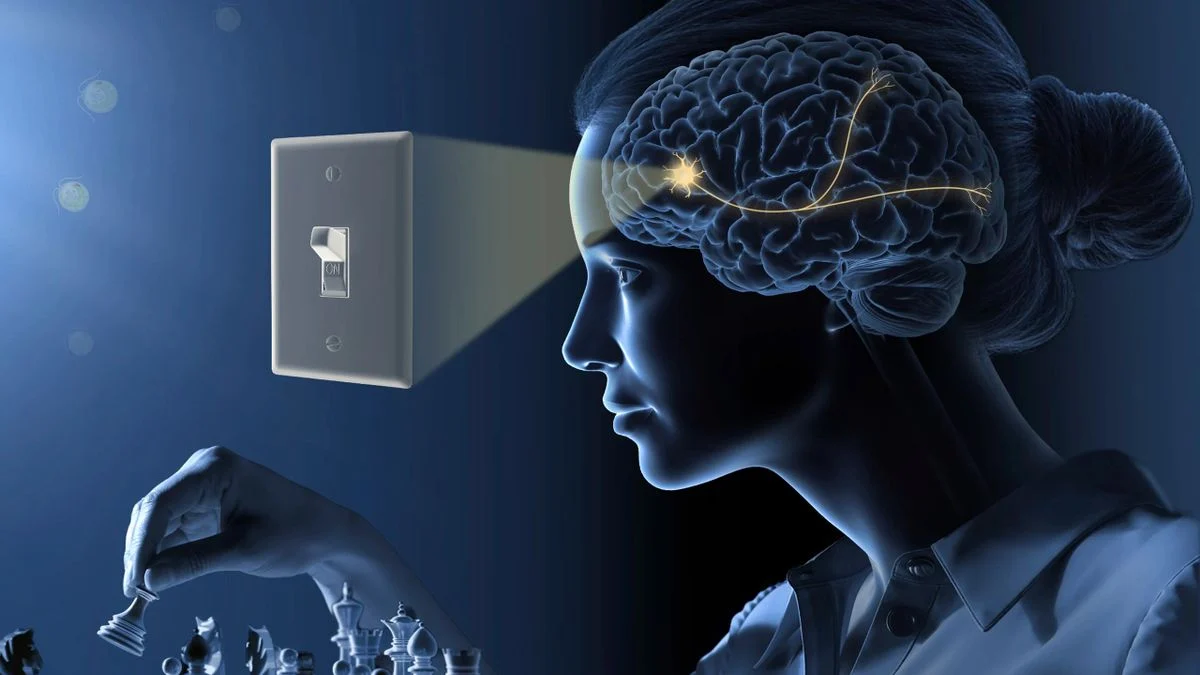
In the annals of scientific discovery, few breakthroughs have fundamentally altered the trajectory of an entire field as dramatically as optogenetics. What began as a bold, almost science-fiction-inspired hypothesis—that light-sensitive proteins could be used to control the activity of individual neurons—has evolved into the cornerstone of modern neuroscience. By enabling researchers to manipulate specific brain circuits with millisecond precision, this technology has unlocked the secrets of how the brain drives behavior, memory, and emotion.
Main Facts: The Intersection of Light and Life
At its core, optogenetics is a technique that combines genetic engineering and optics to control the activity of neurons. The method relies on light-sensitive proteins called opsins, which are naturally found in certain microorganisms like algae. When introduced into specific neurons in a living brain, these proteins act as ion channels or pumps that open or close in response to specific wavelengths of light.
By delivering light via a fiber-optic cable implanted into the brain, researchers can effectively turn specific groups of neurons "on" or "off" at will. This provides an unprecedented level of precision that traditional methods—such as electrical stimulation or pharmacological agents—could never achieve. Electrical stimulation, while powerful, is inherently "blunt," activating everything in the vicinity of the electrode. Optogenetics, by contrast, allows for cell-type-specific control: scientists can target only the neurons that produce dopamine, for instance, leaving neighboring neurons unaffected.
The implications for understanding neurological disorders are profound. By mimicking or suppressing the abnormal firing patterns observed in conditions like Parkinson’s disease, depression, or epilepsy, researchers are mapping the "wiring diagram" of the human brain with granular detail.
A Chronology of Discovery: From Algae to the Nobel Prize
The path to optogenetics was not a straight line; it was a synthesis of decades of curiosity regarding how single-celled organisms sense their environment.
The Foundation (1970s–1990s)
The scientific groundwork was laid by researchers like Dieter Oesterhelt and Walther Stoeckenius, who identified bacteriorhodopsin in the 1970s. This was the first known light-driven proton pump. In the 1990s, Georg Nagel and Peter Hegemann discovered channelrhodopsins—proteins that act as ion channels—in the green alga Chlamydomonas reinhardtii. These proteins allowed the algae to navigate toward light, a behavior known as phototaxis.
The Breakthrough (2004–2005)
The pivotal moment occurred in 2005, when Karl Deisseroth, Ed Boyden, and their colleagues at Stanford University successfully expressed channelrhodopsin-2 (ChR2) in mammalian neurons. They demonstrated that, when exposed to blue light, these neurons would fire action potentials on command. The publication of these findings in Nature Neuroscience marked the birth of optogenetics.
Scaling and Refinement (2010–Present)
Following the initial proof of concept, the field exploded. Researchers developed a vast "toolbox" of opsins, including inhibitory opsins (like halorhodopsin) that can silence neuronal activity, and red-shifted opsins that allow light to penetrate deeper into tissue. Today, the technology is used in laboratories worldwide to investigate everything from the neural basis of addiction and fear to the mechanisms of sleep and social behavior.
Supporting Data: Mapping the Neural Landscape
The power of optogenetics lies in its quantitative rigor. Before this technology, neuroscience was largely observational; researchers could correlate brain activity with behavior but rarely prove causation.
- Temporal Precision: Optogenetics operates on the millisecond timescale, matching the natural firing speed of neurons. This allows scientists to map the precise sequence of events required for a complex behavior, such as a motor task or a sensory decision.
- Cell-Type Specificity: By utilizing genetic promoters, researchers can restrict opsin expression to specific sub-populations of neurons. For example, by targeting parvalbumin-positive interneurons, scientists have been able to parse how different inhibitory circuits regulate the excitation-inhibition balance in the prefrontal cortex.
- Circuit Mapping: Large-scale data sets now show that optogenetic intervention can trigger or arrest specific behaviors—such as turning a mouse to the left or right, or inducing an immediate fear response—by stimulating specific projections between brain regions like the amygdala and the hippocampus.
Official Responses and Ethical Discourse
The scientific community has embraced optogenetics as the most significant development in neuroscience in the last half-century. In 2010, the journal Nature Methods named it the "Method of the Year." More recently, the field has received the highest recognition, with its pioneers being frequent contenders for—and recipients of—major international awards, including the Breakthrough Prize in Life Sciences and the Lasker Award.
However, the rapid progress of optogenetics has also prompted serious ethical discussions.
The Dual-Use Dilemma
While the primary goal is to treat diseases like Parkinson’s or Alzheimer’s, the ability to "edit" behavior via neural control raises concerns about potential misuse. Neuroethicists have cautioned against the normalization of brain manipulation. Although the technology currently requires invasive procedures (viral vectors and fiber-optic implants), which makes it unsuitable for human applications outside of highly controlled clinical trials, the prospect of non-invasive, light-based neuromodulation remains a point of intense focus for future research.
Clinical Translation
The medical community remains cautious but optimistic. Clinical trials are currently investigating how optogenetics might restore vision in patients with retinitis pigmentosa, where light-sensitive cells in the retina have died. By using gene therapy to introduce opsins into the remaining retinal ganglion cells, researchers hope to essentially "re-wire" the eye to process light once again.
Implications: The Future of Brain Science
The integration of optogenetics into medicine represents a paradigm shift. We are moving away from treating the brain as a "black box" where chemicals are blindly dumped to modulate mood or cognition, toward a future of "circuit-based medicine."
Toward Precision Psychiatry
Current psychiatric treatments, such as SSRIs for depression, affect the entire brain, often resulting in significant side effects. Optogenetics provides a roadmap for the next generation of interventions. By identifying the specific circuits that go awry in conditions like depression or OCD, scientists hope to develop targeted therapies—perhaps involving deep brain stimulation (DBS) optimized by optogenetic findings—that correct the neural malfunction without affecting the rest of the brain.
Unlocking the "Connectome"
Beyond medicine, optogenetics is accelerating our understanding of the human connectome—the complex map of neural connections. By combining optogenetics with high-resolution imaging techniques like two-photon microscopy, researchers are beginning to watch the brain "think" in real-time, observing how information propagates through circuits as a behavior is executed.
The Road Ahead
The challenges that remain are significant. The need for invasive gene therapy and the delivery of light into deep brain structures remain the primary bottlenecks for widespread clinical application. Researchers are currently working on developing "upconversion" nanoparticles that can convert infrared light (which penetrates tissue easily) into the visible light required by the opsins, potentially removing the need for fiber-optic implants.
As we look to the next decade, the legacy of this "light switch" technology is clear. It has fundamentally democratized our ability to interrogate the brain, turning neuroscience from a science of observation into a science of engineering. Whether this leads to a cure for neurodegenerative diseases or a deeper understanding of what constitutes consciousness remains the great scientific challenge of our time.
Are you interested in the ongoing revolution in neuroscience?
To continue reading the full report, including exclusive interviews with leading neuroscientists and detailed analysis of upcoming clinical trials, gain full access with SPIEGEL+. Choose the offer that best fits your needs:
- The Digital Starter: Get full access to all S+ articles and the digital weekly edition for just €1 for the first 4 weeks. (Renews at €6.49/week).
- The Annual Advantage: Save 31% with our 52-week plan at just €4.49 per week.
Already a subscriber? Log in here.
Existing print subscribers can click here to activate their digital upgrade.