Paris, France – October 13, 2026 – France is currently experiencing a wave of youth-led protests that are rapidly escalating, drawing stark comparisons to the historic student and worker revolts of May 1968. These demonstrations, initially focused on educational disparities, have morphed into a potent symbol of the deep societal fissures plaguing the nation, intensifying the already acrimonious presidential election campaign. The scale and intensity of the unrest have surpassed previous protest movements, revealing a nation grappling with profound divisions over immigration, identity, and economic opportunity.
The Spark Ignites: From Suburban Schools to National Outcry
The current unrest began in mid-September with initial blockades at a lycée in Créteil, a southern suburb of Paris. What started as a localized action quickly gained momentum, spreading to other banlieues – the often marginalized, immigrant-heavy outer districts surrounding major cities. The spark of discontent, originating in these areas often facing systemic disadvantage, has now ignited a national fire, reaching the more affluent lycées (high schools) in urban centers.
This unprecedented solidarity has been a defining characteristic of the protests. Initially, students from immigrant-background communities in the disadvantaged banlieues found themselves at the forefront. However, the movement has broadened significantly, garnering support from a diverse coalition. University students have joined the fray, alongside teachers’ unions and parent associations, all rallying behind the core demand for improved educational opportunities for youth in the banlieues and for young people across France in general. This widespread support underscores a shared concern for social mobility and equitable access to education, issues that resonate deeply across different socio-economic strata.
Escalating Violence and a State Under Pressure
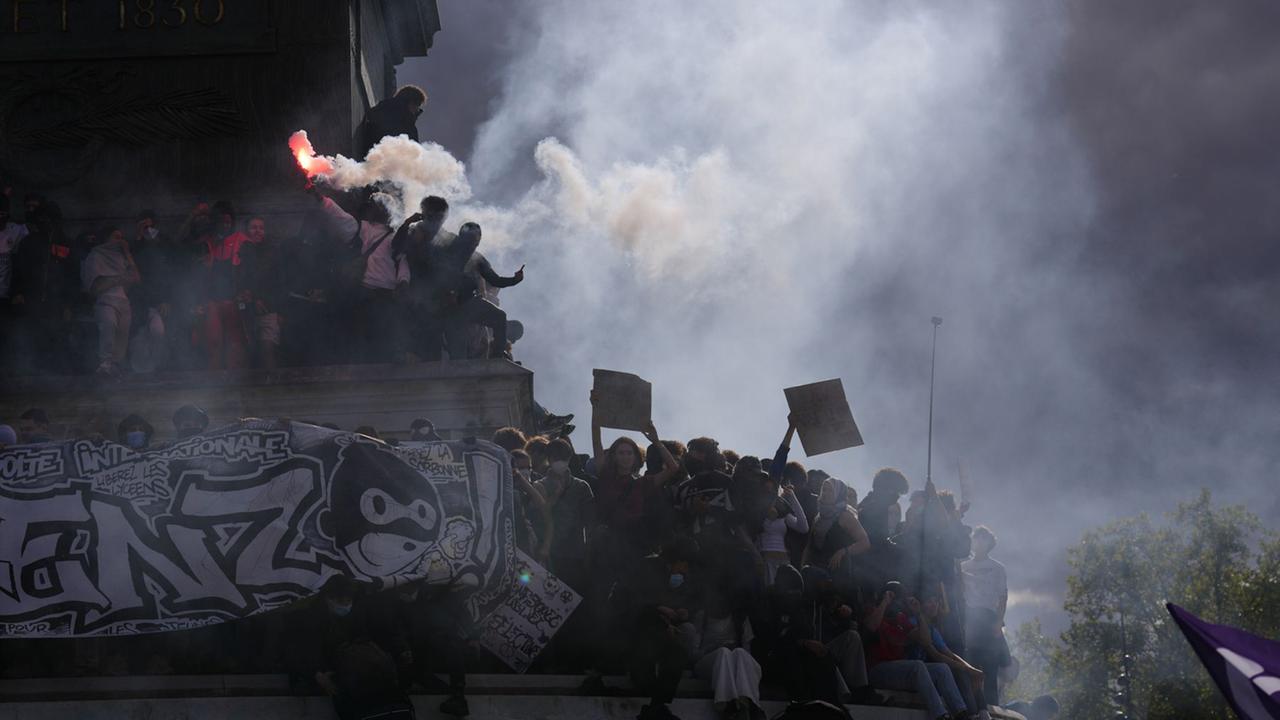
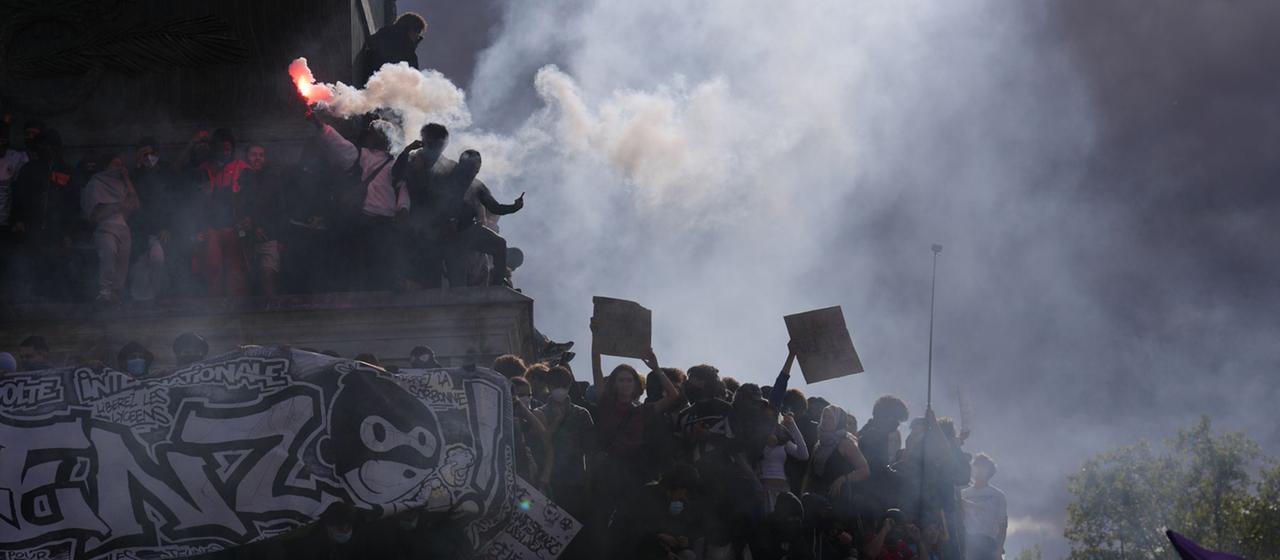
While the spirit of solidarity is a powerful force, the protests have also been marred by alarming levels of violence, a disturbing trend even in a nation accustomed to demonstrations. Masked individuals have engaged in pitched battles with police, wielding stones, fireworks, and iron bars. The Ministry of the Interior reports that over 700 officers have been injured since the protests began, a testament to the ferocity of the clashes.
The violence has not been confined to confrontations with law enforcement. School principals and teachers have also been targeted. School entrances have been set ablaze, and in Nantes, an entire entrance hall of a school was engulfed in flames. Public property has also suffered significant damage, with bus shelters smashed and trash bins ignited, painting a grim picture of the destructive element that has become intertwined with the protests.
The police response has been characterized by a firm directive from Interior Minister Laurent Nuñez, authorizing the use of "all non-lethal weapons if necessary" to quell the unrest. This has led to the deployment of tear gas and stun grenades. Tragically, this forceful response has resulted in severe injuries among students. A 15-year-old boy has had to have his hand amputated, another student lost an eye, and a third suffered a double jaw fracture. These severe casualties have ignited further outrage and debate about the proportionality of the police response.
Record Detentions and a Deeply Divided Society
The sheer scale of the crackdown is evident in the unprecedented number of detentions. Nearly 7,000 individuals have been taken into police custody since the protests began. This figure dwarfs even the numbers seen during the prolonged Yellow Vest movement, highlighting the intensity of the state’s response to the current wave of unrest.
The stark divisions within French society are palpable in the reactions to the ongoing crisis. The recent injury of the 15-year-old student led to a temporary suspension of the use of a specific type of grenade by the police, a move ordered by the Interior Minister. This decision, however, did not unify the nation but rather exacerbated existing tensions.
One faction called for an outright ban on all grenades and rubber bullets in the context of student protests, arguing for de-escalation and the protection of young lives. Conversely, another segment of the population, particularly on the right, accused Minister Nuñez of capitulating to the "left-wing mainstream," suggesting that the government was caving to pressure rather than maintaining order. This polarized reaction underscores the deep ideological chasm that the protests have exposed.
Political Recriminations and the Exploitation of Unrest
The violent clashes have been accompanied by a barrage of harsh rhetoric, with far-right nationalists, the government, and far-left factions trading accusations and deflecting blame. The government, citing intelligence reports, has alleged that the far-left party La France Insoumise (LFI) is orchestrating the protests. LFI vehemently denies these accusations, dismissing them as a "infamous conspiracy theory" aimed at suppressing the movement.
However, it is undeniable that LFI, which enjoys significant support among voters under 24 – polling around 40% in that demographic – is strategically leveraging the protests to bolster its popularity. LFI representatives have not only participated in demonstrations but have also been actively present at school blockades, aligning themselves with the youth’s grievances.
On the far-right, politician Eric Zemmour, known for his more radical stance than Marine Le Pen of the Rassemblement National, has seized the opportunity to intensify his anti-immigrant rhetoric. Zemmour claims that the "rioters are always the same," drawing a sharp distinction between what he terms two Frances: "the one whose Christian youth jubilantly welcomed the Pope" and "the Arab-Muslim France of the banlieues." He frames the current situation as a "struggle between two Frances," pitting a "new France" against an "eternal France." Zemmour’s rhetoric cleverly co-opts Jean-Luc Mélenchon’s slogan "La Nouvelle France" (The New France), which describes France as a multicultural immigrant nation, while simultaneously invoking the mythical "eternal France" – a concept often used by the political right to denote a supposedly pure, pre-immigration French identity.
The War of Images and the Weaponization of Information
Beyond verbal sparring, a "war of images" has also erupted, often fueled by misinformation and disinformation. Bally Bagayoko, the LFI mayor of Saint-Denis, a diverse department north of Paris, found himself accused by right-wing politicians and even government representatives of aligning with the violent demonstrators. This accusation stemmed from an interview given outside a lycée where he stated that violence could be "legitimate, but if one can avoid it, it is better."
Shortly after, a video surfaced on Instagram purportedly showing the mayor dancing in front of a burning trash can, implying he was actively participating in the riots. It took days for public service broadcaster France Info to reconstruct the full scene using other footage, proving that Bagayoko had actually moved the burning trash can away from the school gate at personal risk and then assisted in activating a fire extinguisher to put out the blaze. This incident highlights the potent role of manipulated media in shaping public perception and escalating political tensions.
The conflict has become even more acrimonious in the lead-up to the current protests. LFI presidential candidate Jean-Luc Mélenchon accused a student representative, who is a member of the ruling Renaissance party, of undermining the student movement. This accusation led to the 18-year-old becoming the target of a widespread digital "shitstorm." Conversely, the right-wing press has recently lauded Louise Montangon from Bordeaux, a representative of a conservative student union, who has been vociferously condemning the school and university blockades.
A Government Constrained: Little Room for Reform
These escalating protests and internal divisions are unfolding against the backdrop of a deep political and financial crisis gripping France. Prime Minister Sébastien Lecornu has announced "first decisions" to be made by the end of October. However, his minority government is currently focused on navigating a tight austerity budget to avert a debt crisis similar to Greece’s. This precarious financial situation leaves little room for significant reform initiatives.
Furthermore, the looming presidential elections in April of next year cast a long shadow over any potential policy initiatives. Genuine reforms aimed at improving the education system, a key demand of the protesters, are unlikely to materialize given the political climate and the proximity of the elections. Current polls suggest that Marine Le Pen of the far-right Rassemblement National is the leading contender for the presidency, a prospect that further intensifies the stakes of the current unrest and its potential to shape the nation’s future trajectory. The events of the past weeks are not merely a protest; they are a profound indictment of France’s social fabric and a stark warning of the challenges that lie ahead.