


Paris, France – October 13, 2026 – The French National Assembly convenes today for the commencement of crucial budget deliberations for the upcoming year. Facing a significant fiscal deficit and a national debt approaching 120% of its economic output, the government under Prime Minister Sébastien Lecornu is poised to champion a stringent austerity program aimed at curbing spending and restoring fiscal health. However, this delicate balancing act unfolds against a backdrop of mounting political tension, with presidential elections looming just six months away, promising a stormy debate and a challenging path to legislative consensus.
The proposed budget, unveiled by Finance Minister Roland Lescure approximately two weeks ago, paints a stark picture of France’s financial predicament. Lescure himself acknowledged the gravity of the situation, describing the fiscal year 2027 as following an "equally difficult" preceding period. This understated assessment belies the formidable challenges ahead, as the nation grapples with the significant burden of debt servicing.
The Weight of Debt: A Fiscal Reckoning
Official figures reveal that France’s debt-to-GDP ratio stands at nearly 120% for the current year. The sheer scale of this debt is underscored by the nearly €80 billion allocated in the current budget solely for interest payments on loans. The cost of borrowing has also escalated significantly, with yields on ten-year French government bonds now hovering around a precarious 5%. This elevated interest rate environment places immense pressure on public finances, diverting vital resources that could otherwise be allocated to essential public services, investment, or social programs.
This dire financial situation has prompted concern from economic experts. Mathieu Plane, an economist at the prestigious Sciences Po university and a researcher at the economic think tank OFCE, articulated the severity of France’s fiscal standing. "France has its back against the wall financially," Plane stated in an interview with France 5. He drew a parallel to the 2010 debt crisis, when France’s budget deficit also exceeded 5% of GDP. "We managed to get that under control, even though it was difficult. But at that time, there were political majorities to achieve that. Today, the question arises: Who can achieve this? And how?"
Austerity Measures and Shifting Priorities
The government’s proposed budget outlines a comprehensive set of "sanction measures" totaling over €40 billion. The primary focus of these cuts is directed towards development aid and employment policies, areas that have historically been significant components of government spending. Conversely, defense expenditures are slated for a substantial increase, reflecting a strategic recalibration of national priorities in an increasingly volatile global landscape.
Finance Minister Lescure emphasized that the core objective of these measures is to reduce the budget deficit from its current 5.4% to a targeted 5.0% of GDP. "This is a very important element, an anchor," Lescure declared, urging a sense of responsibility from all members of parliament. "I am counting on all deputies and senators to behave responsibly: Given a difficult international situation and major challenges. … Let us face this challenge to preserve our room for maneuver."
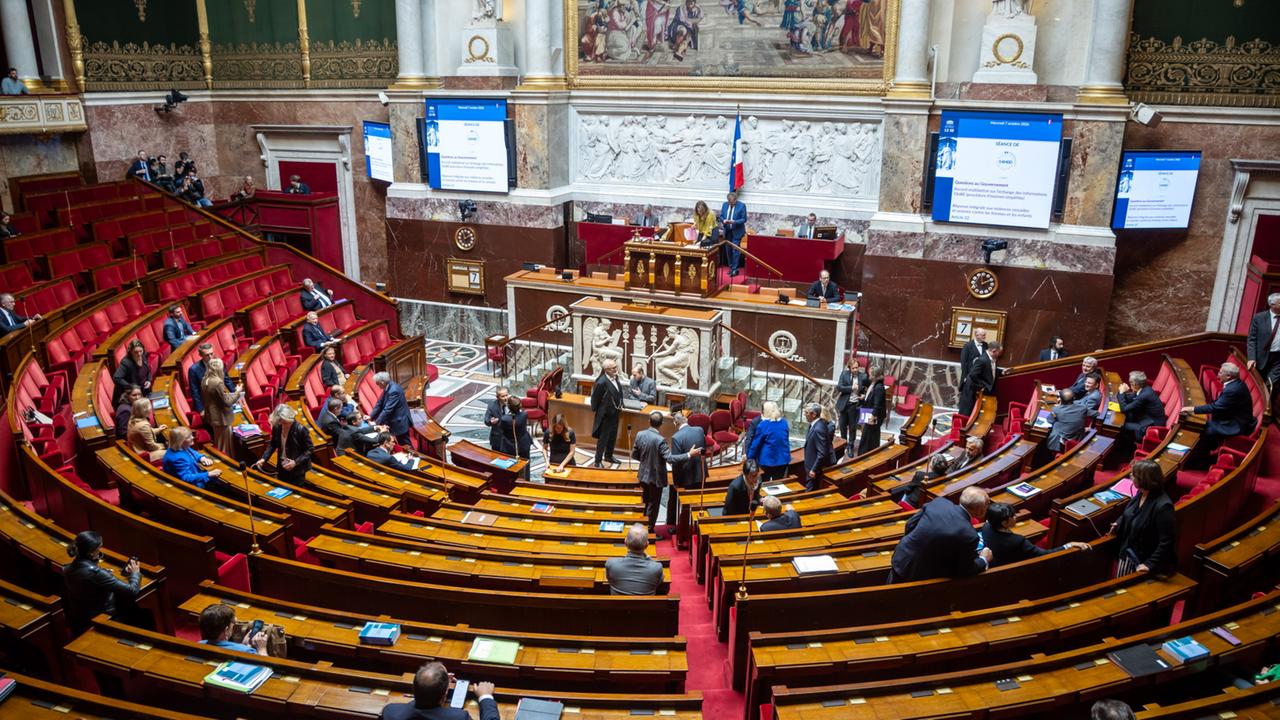
However, implementing these austerity measures represents a formidable "fiscal Hercules task" for the government, as described by observers. It is also a precarious political tightrope walk. The ruling party lacks an outright majority in the National Assembly, making the support of opposition parties indispensable for the passage of the budget. With presidential elections just six months away, Prime Minister Lecornu can scarcely expect overt cooperation from the opposition, who may view the budget as a political opportunity rather than a national necessity.
Opposition Voices: Criticism and Counter-Proposals
The proposed budget has already ignited fierce criticism from across the political spectrum.
Left-Wing Opposition: Targeting the Wealthy
Éric Coquerel, a member of the far-left La France Insoumise (LFI) party and the chairman of the Finance Committee, has been a vocal critic of the government’s fiscal proposals. He argues that the planned tax increases disproportionately affect pensioners and the middle class, while the wealthiest segments of society remain largely untaxed. "For us, as the opposition, there is no reason to support a bad budget law," Coquerel stated, signaling his party’s intent to oppose the bill. LFI advocates for a more progressive approach to deficit reduction, suggesting that higher taxes on corporations and high earners could generate significant revenue without burdening ordinary citizens.
Right-Wing Opposition: Alternative Austerity Blueprint
The far-right Rassemblement National (RN) presented its own alternative budget proposal last week, offering a contrasting vision for fiscal consolidation. The RN’s plan includes significant cuts to France’s contributions to the European Union budget – a move that is currently under negotiation in Brussels – and a reduction in social benefits for migrants. Presidential candidate Marine Le Pen described the government’s austerity measures as "radical," and stated, "We will save a total of 140 billion euros by 2032 – compared to 2026." She added, "I hope not to have to intensify this goal if the situation deteriorates further by the second round of the presidential election on May 2nd." The RN’s proposals often resonate with a segment of the electorate concerned about national sovereignty and immigration, framing their fiscal policies as a means to protect French interests.
Economic Realities and Political Uncertainty
Economic experts, however, have raised questions about the feasibility and effectiveness of various proposals, including those from the RN. Many of the RN’s suggested savings are deemed difficult to implement or likely to yield limited fiscal benefits.
The High Council of Public Finances, an independent body attached to the French Court of Audit, has also weighed in on the government’s budget draft. The Council has pointed out that the government’s projections are based on optimistic assumptions, including an economic growth rate of 1% and declining interest rates on French government bonds. These assumptions, if not met, could further complicate the government’s deficit reduction targets.
The prevailing political uncertainty, coupled with the fragile parliamentary majority, is likely to exacerbate the challenges of implementing the government’s austerity agenda. The upcoming budget debates are expected to be highly contentious, characterized by sharp exchanges and potential legislative deadlock. The opposition’s unified front against the government’s proposals underscores the deep divisions within French politics and the difficulty the administration will face in securing the necessary votes to pass its budget.
The Road Ahead: A Test of Governance
As the National Assembly embarks on this critical fiscal journey, the stakes are exceptionally high. The government’s ability to navigate these treacherous financial waters and secure legislative approval for its austerity measures will not only determine France’s economic trajectory but also significantly influence the political landscape leading up to the presidential elections. The coming weeks will reveal whether France can achieve the necessary consensus to address its fiscal challenges or if political expediency will take precedence over sound economic management. The outcome of these debates will have far-reaching implications for the nation’s financial stability and its standing within the European Union.


