As global temperatures continue to climb, the iconic glaciers of the Swiss Alps are suffering an unprecedented decline. New data released by the GLAMOS monitoring network reveals a harrowing trend: 2026 has been another year of devastating loss, with the nation’s ice reserves shrinking by more than five percent in a single season. As the "eternal ice" vanishes, Switzerland is forced to confront a future that is warmer, drier, and fundamentally altered.
The Anatomy of a Crisis: Main Facts and Observations
For thousands of years, glaciers have been the heartbeat of the Swiss landscape. They are not merely scenic backdrops for postcards or tourist destinations; they are the water towers of Europe. However, the latest findings from the Swiss Glacier Monitoring Network (GLAMOS) indicate that this geological legacy is under immediate threat.
In 2026, the glaciers lost over five percent of their total remaining volume. This follows a multi-year trend of accelerated ablation—the process of snow and ice loss through melting and evaporation. Glaciologists like Matthias Huss, who leads the GLAMOS project at ETH Zurich, have described the current situation as "devastating." The combination of a snow-poor winter, which left the ice exposed and vulnerable, and a series of relentless heatwaves from May through September, has turned the high-altitude regions into a landscape of rapid retreat.
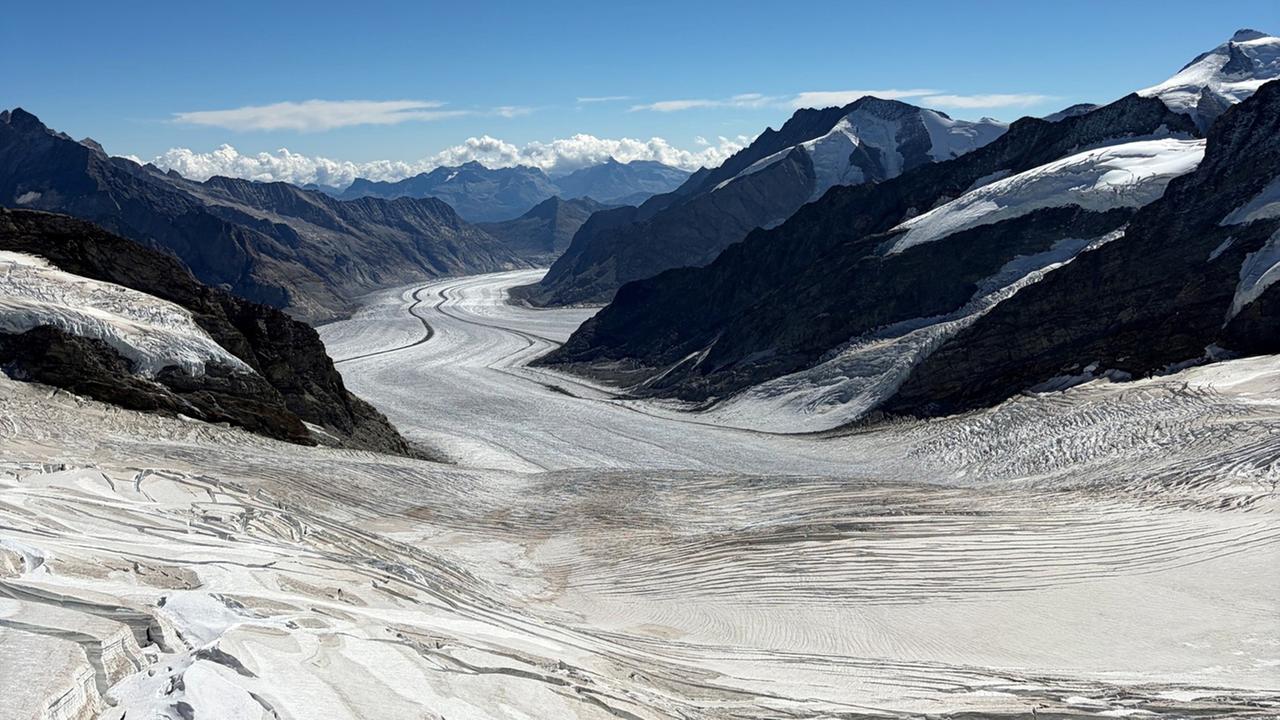
While the loss recorded this year falls slightly short of the record-shattering year of 2022, it remains one of the most severe contractions observed since systematic monitoring began over a century ago. The Aletsch Glacier, the largest in the Alps, serves as the most visible barometer of this shift. Stretching nearly 23 kilometers and spanning 76 square kilometers, its edges are receding at a rate that is physically reshaping the mountain passes and valleys surrounding it.
A Chronology of Decline
The story of the Swiss glaciers is a tragedy told in stages. For decades, the fluctuations of ice were considered part of a natural cycle. However, the pace of change has shifted from a slow, centuries-long retreat to a rapid, decades-long collapse.
- Mid-20th Century: The glaciers were relatively stable, acting as a reliable, massive reservoir for the region.
- The 1990s and 2000s: Researchers began noting a consistent trend of thinning ice, with the equilibrium line—the altitude where snow accumulation equals melt—creeping steadily higher.
- The 2022 Milestone: The summer of 2022 marked a "black year" for Swiss glaciers, where, for the first time, researchers saw double-digit percentage losses in certain regions.
- 2026 (The Current Status): A cycle of low winter precipitation meant that the "protective blanket" of snow was absent early in the spring. Subsequent summer heatwaves, which have become more frequent and intense due to climate change, acted like a blowtorch on the exposed, dark-colored glacial ice, which absorbs more solar radiation than fresh snow.
Supporting Data: The Science of Melting
The data provided by GLAMOS is derived from a complex network of stakes, sensors, and satellite imagery. The core of the problem lies in the "mass balance" of the glacier. To maintain its size, a glacier needs a winter with heavy, insulating snowfall and a cool, wet summer.
Current meteorological data shows that Switzerland is experiencing higher-than-average temperature increases compared to the global mean. This shift has two immediate consequences:
- Albedo Reduction: As the white, reflective surface of the glacier disappears, it exposes darker rock or "dirty" ice. This reduces the albedo effect, causing the surface to absorb more heat, which in turn accelerates the melting process—a feedback loop that is becoming increasingly difficult to break.
- Elevation Sensitivity: As the glaciers shrink, their surface area at higher, colder altitudes decreases. This forces the ice into lower, warmer zones where it is inherently more susceptible to atmospheric heat, accelerating the rate of loss.
The Human Perspective: Echoes from the Jungfraujoch
The human impact of this transformation is perhaps best felt at the Jungfraujoch, the highest railway station in Europe. Tourists from around the world travel here to witness the "eternal ice," often unaware that they are visiting a relic that may not survive the century.
Cyrill Feigenwinter, a station manager at the high-altitude research station on the Jungfraujoch, observes the change daily. He points to the Konkordia Hut, a landmark built 150 years ago. When it was constructed, the glacier reached up to the hut’s doorstep. Today, hikers must climb a long, daunting steel staircase from the current surface of the glacier to reach the facility—a visceral, physical manifestation of the ice’s retreat.
For visitors like Michael Bock and Uta Munter, the experience is a mix of awe and existential dread. "It gives you a sense of grounding to see this ancient ice," says Bock. "But there is also the realization that this is a finite experience. You realize how much we are changing the world."
Official Responses and Strategic Implications
The Swiss government and scientific community are moving beyond simple observation to active adaptation. The loss of glaciers is not just an aesthetic issue; it is a critical economic and ecological threat.
The Water Cycle Crisis
Glaciers function as natural storage batteries for water. During the winter, they store precipitation as ice, and during the hot, dry months of summer, they release that water into the river systems. This water is essential for:
- Agriculture: Irrigation for the Swiss plateau depends on stable meltwater flow.
- Energy Production: Switzerland’s hydroelectric power plants are highly dependent on the timing and volume of glacial melt.
- Industrial Cooling: Nuclear and thermal power plants require reliable water sources for cooling, which are strained during heatwaves.
Searching for Solutions
In response to these threats, the Swiss federal authorities are currently debating the expansion of artificial water storage. Proposals include the construction of new high-altitude reservoirs designed to capture rainfall that would otherwise run off the mountains immediately. This would serve as a "man-made" replacement for the natural buffering capacity of the glaciers. However, these projects face significant environmental and social opposition, as they require altering pristine alpine ecosystems.
Looking Toward the Future: What is at Stake?
The scientific consensus is sobering. Even if global carbon emissions were to stop tomorrow, the glaciers have already "committed" to a significant period of further melting due to the thermal inertia of the climate system.
The question for Switzerland is no longer whether the glaciers will disappear, but how the nation will adapt to their absence. The disappearance of these ice masses will likely lead to:
- Increased Geohazards: As glaciers retreat, they leave behind unstable slopes, increasing the risk of landslides and rockfalls.
- Biodiversity Loss: Specialized alpine ecosystems that rely on the cold, mineral-rich meltwater are already showing signs of stress and migration.
- Economic Shifts: The tourism industry, which relies heavily on the "glacier brand," will have to pivot toward new forms of high-altitude recreation that do not depend on the presence of ice.
As visitors walk across the thinning ice of the Aletsch, the silence of the glacier is becoming deafening. It serves as a reminder that the world is in a state of rapid flux. The glaciers of Switzerland are not just melting; they are delivering a message about the fragility of the environment and the urgency of the climate crisis. For the people who live in their shadow, the time for passive observation has passed—it is now a time for fundamental societal and industrial transformation.