In a landmark announcement that bridges the gap between evolutionary biology and cutting-edge neuroscience, the Nobel Assembly has awarded the 2026 Nobel Prize in Physiology or Medicine to Peter Hegemann, Georg Nagel, and Karl Deisseroth. Their pioneering development of optogenetics—a revolutionary technique that allows scientists to control the activity of nerve cells with light—has fundamentally altered our understanding of the brain.
For decades, the human brain remained a "black box," its complex neural circuits shielded from precise manipulation. Today, thanks to the serendipitous discovery of a light-sensitive protein in a simple green alga, that box has been pried open. By employing light as a high-precision remote control for neurons, the laureates have provided the scientific community with a tool that does not just observe the brain, but actively interrogates it.
The Genesis: From Pond Scum to Neurobiology
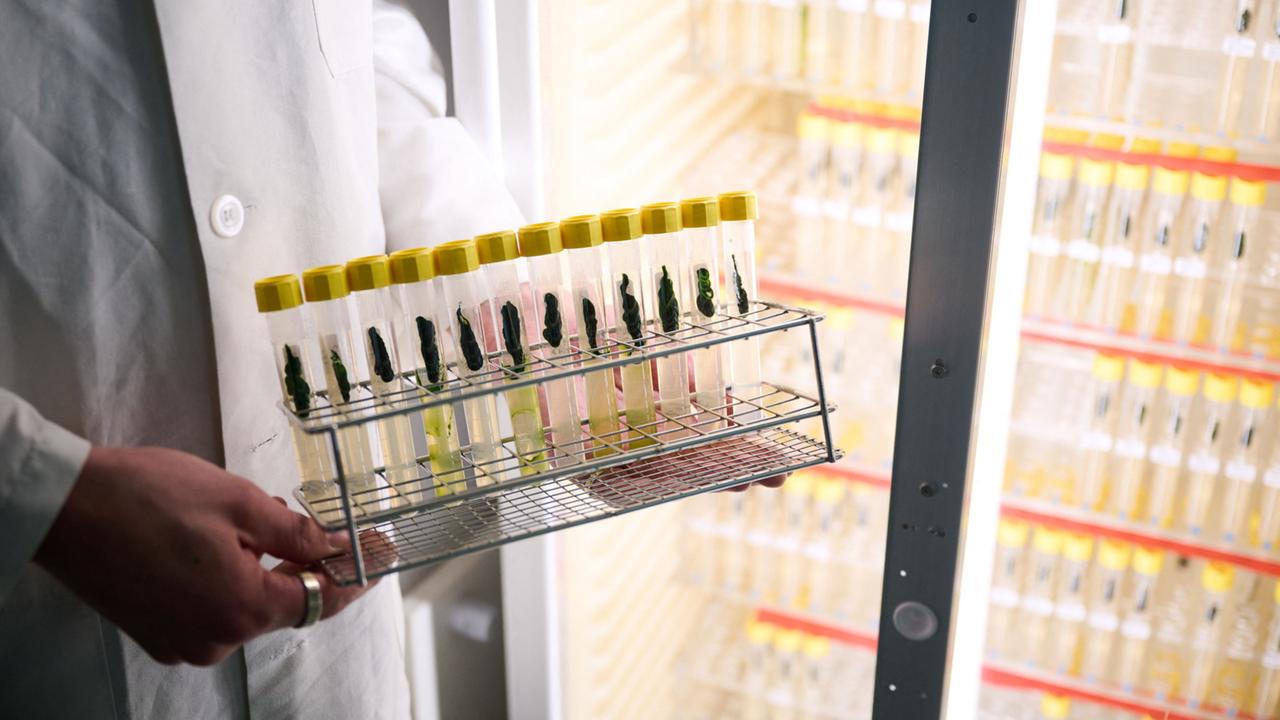
The story of optogenetics does not begin in a high-tech neuro-imaging lab, but rather in the study of basic plant physiology. In the early 2000s, Peter Hegemann, a researcher at Humboldt University in Berlin, was obsessed with a fundamental question: How does the microscopic green alga Chlamydomonas reinhardtii sense and move toward light?
At the time, the genetic code of the alga was becoming public, and Hegemann’s team identified genes that appeared to encode light-sensitive proteins. He reached out to Georg Nagel, then at the Max Planck Institute for Biophysics in Frankfurt, to investigate these proteins further.
The breakthrough came when they expressed these proteins in frog oocytes. They discovered that one specific protein, which they dubbed "Channelrhodopsin-2," acted as a direct, light-gated ion channel. When bathed in blue light, the channel snapped open, allowing charged particles to flood into the cell, triggering an immediate electrical signal.
The implications were profound. Since the fundamental language of the brain—the communication between neurons—is also based on electrical pulses, the researchers posed a daring question: Could they transplant this "light switch" into mammalian neurons to command them at will?
Chronology of a Scientific Breakthrough
- Pre-2000: Theoretical frameworks for neural control are proposed, most notably by Francis Crick, who posited that light would be the ideal medium for precision control due to its speed and targeting capability.
- 2002–2003: Hegemann and Nagel successfully characterize Channelrhodopsin-2, proving it acts as a light-activated ion channel.
- 2005: Karl Deisseroth, working at Stanford University and the Howard Hughes Medical Institute, collaborates with the German team to successfully apply this technology to mammalian neurons. Their seminal paper in Nature proves that light pulses can induce action potentials in live brain cells.
- 2007: The team demonstrates that optogenetics works in the intact brains of living mice, effectively mapping behavior to specific neural circuits.
- 2026: The Nobel Assembly honors the trio, recognizing that their work has evolved from a curiosity of basic biology into the most powerful tool in modern neuroscience.
How the "Lichtschalter" Works
The brilliance of optogenetics lies in its combination of genetic engineering and optics. The process involves three primary steps:
- Genetic Delivery: Scientists introduce the gene encoding the light-sensitive protein (the opsin) into a specific population of neurons using a viral vector.
- Expression: The neurons begin to produce these proteins, embedding them into their outer membranes.
- Activation: Using fiber optics implanted in the brain, researchers deliver precise pulses of light. Because the proteins only respond to specific wavelengths, researchers can "turn on" or "turn off" specific circuits within milliseconds, while leaving neighboring, non-modified cells completely unaffected.
Unlike electrical stimulation, which fires all neurons in a localized area like a sledgehammer, optogenetics allows for the "surgical" activation of specific cell types. If a researcher suspects that a tiny cluster of neurons in the amygdala is responsible for a specific fear response, they can now stimulate exactly that cluster to see if the behavior is triggered.
Official Responses and Peer Recognition
The scientific community has lauded the decision as a perfect example of the power of "blue-sky" research—science conducted without an immediate practical application in mind, driven solely by curiosity.
"It is a testament to the importance of persistence," noted Patrick Cramer, President of the Max Planck Society. "Hegemann and Nagel were exploring the biology of an alga, yet they uncovered the foundational mechanism that would allow us to decode the human mind. They did not set out to build a tool for neuroscience; they set out to understand nature. That is the essence of true discovery."
Patrik Ernfors of the Karolinska Institute echoed this sentiment during the announcement in Stockholm: "We are currently witnessing a golden age of brain research, and optogenetics is the primary driver of that shift. We are no longer limited to observing; we are now participating in the dialogue of the brain."
The Path to Clinical Therapy: Retinitis Pigmentosa
While the primary use of optogenetics remains in fundamental research—allowing us to map the circuits of memory, addiction, and movement—the technology is rapidly approaching the clinic.
One of the most promising applications is in the treatment of degenerative eye diseases, specifically retinitis pigmentosa, where the light-sensing cells of the retina die off. By using optogenetics to turn the remaining, non-light-sensitive retinal ganglion cells into functional photoreceptors, doctors can essentially "re-wire" the eye to see again.
In September 2026, the U.S. Food and Drug Administration (FDA) accepted a biologics license application for a therapy utilizing this exact principle. If approved, it will represent the first gene-independent therapy for this condition, potentially restoring vision to thousands who currently have no options.
Broader Implications: The Future of Neurology
The impact of the 2026 Nobel Prize extends beyond the brain. Research groups worldwide are now applying these principles to the autonomic nervous system, exploring how the brain communicates with the heart, the digestive tract, and the immune system.
As Dirk Becker, a colleague of Nagel at the University of Würzburg, noted: "The barrier between the physical architecture of the brain and the abstract concepts of consciousness and behavior has been lowered. We are moving toward a future where we can treat neurological disorders not just by suppressing symptoms with systemic drugs, but by precisely modulating the faulty circuits responsible for the illness."
Ethical Considerations and the Future
As with any technology that offers the ability to influence behavior, the rise of optogenetics brings with it a host of ethical questions. As the ability to manipulate neural circuits becomes more refined, the scientific community is already engaging in discussions regarding the boundaries of this power. However, for the millions suffering from Parkinson’s disease, epilepsy, and severe psychiatric disorders, the work of Hegemann, Nagel, and Deisseroth represents more than just a scientific triumph—it represents hope.
The 2026 Nobel Prize acknowledges that by looking into the smallest, simplest organisms in our ponds, we have finally found the light needed to illuminate the most complex structure in the known universe: the human brain.