On the expansive, rugged terrain of the Königsbrück military training area, one typically expects to find nothing more than scrap metal, unexploded ordnance, or the silent remnants of maneuvers past. Yet, for those who know where to look, the dense, untamed forests of this Saxon wilderness harbor something far more profound: the echoes of lost villages. Communities like Otterschütz, Rohna, and the Saxon "Krakau" have long been relegated to the pages of history, their physical existence erased to make way for the machinery of war nearly a century ago. However, thanks to a unique collaboration between conservationists and historians, these "ghost villages" are now being brought back into the collective consciousness.
The Silent Witnesses of Military History
The Königsbrück training ground, a vast expanse of land that has served various military powers from the Imperial German Army to the Soviet forces, is a landscape defined by paradoxes. For decades, it was a place of exclusion—a "forbidden zone" where the roar of tanks and the thud of artillery defined the rhythm of life. Today, it is a protected wilderness area managed by the Sachsenforst (Saxony State Forest), where nature has reclaimed the scars left by human conflict.

However, the history of this land did not begin with the military. Before the first soldiers arrived in 1907, these lands were home to thriving rural communities. Families farmed the soil, children played in the village squares, and local traditions were woven into the fabric of daily life. The transition from civilian sanctuary to military testing ground was not a gradual shift, but a forced displacement. Families were uprooted, homes were demolished, and the very infrastructure of these villages was systematically dismantled to clear the field for training maneuvers.
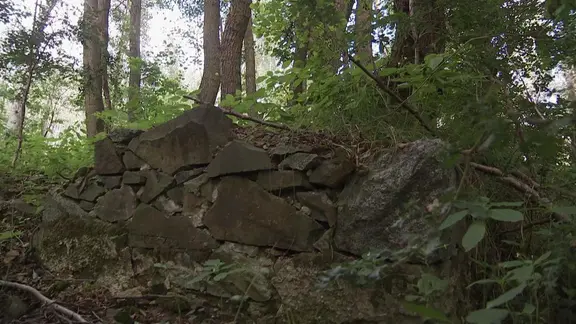
Today, walking through the area is less of a casual hike and more of an expedition through a "jungle" of thirty years of unmanaged nature. The challenge of identifying these sites is immense. As Teresa Brose, a representative of the Sachsenforst, explains, the landscape offers only small, haunting fragments of the past. "We are attempting to bridge the gap between history and the present," says Brose. "What we find are mere remnants—foundations hidden under thick moss, a stray brick, or a remnant of a garden wall. They are the only pieces left of the puzzle that was life here 100 years ago."
A Chronology of Displacement
The history of the Königsbrück area is a testament to the changing tides of European military strategy. To understand the gravity of the loss, one must look at the timeline of the site’s development.

- 1907: The Genesis of the Training Ground: The Prussian military administration officially established the training ground. The first wave of villages, including sections of Zochau and others, were vacated. This was the beginning of the end for the traditional agricultural lifestyle in the region.
- The World War I Era: As the conflict escalated, the training ground became vital for preparing soldiers for the trenches. The need for larger, more sophisticated firing ranges accelerated the destruction of remaining structures.
- The 1930s Expansion: During the rapid rearmament of the Third Reich, the military requirements expanded once again. The last of the original village populations were relocated, and remaining structures were flattened.
- 1945–1990: The Soviet Occupation: After the Second World War, the area was taken over by the Soviet military. This period saw the greatest environmental and structural shifts, as the land was used heavily for tank exercises, effectively sealing off the history of the German villages beneath layers of earth and military debris.
- 1994–Present: The Transition to Wilderness: With the withdrawal of Soviet troops, the site was eventually transitioned into a nature reserve. The Geschichtsverein Truppenübungsplatz Königsbrück e.V. (Historical Association of the Königsbrück Training Ground) began its systematic work to document the lost villages and ensure their memory survived.
The Role of Memory: Curating the Past
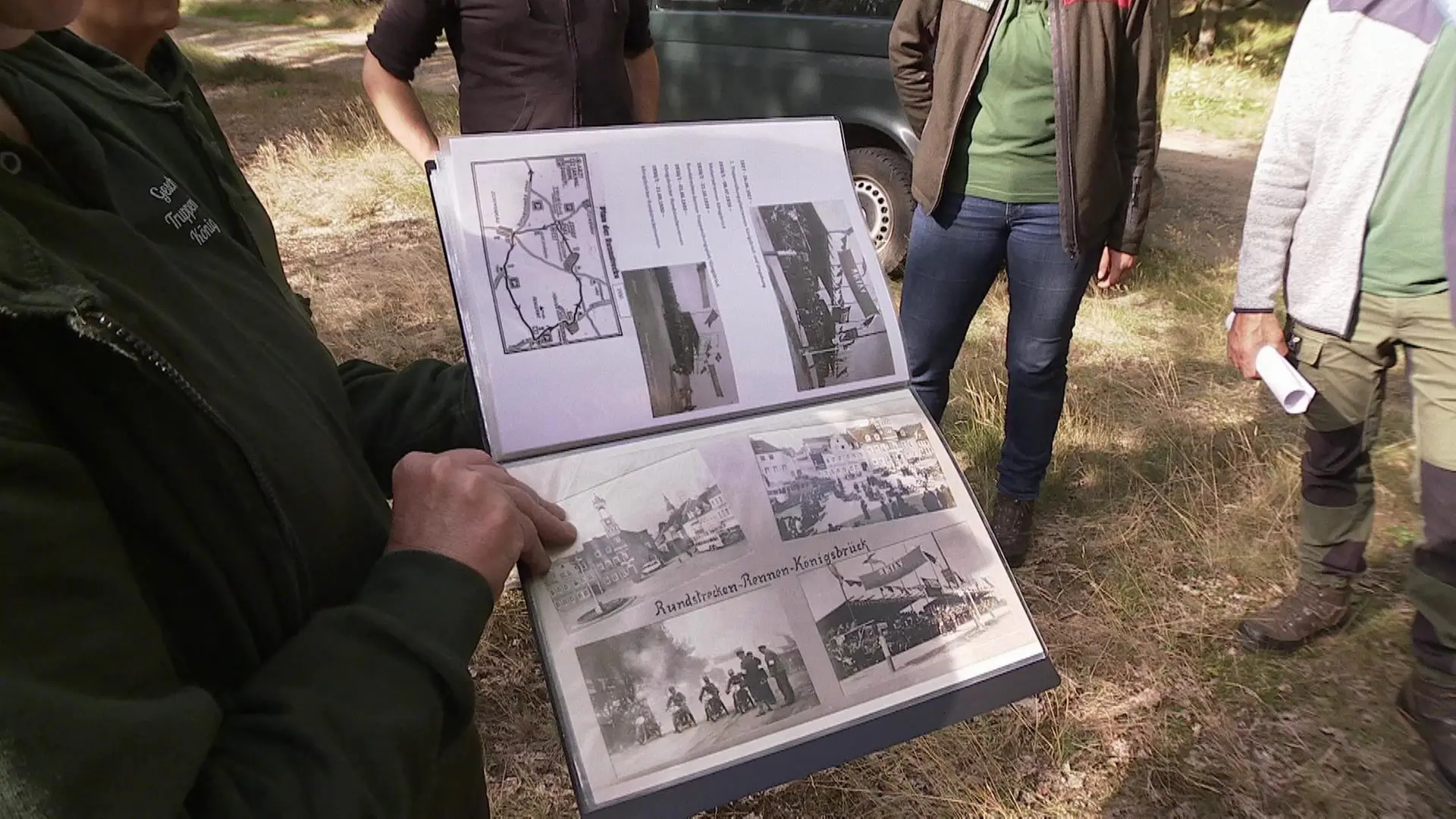
While the physical sites are largely overgrown, the Geschichtsverein has turned to the archive to reconstruct what the forest has obscured. Jakob Scheller, a key member of the historical association, notes that their work is vital for preserving the identity of the region. In the association’s museum, visitors can find artifacts that tell the story of the site’s varied military masters—from the iconic Imperial "Pickelhaube" (spiked helmet) to the remnants of Soviet-era equipment.

However, the core of their mission is the human element. Uta Steckel, another member of the association, describes their ongoing project: "We have been collecting photographs and oral histories since 1994. Our goal is to have a visual record of every single house that once stood in these villages. When you have a photo of a home, you can walk through the forest, look at the foundations, and mentally rebuild the village. You can see the community as it once was, rather than just the ruin it became."

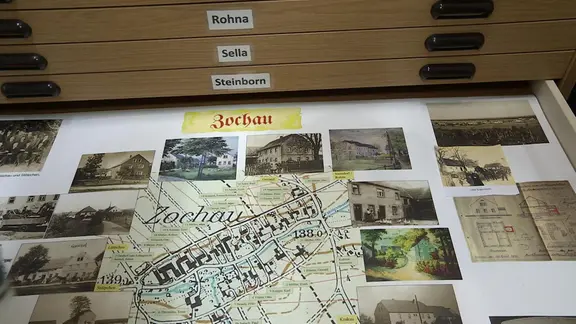
This, they argue, is the most powerful tool against historical erasure. By connecting current visitors to the specific residents who were forced to leave—such as the ancestors of association member Diana Meinke, who can point to a map and identify the exact floor plan of her great-grandparents’ house in Zochau—the history becomes personal. It shifts from being a dry military statistic to a narrative of human loss and resilience.

Supporting Data: The Scale of the Loss
The impact of the military base on the local geography was absolute. While exact numbers vary depending on historical records, the association has identified ten distinct villages that were either partially or entirely liquidated.
| Village Name | Status | Primary Era of Clearance |
|---|---|---|
| Otterschütz | Fully Cleared | 1907–1910 |
| Rohna | Fully Cleared | 1910–1915 |
| Krakau (Saxon) | Fully Cleared | 1930s |
| Zochau | Fully Cleared | 1907–1930s |
| (Additional 6 sites) | Partially/Fully | Various |
The environmental impact is equally significant. The land, once agricultural, is now a high-value biodiversity hotspot precisely because it remained untouched for decades. The "wildness" of the site is the result of the absence of human interference, creating a unique tension between the need to preserve the natural habitat and the desire to commemorate the human history buried beneath the canopy.
Official Responses and Conservation Challenges
The management of the Königsbrück site is a complex balancing act. The Sachsenforst is tasked with maintaining the site as a nature reserve, which involves strict regulations. Public access is heavily restricted to protect the rare flora and fauna that have flourished in the absence of human activity.

The guided tours, which are organized in partnership with the historical association, are the only legal way for the public to enter the deeper sections of the training ground. However, these are limited to three per year. The Sachsenforst justifies this limitation by citing the safety risks of unexploded ordnance that may still be present in the soil and the necessity of keeping the "wildness" as undisturbed as possible.

"We recognize the historical significance," says a spokesperson for the environmental agency, "but our primary mandate is the protection of the habitat. We allow these tours because they foster a deeper understanding of the land’s history, which in turn encourages respect for the environment. It is a compromise that we review constantly."
Implications: Why We Must Remember
The project in Königsbrück carries significant implications for how we treat post-military landscapes across Europe. Often, these areas are either turned into industrial zones or left to decay in total anonymity. The approach taken here—combining ecological conservation with community-led historical curation—offers a third, more humane path.

1. The Ethics of Displacement
The history of these villages forces us to confront the ethical implications of military expansionism. The displacement of rural populations for the sake of national security is a recurring theme in the 20th century. By telling the stories of these families, we acknowledge that the "empty" spaces on military maps were, in fact, vibrant, living places.
2. The Intersection of History and Ecology
The Königsbrück site demonstrates that nature and history are not mutually exclusive. The ruins of the villages are now part of the forest’s ecosystem, acting as artificial micro-habitats for various species. Protecting the history of the site doesn’t necessarily mean destroying the forest; it means integrating the historical narrative into the visitor’s experience of the nature reserve.

3. The Future of Commemoration
As the generation with living memories of these villages passes away, the role of digital archives and historical associations becomes even more critical. The work being done by the Geschichtsverein ensures that future generations can still "walk through" these villages, even if only through the medium of recovered photographs and historical research.
Conclusion: A Living Legacy
The "time travel" hikes offered by the association are more than just tours; they are an act of reclamation. In a world that is increasingly digitized and fast-paced, the silent, overgrown paths of the Königsbrück training ground offer a space for reflection. They remind us that history is not just found in textbooks or museums, but is etched into the very soil beneath our feet.

For the visitor, the experience of seeing a moss-covered wall foundation or the site of a long-gone orchard is a powerful reminder of impermanence. The villages are gone, but by refusing to let them be forgotten, the people of Königsbrück are ensuring that their legacy remains a part of the Saxon identity. As long as there are those willing to walk the woods with a map in one hand and a photograph in the other, the echoes of the lost villages will continue to resonate through the trees, telling the story of a time when these quiet woods were a bustling home to hundreds of families.
Though the remaining tours for the current year are already fully booked, the interest in these excursions continues to rise. It is a sign that there is a profound public hunger for stories that are authentic, local, and human. The ghost villages of Königsbrück are no longer just history; they are a living, evolving part of the region’s future.