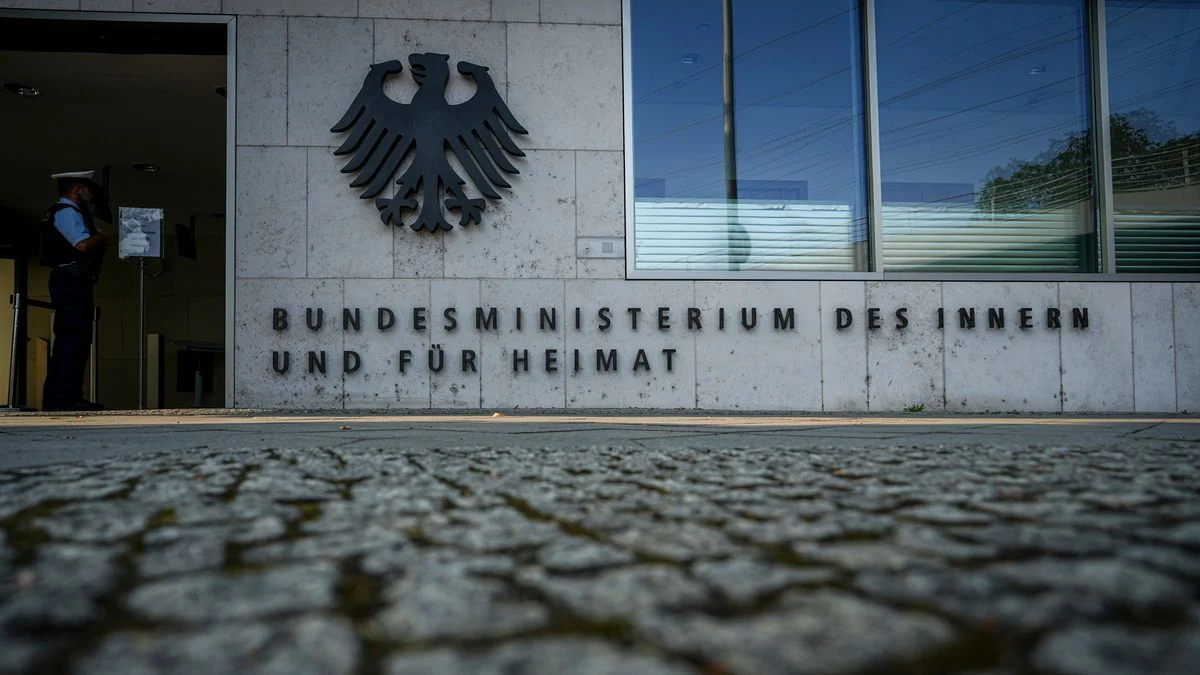
BERLIN, Germany – A significant controversy has erupted in Germany following the abrupt cessation of funding for "Radikale Töchter" (Radical Daughters), a prominent non-governmental organization dedicated to promoting democracy and combating racism. The decision, handed down by the Federal Agency for Civic Education (Bundeszentrale für politische Bildung – bpb), an institution overseen by the Interior Ministry, has drawn sharp criticism and ignited a fierce debate about political influence on independent civic education. Internal documents, reportedly reviewed by the Süddeutsche Zeitung, suggest that the funding cut, totaling approximately €290,000, was not based on factual or professional grounds but was, in the words of a high-ranking bpb official, "ultimately a political decision." The NGO has announced its intention to pursue legal action, arguing that the move is arbitrary, negligent, and detrimental to democratic values.
Main Facts: A Politically Charged Funding Halt
The "Radikale Töchter" (Radical Daughters), founded in 2019, has established itself as a vital force in Germany’s landscape of civic education. Through over 400 workshops conducted in schools, youth centers, and cultural institutions across the country, the non-profit organization has been actively engaged in fostering democratic values, promoting critical thinking, and addressing issues of social justice and anti-racism among young people. Its founder, Cesy Leonard, is a well-known activist and public figure, whose work often places her at the forefront of progressive social movements.
The recent decision by the Interior Ministry, enacted through the bpb, to halt crucial funding for an upcoming project by "Radikale Töchter" has sent shockwaves through the German civil society sector. The funding, amounting to around €290,000, was earmarked for the continuation of their impactful educational initiatives. What makes this particular case highly contentious is the alleged lack of professional justification for the withdrawal of funds. While the Interior Ministry initially offered only a vague statement about "regular adjustments" to funding instruments, leaked internal communications paint a starkly different picture, pointing towards political motivations rather than substantive concerns about the NGO’s work or financial management.
The controversy is deeply intertwined with recent political events and public discourse. Cesy Leonard had previously initiated a widely supported petition targeting Friedrich Merz, the leader of Germany’s conservative Christian Democratic Union (CDU), over his controversial "cityscape" remarks. These comments, perceived by many as racially charged, prompted Leonard to accuse Merz of normalizing racism, leading to her petition garnering an impressive 250,000 signatures. Shortly after this high-profile activism, the right-leaning media platform "Nius" began scrutinizing the "Radikale Töchter"’s funding sources, specifically questioning the use of taxpayer money for their projects. Within weeks of "Nius"’s intervention, the Interior Ministry, under whose purview the bpb operates, formally withdrew the funding. This rapid sequence of events has fueled suspicions of political retaliation and a concerted effort to silence critical voices within civil society. The NGO now faces not only a significant financial blow but also a profound challenge to its operational independence and its mission to foster an open, democratic society.
Chronology of Events: From Petition to Political Decision
The unfolding narrative surrounding "Radikale Töchter" and the withdrawal of its funding is a complex tapestry woven from political activism, media scrutiny, and alleged governmental interference. Understanding the sequence of events is crucial to grasping the gravity of the situation.
The story of "Radikale Töchter" begins in 2019, when the NGO was founded with a clear mandate to promote democracy and civic engagement, particularly among younger generations. Over the past five years, the organization has diligently worked to fulfill this mission, successfully conducting more than 400 workshops in diverse educational and community settings. These workshops have focused on crucial topics such as anti-racism, critical media literacy, and democratic participation, establishing "Radikale Töchter" as a respected and effective player in the field of political education.
A pivotal moment leading to the current controversy occurred earlier this year, involving Cesy Leonard, the founder of "Radikale Töchter," and Friedrich Merz, the leader of the CDU. Merz, a prominent figure in German conservative politics, had made highly contentious remarks regarding certain "cityscapes" in Germany, which were widely interpreted as discriminatory and racially insensitive. His comments, specifically referencing "little pashas" and young migrants, sparked a national outcry and drew accusations of xenophobia and the normalization of prejudice.
In response to Merz’s statements, Cesy Leonard launched a powerful online petition. Her petition directly accused Merz of contributing to the normalization of racism in public discourse and called for greater accountability from political leaders. The petition resonated deeply with a broad segment of the German public, rapidly accumulating an astounding 250,000 signatures. This overwhelming public support underscored the significant concern many Germans felt regarding the tenor of political debate and the rise of potentially divisive rhetoric. Leonard’s prominent role in this highly visible act of political activism undoubtedly raised the profile of "Radikale Töchter" and its founder, placing them directly in the political spotlight.
Following closely on the heels of the petition’s success, the right-leaning media platform "Nius" entered the scene. Known for its critical stance on government spending and its often skeptical view of progressive NGOs, "Nius" began to scrutinize the funding of "Radikale Töchter." The platform specifically questioned the appropriateness of using taxpayer money to support an organization whose founder was actively engaged in political opposition to a major party leader. This media campaign by "Nius" effectively amplified calls for greater oversight and accountability regarding state funding for civil society groups, creating a narrative that positioned "Radikale Töchter" as a potentially problematic recipient of public funds.
The decisive blow came just weeks after "Nius"’s reporting. The Interior Ministry, which is the federal authority responsible for the Federal Agency for Civic Education (bpb), instructed the bpb to cease its funding for "Radikale Töchter." Crucially, this directive was issued without a clear, professionally articulated justification. The speed with which this decision was made, coupled with its timing immediately after the "Nius" coverage and Leonard’s petition, raised immediate red flags among observers and advocates for independent civil society.
When pressed for an explanation in the spring, the Interior Ministry offered only a generic response, stating that "funding instruments for political education are regularly adjusted" and declining to comment on individual cases. This boilerplate reply did little to assuage concerns, instead fueling suspicions that the decision was not based on objective criteria but on other, unstated motives.
Further clarity, or rather, further confirmation of these suspicions, emerged from internal documents reportedly obtained by the Süddeutsche Zeitung. These documents strongly suggest that the funding cut was a "political arbitrary decision." The internal assessment apparently found no factual or professional reason to reject "Radikale Töchter"’s project. This assessment remained unchanged even after the NGO filed an appeal, which the bpb subsequently rejected.
The most damning piece of evidence from these internal papers came in the form of an email dated May 26 of this year. Sent by Volker Ullrich, the new Vice-President of the bpb and a former CSU Member of the Bundestag, to his colleagues, the email explicitly categorized the decision: "Ultimately a political decision." Despite this acknowledgment of its political nature, Ullrich nevertheless sanctioned the course of action. This internal admission stands as a powerful indictment of the process, stripping away any pretense of neutrality or professional objectivity from the funding withdrawal. The NGO is now preparing for a legal battle, determined to challenge what it views as an unjust and politically motivated curtailment of its vital work.
Supporting Data: Unpacking the Context and Implications
The decision to cut funding for "Radikale Töchter" is not an isolated incident but rather a symptom of broader trends and tensions within Germany’s political landscape. Several pieces of supporting data and contextual information illuminate the depth and significance of this controversy.
Firstly, the importance of independent political education in Germany cannot be overstated. Post-World War II, Germany has placed a profound emphasis on fostering democratic values, critical thinking, and historical awareness through state-supported but ostensibly independent civic education initiatives. The Federal Agency for Civic Education (bpb) was established precisely to fulfill this mandate, operating under the principle of promoting pluralism and open discourse without partisan bias. Its theoretical independence from direct political influence is a cornerstone of its credibility. The allegation that a decision by the bpb was "ultimately political" directly undermines this fundamental principle and raises serious questions about the integrity of the institution and the government’s commitment to truly independent civic education.
Secondly, the nature of Friedrich Merz’s "cityscape" remarks provides crucial context for Cesy Leonard’s petition. While the precise wording of Merz’s comments varied across different interviews, they generally alluded to "little pashas" and young migrants in urban areas, linking them to a lack of integration and a rise in certain social problems. These remarks were widely criticized for employing stereotypical language, potentially stigmatizing entire groups, and contributing to a divisive narrative about immigration and social cohesion. Leonard’s petition, which amassed 250,000 signatures, was a powerful demonstration of civil society’s rejection of such rhetoric and its perceived role in normalizing discriminatory discourse. The sheer volume of signatures highlights a significant segment of the population that is acutely sensitive to issues of racism and social justice.
Thirdly, the role of the "Nius" platform in this chronology is highly significant. "Nius" is a relatively new, German conservative news and opinion platform co-founded by Julian Reichelt, the former editor-in-chief of the tabloid Bild. It has quickly gained a reputation for its right-leaning perspective, its strong criticism of progressive policies, and its often aggressive targeting of individuals and organizations perceived as left-wing or "woke." "Nius" frequently scrutinizes the funding of NGOs and public broadcasters, advocating for what it describes as a more "balanced" or "conservative" perspective in publicly funded initiatives. Its intervention in the "Radikale Töchter" case, questioning the use of taxpayer money, aligns perfectly with its editorial agenda. The rapid sequence of events – "Nius" reporting followed by the funding cut – strongly suggests a causal link, implying that the platform’s pressure may have directly influenced the government’s decision. This raises concerns about the undue influence of specific media outlets on governmental processes and the potential for politically motivated campaigns to impact civil society organizations.
Fourthly, the internal documents cited by the Süddeutsche Zeitung and, particularly, the email from Volker Ullrich, are the most damning pieces of evidence. Ullrich, a former CSU Bundestag member, was appointed Vice-President of the bpb shortly before this controversy. His background as a politician from the CDU’s Bavarian sister party, the CSU, makes his acknowledgment of a "political decision" particularly noteworthy. It suggests an awareness within the bpb’s leadership that the decision was driven by external political considerations rather than internal professional assessments of the NGO’s merit or project quality. The fact that he still approved the decision, despite acknowledging its political nature and the apparent lack of "fachliche Begründung" (professional justification), points to a potential capitulation to political pressure. This compromises the bpb’s stated mission of political neutrality and raises serious questions about the independence of federal agencies.
Finally, the €290,000 at stake, while a substantial sum for an NGO, represents more than just financial loss. It signifies the direct disruption of specific projects and educational initiatives planned by "Radikale Töchter." This amount would have funded critical anti-racism and democracy-promotion workshops, directly impacting hundreds, if not thousands, of young people across Germany. The loss of this funding means these educational opportunities will not materialize, leaving a void in the provision of crucial civic education at a time when, as Cesy Leonard rightly points out, such work is needed "more than ever."
Official Responses: Vague Justifications and Internal Admissions
The official responses surrounding the funding cut for "Radikale Töchter" have been characterized by a stark contrast between public ambiguity and internal candor, further fueling the controversy and raising questions about transparency and accountability within the German government.
Initially, when queries first emerged in the spring regarding the cessation of funding, the Interior Ministry offered a notably generic and unspecific justification. Their public statement merely asserted that "funding instruments for political education would be regularly adjusted" and that they would not comment on "individual case assessments." This standard bureaucratic response, while common in government communications, was immediately perceived as insufficient and evasive, failing to provide any concrete reasons for the specific decision regarding "Radikale Töchter." The vagueness of the statement allowed for speculation to proliferate, leaving observers to infer that the lack of detail might be a deliberate strategy to obscure the true motivations behind the funding cut. Such an approach often erodes public trust, especially when dealing with organizations engaged in critical civic work.
Following this, the Federal Agency for Civic Education (bpb), the institution directly responsible for allocating such funds, formally rejected the appeal lodged by "Radikale Töchter." The original article states that this rejection also occurred without clear professional justification, mirroring the initial decision. This rejection of the appeal is a critical point, as it signifies a final administrative decision within the bpb’s purview. An appeal process is designed to allow for a review of the initial decision based on factual and professional grounds. The bpb’s alleged inability or unwillingness to provide such grounds, even after an appeal, reinforces the perception that the decision was not rooted in an objective evaluation of the NGO’s work or project proposal.
However, the most significant "official response," albeit an internal one, came from Volker Ullrich, the new Vice-President of the bpb. In an email dated May 26 of this year, circulated among his colleagues, Ullrich unequivocally stated his assessment of the situation: "Ultimately a political decision." This internal admission is profoundly significant. It strips away the veneer of administrative neutrality and professional assessment that the Interior Ministry and bpb had attempted to maintain publicly. Ullrich, a former CSU Member of the Bundestag, is not an external observer but a high-ranking official within the very agency that made the decision. His candid remark, therefore, carries immense weight, essentially confirming the suspicions of "Radikale Töchter" and its supporters – that the funding cut was dictated by political considerations rather than an impartial evaluation of the NGO’s educational mandate or the quality of its proposed project. The fact that Ullrich, despite acknowledging the political nature of the decision, still "approved the procedure" (billigte das Vorgehen) further complicates the narrative, suggesting that political expediency or pressure may have overridden professional judgment within the bpb’s leadership. This internal admission serves as a crucial piece of evidence that will undoubtedly form a central part of "Radikale Töchter"’s legal challenge, as it directly contradicts the public stance of the ministry and the bpb.
Implications: A Chilling Effect on Civil Society and Democratic Discourse
The funding cut for "Radikale Töchter" carries far-reaching implications, extending beyond the immediate financial hardship for the NGO to potentially affect the broader landscape of civil society, political education, and democratic discourse in Germany.
For "Radikale Töchter": The immediate impact is severe. The loss of €290,000 directly jeopardizes planned projects and workshops, disrupting the organization’s ability to fulfill its mission. This financial blow will necessitate a reassessment of their operational capacity, potentially leading to staff reductions, scaling back of initiatives, and an overall reduction in their reach and impact. Furthermore, the organization is now forced into a costly and resource-intensive legal battle. While their lawsuit aims to reverse the decision, the process itself diverts energy and resources away from their core educational work. The public nature of this controversy also places the NGO under intense scrutiny, potentially affecting future fundraising efforts and partnerships, despite the widespread support they have received.
For Independent Political Education in Germany: This incident could have a significant chilling effect on other NGOs and organizations engaged in civic education. If funding decisions can be influenced by political pressure or retaliation for activism, it creates an environment where organizations might self-censor or shy away from addressing sensitive political topics or criticizing powerful figures, fearing similar repercussions. This undermines the very purpose of independent civic education, which is to foster critical engagement, pluralism, and an informed citizenry. Cesy Leonard’s statement, "independent political education is needed now more than ever," particularly in light of recent state elections in Saxony-Anhalt and Mecklenburg-Vorpommern (where right-wing populist parties often perform strongly), underscores the urgency of this work. Arbitrarily cutting such funding is not just negligent but actively detrimental to strengthening democratic resilience against extremism and polarization.
For the Interior Ministry and the Federal Agency for Civic Education (bpb): The controversy raises serious questions about the impartiality and independence of these governmental institutions. The bpb, specifically, is meant to be an apolitical body dedicated to civic education. An internal admission that a funding decision was "ultimately political" severely damages its credibility and public trust. This incident suggests a potential erosion of the institutional safeguards designed to protect public administration from partisan influence. If the bpb is perceived as susceptible to political pressure, its ability to effectively carry out its crucial mandate will be compromised, potentially leading to a decline in its legitimacy among civil society and the public.
For German Democracy and Civil Society: The episode highlights a growing tension between governmental oversight and the autonomy of civil society organizations, particularly those engaged in critical social and political work. In a vibrant democracy, NGOs play a vital role as watchdogs, advocates, and educators, often challenging established power structures. Attempts to curtail their funding based on political grounds can be seen as an assault on the freedom of expression and association, fundamental pillars of democratic society. It also sets a dangerous precedent, suggesting that political activism, even if widely supported and within legal bounds, can lead to punitive measures from the state. This could deter civic engagement and weaken the democratic fabric by stifling critical voices and reducing the diversity of perspectives in public discourse.
Wider Political Context: The involvement of the "Nius" platform points to a broader trend of right-leaning media outlets actively scrutinizing and attempting to delegitimize progressive NGOs. This is part of a larger culture war, where debates around "wokeness," "cancel culture," and the perceived ideological leanings of publicly funded institutions are increasingly weaponized. The "Radikale Töchter" case exemplifies how such media campaigns can translate into tangible governmental actions, demonstrating the growing influence of specific media ecosystems on policy decisions and the targeting of civil society organizations deemed ideologically undesirable by certain political factions.
Legal Precedent and Future Outlook: The lawsuit announced by "Radikale Töchter" will be a landmark case. Its outcome could establish important legal precedents regarding the criteria for funding decisions for NGOs, the boundaries of political influence on public administration, and the protection of civil society organizations from arbitrary cuts. Regardless of the immediate legal outcome, the battle will undoubtedly keep the issue of independent political education and the role of civil society firmly in the public eye, forcing a necessary national conversation about the values and principles that underpin Germany’s democratic institutions. The fight for €290,000 is, therefore, much more than a financial dispute; it is a battle for the integrity of democratic processes and the freedom of civil society to thrive.