Berlin, Germany – The nascent hopes for a left-wing coalition government in Berlin have been abruptly dashed, plunging the city’s political future into uncertainty. Exploratory talks between the Social Democratic Party (SPD), the Greens, and the Left Party were dramatically suspended on Tuesday evening after the Left Party’s parliamentary group voted to integrate, rather than exclude, a controversial newly elected member, Vanessa Emde. This decision, perceived by the SPD and Greens as a breach of prior agreements regarding a clear stance against antisemitism, has led to a deepening crisis in the capital’s governance.
Steffen Krach (SPD) and Werner Graf (Greens), the lead negotiators for their respective parties, issued a joint statement announcing the immediate interruption of the exploratory discussions. They cited "different agreements" within the Left Party’s parliamentary group as the reason, demanding clarification on whether the commitments made just last week still held true. "We expect the Left Party to clearly demonstrate how seriously they take and intend to implement our agreements," Krach and Graf stated, underscoring the gravity of the situation.
The Stalled Negotiations: A Deep Dive into Berlin’s Coalition Crisis
Berlin’s political landscape has been in flux since the September 2023 state election, which saw the SPD emerge as the narrow winner, tasked with forming a new government. Initial exploratory talks with the Greens and the Left Party had promised a continuation of the previous red-red-green (SPD-Left-Green) coalition, albeit with a new distribution of power. However, the path to forming such an alliance has proven fraught with ideological divides and personal controversies, culminating in the current impasse.
A Sudden Halt: SPD and Green Ultimatum
The joint announcement by the SPD and Greens came as a stark declaration, effectively putting the ball back in the Left Party’s court. The "Berlin Agreement for the Start of Exploratory Talks," unveiled last Thursday at the Haus der Statistik – a symbolic venue often used for progressive political gatherings – was meant to lay a foundational understanding. Yet, beyond this public agreement, the SPD and Greens had reportedly made an additional, crucial demand: the controversial newly elected member, Vanessa Emde, must not be part of the Left Party’s parliamentary group. Her inclusion, they argued, would render any coalition untenable.
The Emde Controversy: A Catalyst for Crisis
Vanessa Emde, a political newcomer, had secured a direct mandate in the Neukölln district with a remarkable 46.2 percent of the vote, highlighting her local popularity and mandate. However, her political career quickly became embroiled in controversy due to past statements. At a rally, Emde had reportedly declared that "states have no right to exist." For the SPD and Greens, this statement unequivocally translated to a denial of Israel’s right to exist – a red line for both parties, particularly in the context of German historical responsibility and the current political climate surrounding the Middle East.
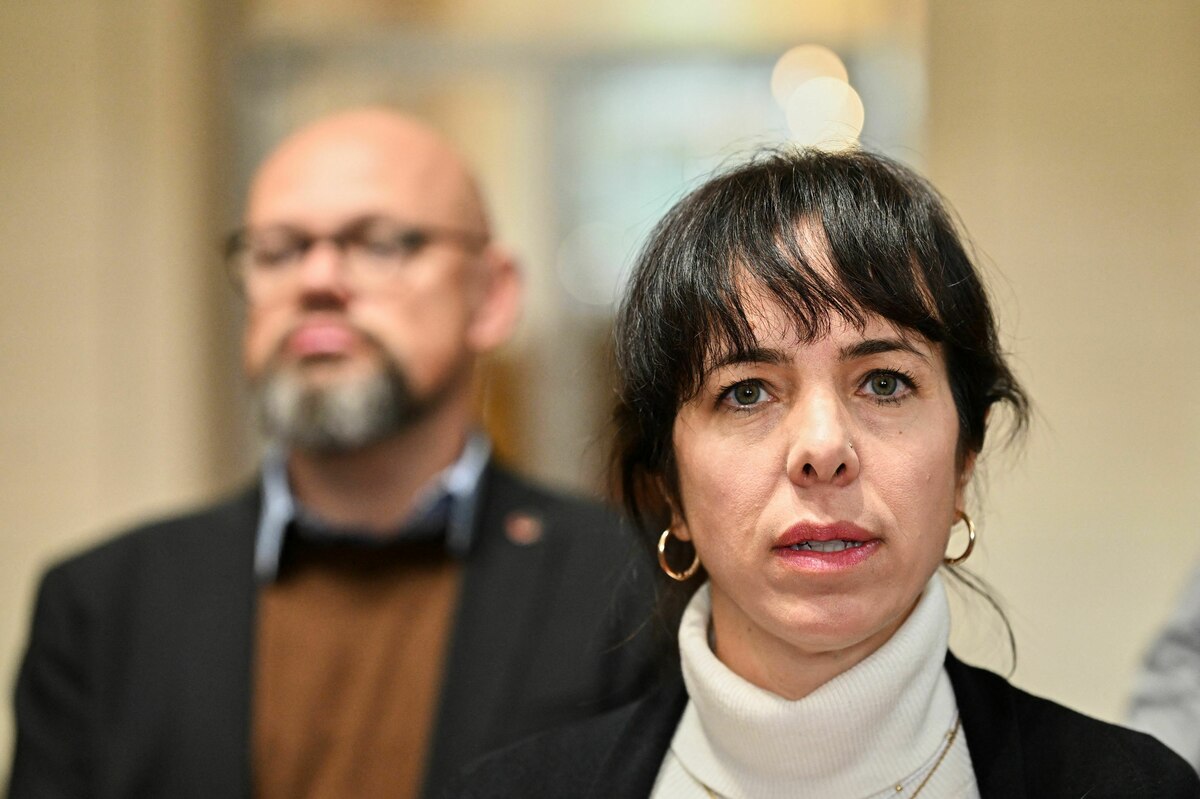
Even before the Left Party’s constituent parliamentary group meeting on Tuesday, the SPD and Greens had reiterated their demand for Emde’s exclusion. Their insistence reflected a broader political sensitivity within Germany concerning antisemitism and the unequivocal support for Israel’s security, issues that frequently test the unity of left-leaning alliances.
Chronology of Events: A Week of Tumult
The current crisis did not erupt without warning but was the culmination of escalating tensions and demands.
The Pre-Condition: Navigating the Red Lines
The initial "Berlin Agreement" was presented as a blueprint for the next phase of negotiations, focusing on policy areas such as housing, climate, and social justice. However, beneath the surface, the Emde issue festered. The SPD and Greens, acutely aware of public perception and their own party principles, had made it clear that a clear commitment against antisemitism and a recognition of Israel’s right to exist were non-negotiable prerequisites for any coalition. They viewed Emde’s past statements as directly contradicting these fundamental tenets.
The Left Party’s Internal Deliberations: A Bid for Unity
On Tuesday, the Left Party’s newly elected parliamentary group convened for its constituent meeting. The agenda was dominated by the Emde question. Prior to the meeting, Left Party top candidate and co-parliamentary group leader Elif Eralp had publicly pushed back against perceived external interference, particularly from opposition leader Friedrich Merz (CDU), who had warned against a Left Party-led state government. Eralp deemed such comments "unacceptable," asserting the sovereignty of Berlin’s government formation process.
The crucial development of the meeting was the unanimous adoption of a joint declaration by all 44 present members (one was absent due to illness). This declaration explicitly reaffirmed the party congress resolutions on the protection of Jewish life and Israel’s right to exist. Significantly, Vanessa Emde also voted in favor of this declaration, a move that the Left Party leadership hoped would resolve the controversy and satisfy the demands of their potential coalition partners.

The Declaration’s Content: A Statement of Principles
The adopted declaration was a comprehensive document, aiming to leave no doubt about the Left Party’s stance. It stipulated: "We assure that our political actions in the House of Representatives will be guided by the democratically adopted (fundamental) resolutions and guidelines of our state and federal associations."
This commitment specifically referenced "resolutions on antisemitism, racism, the protection of Jewish and Palestinian life and all life, as well as those on Israel and Palestine." A key passage affirmed: "We stand for the right of Israel to exist and for equal rights for all people in Israel." It also emphasized that this principle applied equally to Palestine.
Furthermore, the document included a strong condemnation of Hamas and other Islamist terrorist groups, denouncing their violence. It explicitly stated that "antisemitic hate speech, the endorsement of Hamas’s terror, or demands for the annihilation of Israel" must be prevented. "Groups that express themselves in such a way will never be partners of the Left Party or march with us on the streets," the declaration firmly asserted. Simultaneously, the Left Party defended the freedom of assembly, stressing the importance of being able to demonstrate for peace.
Emde’s Integration, Not Exclusion: The Left Party’s Stance
Following the three-and-a-half-hour parliamentary group meeting, parliamentary group leaders Tobias Schulze and Elif Eralp addressed the press, emphasizing the importance of the adopted declaration. Schulze declared, "This declaration is the basis of our common work."
Regarding Vanessa Emde, Schulze stated, "She is now a member of parliament and must recognize the significance she has as a member of parliament for our state party." He added that by signing the declaration, she had done precisely that. Eralp further clarified that with this statement, the Left Party intended to "enter into further discussions on how to tackle Berlin’s central problems and solve the housing crisis." Their expectation was that the declaration, along with Emde’s signature, would clear the path for the next round of exploratory talks, which had been scheduled for the same evening.

Official Responses and Party Dynamics
The Left Party’s attempt to bridge the divide through an internal declaration and Emde’s affirmation was met with a decisive rejection from the SPD and Greens, highlighting the deep chasm that remains.
SPD and Green Ultimatum: Demands for Clarity
The immediate suspension of talks by Krach and Graf underscored their dissatisfaction. They clearly indicated that the Left Party’s internal resolution, while a step, did not sufficiently address their concerns or meet their demand for Emde’s exclusion. Their joint statement conveyed a sense of being let down, suggesting that the Left Party had failed to uphold an implicit or explicit understanding crucial for partnership. The ball is now firmly in the Left Party’s court to provide further assurances or risk the complete collapse of a left-wing alliance.
The Left Party’s Defense: Internal Views and Frustration
Inside the Left Party, the response to the SPD and Green’s decision ranged from frustration to defiance. Rouzbeh Taheri, a fellow Left Party representative from Neukölln, voiced his exasperation to the taz newspaper after the parliamentary group meeting. He suggested that the exploratory talks had revealed a pattern where "no matter what you do, the SPD always wants more." Taheri defended the adopted declaration as "uncontested," emphasizing that it was based on "the resolutions of the party." He concluded, "If the SPD cannot live with this declaration, it is the SPD’s problem." This statement reflects a sentiment within parts of the Left Party that they had made sufficient concessions and that further demands were unreasonable or politically motivated.
External Pressures and Internal Dissent: Cracks in the Coalition Front
The political machinations surrounding the coalition talks have also exposed internal divisions within the SPD and external pressures. Opposition leader Friedrich Merz’s (CDU) earlier public warnings against a Left Party-led government, though dismissed by Eralp as "unacceptable interference," added another layer of complexity. Merz’s comments reflect a broader conservative concern about the Left Party’s more radical elements and their potential influence on state policy.
More significantly, within the SPD itself, resistance to a left-wing coalition has been growing. Even before the Left Party’s decision, the Reinickendorf SPD district association had publicly spoken out against their party participating in an alliance with the Left Party and Greens. "The election result of September 20 cannot possibly be understood as a mandate for the SPD to govern," quoted SPD district chairman Gilbert Collé in a statement. The Reinickendorf branch instead advocated for the SPD to tolerate a minority government formed by the Left Party and Greens, signaling a clear preference for avoiding direct involvement.

A resolution passed by the Reinickendorf SPD cited a lack of substantive and financial foundation for a joint coalition, stating, "To remain true to its own red lines and substantive convictions, the SPD cannot at this time enter into a coalition with the Left Party and Greens."
Adding to the internal SPD pressure, Franziska Giffey, the incumbent Senator for Economy and a prominent figure in the SPD’s negotiating team, has consistently expressed skepticism about a left-wing alliance. She had previously openly rejected a coalition with the Left Party. On Tuesday, she also declared her willingness to continue serving as Economy Senator, telling the web.de portal when asked if she was available: "Of course. This is my city, and there is still plenty to do." Giffey’s consistent stance further complicates the SPD’s position, indicating a significant faction within the party that prefers alternative coalition options.
Broader Implications and Uncertainties
The suspension of talks has thrown Berlin’s political future into disarray, raising fundamental questions about the city’s governance and the dynamics of German politics.
The Future of Berlin’s Governance: A Maze of Options
With the left-wing alliance now on hold, the paths forward are unclear. The most obvious alternative would be a grand coalition between the SPD and the CDU, the two largest parties in the Berlin House of Representatives. Such a coalition would offer greater stability but might face resistance from progressive wings within both parties and could be seen as ignoring the voters’ desire for a change from the previous centrist governments. Other possibilities include a minority government, as suggested by the Reinickendorf SPD, or even new elections, though this is typically a last resort. The delay in forming a government could lead to prolonged political instability, impacting policy-making and public trust.
The Left Party’s Dilemma: Unity Versus Viability
For the Left Party, the crisis presents a profound dilemma. Their decision to integrate Vanessa Emde, despite her controversial statements, reflects a desire to maintain internal unity and respect the democratic mandate of a directly elected member. Emde’s strong electoral performance in Neukölln also makes her exclusion politically difficult. However, this commitment to internal cohesion has come at the cost of coalition viability, at least with the current SPD and Green partners. The party must now weigh the importance of accommodating its diverse ideological wings against the pragmatism of forming a government and implementing its policies. This incident also highlights the ongoing struggle within the German Left to clearly define its stance on Israel and antisemitism, an issue that frequently divides the party.

The Israel-Palestine Conflict in German Politics: A Lingering Shadow
The Emde controversy underscores the enduring sensitivity of the Israel-Palestine conflict within German domestic politics. Germany’s historical responsibility for the Holocaust has instilled a strong commitment to Israel’s security and right to exist, making any perceived denial or equivocation on this matter highly contentious. For many mainstream parties, a clear and unambiguous stance against antisemitism and in favor of Israel’s existence is a fundamental tenet that cannot be compromised in coalition negotiations. The Left Party’s attempt to navigate this complex terrain with a nuanced declaration, while significant internally, ultimately failed to satisfy the stringent demands of its potential partners, revealing the deep ideological fault lines that continue to shape German political alliances.
Conclusion: An Impasse in the Capital
As Berlin’s political leaders grapple with the fallout, the city faces an uncertain period. The suspension of talks by the SPD and Greens has left the formation of a new government in limbo, with no clear path forward. The Left Party, having prioritized internal unity and the inclusion of Vanessa Emde, must now decide how to respond to the ultimatum from its former negotiating partners. Whether the parties can find a way to reconcile their differences, explore alternative alliances, or face the prospect of new elections remains to be seen. For now, Berlin’s political landscape is marked by an impasse, with critical decisions looming for all involved.