In a triumph of urban renewal and passenger-centric design, the central railway station in Ansbach, Middle Franconia, has been crowned the "Station of the Year 2026." The accolade, bestowed by the transport alliance Allianz pro Schiene, marks a significant milestone in the ongoing effort to revitalize Germany’s regional transit hubs, transforming a once-functional post-war structure into a welcoming, light-filled beacon of modern travel.
The decision, announced on October 15, 2026, highlights how thoughtful architecture and seamless integration can fundamentally alter the passenger experience. While many regional stations suffer from the aesthetic fatigue of cold metal benches and neglected subterranean passages, Ansbach has successfully pivoted to a design language that favors warmth, accessibility, and intuitive flow.
The Transformation: A Vision for the Modern Passenger
For decades, the Ansbach railway station was viewed as little more than a utilitarian necessity—a standard-issue post-war concrete building defined by efficiency rather than comfort. However, the completion of a multi-year modernization program, concluded in late 2024, has completely redefined the facility.
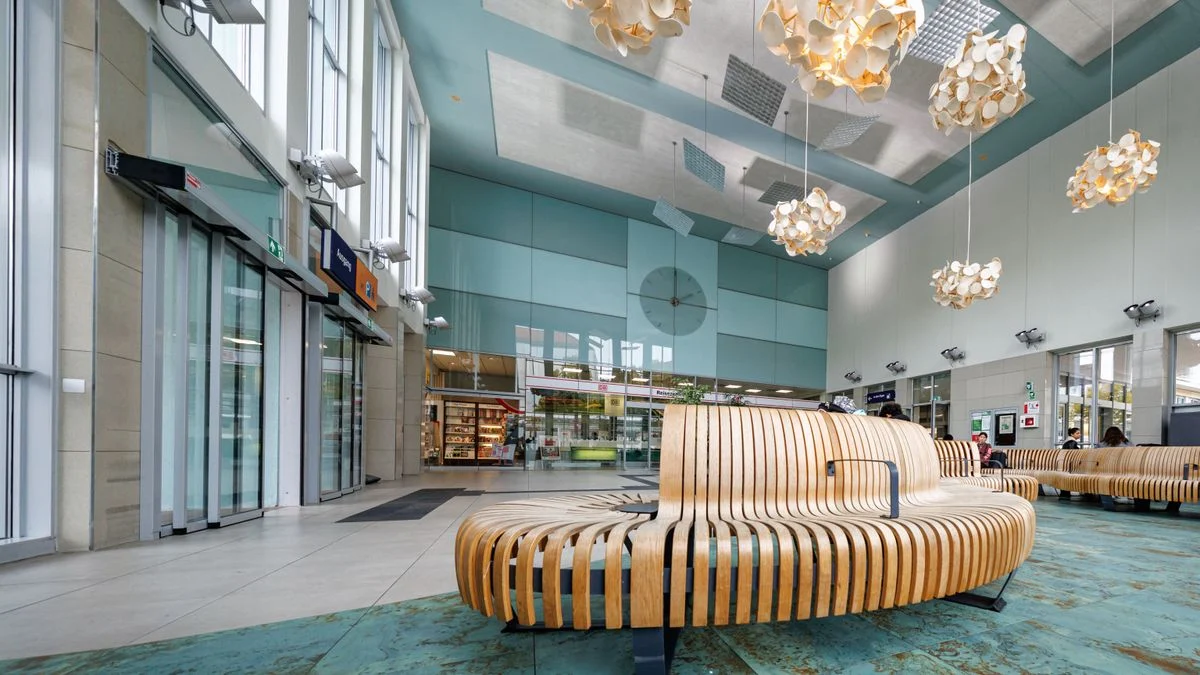
The nine-member jury, composed of experts from the transport and tourism sectors, was particularly struck by the "fresh design" of the main concourse. Departing from the sterile environments typically associated with smaller municipal stations, the renovation introduced soft, curvilinear wooden benches and bespoke, high-efficiency ceiling lighting that draws natural light deep into the structure.

"The exterior, with its straightforward, no-frills post-war architecture, belies the warmth and comfort found within," noted a representative from the jury. The station now serves as a blueprint for how older infrastructure can be salvaged and elevated without requiring total demolition, proving that sustainability in urban planning often starts with restoration.
Chronology of a Revitalization Project
The path to winning the prestigious "Station of the Year" award was neither short nor simple. It represents a long-term commitment by both the Deutsche Bahn and regional authorities to prioritize rail travel as a cornerstone of the Middle Franconian economy.
- Pre-2022: The station functioned as a vital, yet aging, transit point. While essential for commuters, it lacked modern amenities and failed to meet the contemporary standards of accessibility or comfort.
- 2022: A turning point for the city, as Ansbach was formally integrated into the ICE (InterCity Express) network. This upgrade necessitated a major influx of investment, as the station had to accommodate higher passenger volumes and provide premium service standards.
- 2022–2024: The bulk of the renovation took place. The Bavarian state government committed over €20 million to the project. The focus was twofold: total barrier-free access and a complete interior overhaul.
- Late 2024: The station officially reopened as one of the Deutsche Bahn’s designated "Future Stations" (Zukunftsbahnhöfe), featuring the new aesthetic that would eventually capture the 2026 award.
- October 15, 2026: Allianz pro Schiene officially confers the "Station of the Year 2026" title, citing the station’s atmospheric success and operational efficiency.
Supporting Data: Why Ansbach Stands Out
The award is not merely a reflection of aesthetic beauty; it is rooted in hard data regarding passenger throughput and logistical functionality. With over 10,000 travelers passing through the station every working day, the facility acts as a critical heartbeat for the city of approximately 41,000 residents.
The station’s strategic importance is highlighted by its location on key transit corridors:

- The Nuremberg–Stuttgart Corridor: A high-traffic route connecting major industrial and cultural centers.
- The Augsburg–Würzburg Link: A vital regional artery that feeds into the broader Southern German rail network.
The jury specifically praised the "intermodal" integration at the station. In many German cities, the transition from train to bus is a point of friction. In Ansbach, the bus terminal is located directly in front of the station entrance, minimizing transfer times and maximizing convenience for commuters. Furthermore, the inclusion of dedicated, secure bicycle parking facilities addresses the "last-mile" challenge, ensuring that cyclists can integrate their commutes into the rail network seamlessly.
Official Responses and Constructive Criticism
The accolade has been met with pride in the region. The Bavarian Ministry of Transport emphasized that the €20 million investment was a calculated move to incentivize public transport usage in rural and suburban areas. "The bar for this award is set incredibly high," a ministry spokesperson stated. "By creating a space where people actually want to spend time, rather than just pass through, we are building the foundation for a sustainable transportation future."
However, the jury—true to its role as a critical watchdog for passenger rights—did not shy away from pointing out areas for further improvement. The report explicitly noted that while the station is clean, the subterranean underpass remains "schmucklos" (unadorned) and lacks the visual appeal of the main hall.
Additionally, the experts highlighted three key technical shortcomings that could elevate the station to a world-class level:

- Real-time Bus Data: The lack of live, digital displays for bus departures at the station concourse remains a significant pain point for commuters.
- Unified Digital Connectivity: The absence of comprehensive, station-wide high-speed Wi-Fi is seen as a missed opportunity for a modern "Future Station."
- Aesthetic Continuity: While the main hall is a triumph of design, the jury suggested that a similar effort should be applied to the platforms and tunnels to create a cohesive sensory experience from the moment a traveler arrives.
The Broader Implications: What Does "Station of the Year" Mean?
The Allianz pro Schiene initiative, which began in 2004, has become an influential benchmark for the quality of service in German rail transport. By prioritizing the "passenger perspective," the jury shifts the conversation away from corporate balance sheets and toward the lived experience of the traveler.
Previous winners offer a glimpse into the evolving priorities of the German rail system:
- 2025: Magdeburg – Recognized for its urban integration and architectural harmony.
- 2024: Bautzen and Sörup – Honored for their dedication to regional accessibility and small-town charm.
- 2023: Halle an der Saale and Nordhorn – Celebrated for their technical innovation and restoration of historical facades.
- 2022: Coburg – A testament to the power of regional revitalization.
The success of Ansbach reinforces a growing trend in Germany: the "Station as a Third Space." As remote work becomes more common and the climate crisis necessitates a shift away from individual car ownership, train stations are being reimagined as social hubs. They are no longer just points of departure; they are centers of commerce, waiting, and civic pride.
By awarding Ansbach, the jury has sent a clear message: even the most unassuming, utilitarian post-war structures can be transformed into points of excellence if there is sufficient political will and a commitment to human-centric design. For the 10,000-plus daily users in Ansbach, the award is a validation of their daily commute—a daily routine that has, through careful planning and design, become significantly more pleasant.

As the German rail network faces increasing pressure to modernize, the Ansbach model provides a roadmap. It demonstrates that the path to a robust rail future does not always require grand, multi-billion-euro architectural marvels. Instead, it requires the consistent, detail-oriented improvement of the existing infrastructure to ensure that every traveler—regardless of their starting point—feels welcomed, valued, and connected.