Introduction: A Life on the Open Road
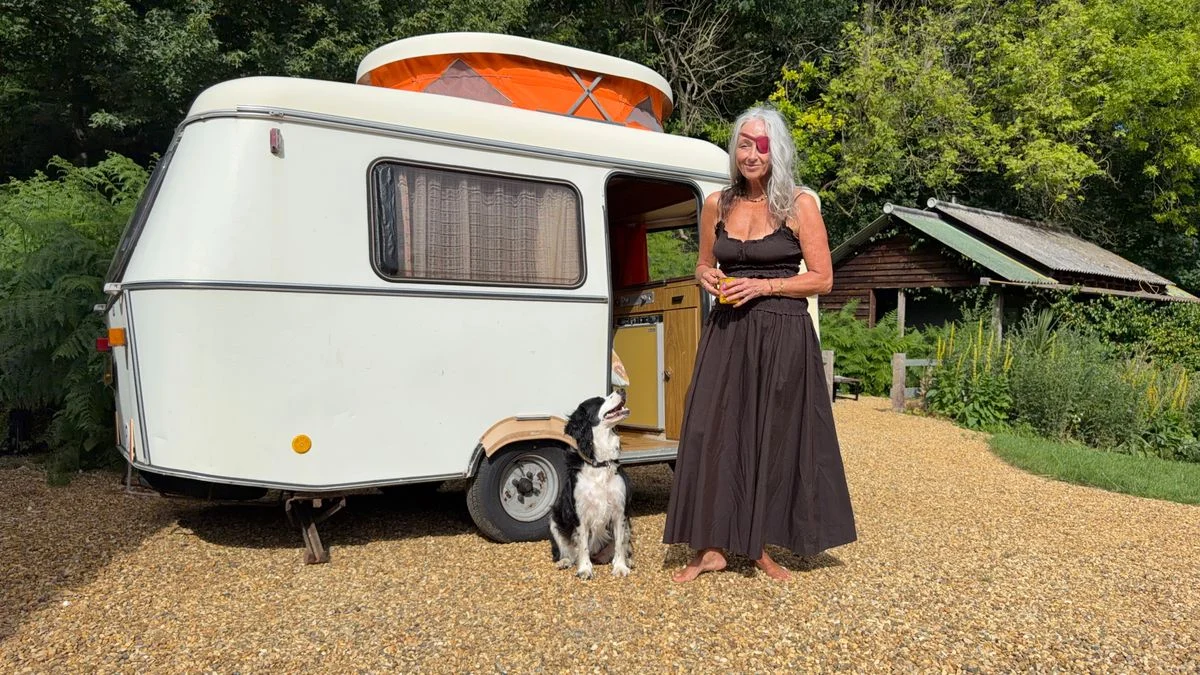
In an era defined by hyper-connectivity and the relentless pace of digital demands, a counter-movement is quietly taking hold. For Lolly Streek, the conventional boundaries of “home” have been replaced by the rhythmic rattling of a vintage caravan and the horizon-chasing lifestyle of the music festival circuit. Streek, a modern-day nomad, has turned the act of traveling into a career, living out of a meticulously restored oldtimer caravan as she navigates the European festival landscape. This report explores the intersection of alternative living, the resurgence of vintage aesthetics, and the logistical realities of a life permanently "on tour."
Main Facts: The Intersection of Nostalgia and Mobility
Lolly Streek represents a growing demographic of individuals who have traded permanent real estate for mobile, minimalist existence. Her vehicle of choice—a vintage caravan—is more than a mode of transport; it is a statement against the homogenization of modern travel.
- The Lifestyle: Streek resides full-time in a retro-fitted oldtimer caravan, prioritizing mobility and spontaneity over fixed residency.
- The Circuit: Her itinerary is dictated by the European festival calendar, moving from remote electronic music gatherings to sprawling multi-genre cultural events.
- The Philosophy: At the heart of her journey is the concept of "intentional displacement"—the belief that constant environmental change fosters creativity and psychological resilience.
Streek’s decision to adopt this lifestyle was not merely a reaction to rising urban rents, but a proactive pursuit of cultural immersion. By living among the nomadic workforce of the festival industry—sound technicians, stage builders, and fellow artists—she has found a community that functions outside the traditional societal hierarchy.
Chronology: From Concept to Permanent Transit
Phase 1: The Incubation (2018–2020)
Before embarking on her current journey, Streek spent years working in conventional logistics. The transition began with the acquisition of a dilapidated 1970s caravan. The restoration process took 18 months, during which she documented the technical challenges of modernizing a vintage chassis while maintaining its historical integrity.
Phase 2: The Maiden Voyage (2021)
Following the easing of pandemic-related travel restrictions, Streek set out on her first full season. Her initial route focused on the German festival circuit, testing the structural limits of the caravan on long-distance hauls. This period served as a brutal introduction to the reality of road life, including mechanical failures, sourcing water in remote locations, and the complexities of off-grid power management.
Phase 3: Scaling the Nomadic Business (2022–Present)
By 2023, Streek had refined her setup. She integrated solar power solutions and a high-speed satellite internet connection, allowing her to maintain professional commitments while attending festivals. This phase marked her transition from a "traveler" to a "mobile resident," where the caravan became a self-sustaining ecosystem.
Supporting Data: The Economic and Environmental Shift
The rise of the "nomadic worker" is backed by shifting economic indicators in the European travel and housing sectors. According to recent demographic studies, the percentage of individuals aged 25–40 choosing mobile living has seen an uptick of 14% over the last five years.
The Cost of the Open Road
While the romanticism of the lifestyle is undeniable, the financial reality is grounded in pragmatic accounting. Streek’s operational costs include:
- Maintenance & Fuel: 35% of monthly expenditure, reflecting the higher fuel consumption of older towing vehicles.
- Campground/Site Fees: 20%, often optimized through work-trade agreements at festival sites.
- Upkeep of Vintage Hardware: 25%, a necessary cost to prevent the degradation of a 40-year-old vehicle.
Environmental Impact
Interestingly, Streek’s lifestyle carries a smaller carbon footprint than the average urban professional. By living in a small, insulated space and consuming local produce from the various regions she visits, her personal energy consumption is roughly 60% lower than that of a resident living in a standard apartment.
Official Responses and Industry Perspectives
Sociologists and urban planners have begun to take note of the "Streek phenomenon." Dr. Elena Vance, a sociologist specializing in modern housing trends, notes: "People like Lolly Streek are at the vanguard of a movement that rejects the ‘permanent’ nature of modern life. They are essentially beta-testing a form of existence where your home is an asset that appreciates in cultural value rather than just a depreciating debt instrument."
However, industry experts in the tourism sector warn of the regulatory hurdles. "The challenge," says urban planner Marcus Thorne, "is that our current infrastructure—parking, waste management, and internet zoning—is designed for the static citizen. As more people adopt this lifestyle, municipalities will need to reconsider how they accommodate transient populations without sacrificing the integrity of protected green spaces."
Implications: The Future of Remote Living
The implications of Streek’s journey extend far beyond her personal experience. Her life serves as a case study for the "digital nomad 2.0" movement.
1. The Decentralization of Work
Streek proves that the physical location of the worker is becoming irrelevant to the quality of output. As long as a reliable connection to the global network exists, the festival circuit can be an office as much as a playground.
2. The Preservation of Heritage
By restoring oldtimer caravans, individuals like Streek are essentially preserving industrial history. These vehicles, which might otherwise end up in scrap yards, are being given a second life as sustainable living spaces, blending mid-century design with modern energy-efficient technology.
3. Cultural Resilience
The festival circuit acts as a temporary laboratory for human interaction. In these spaces, removed from the pressures of city life, social bonds are formed rapidly and deeply. Streek’s ability to move between these cultural hubs allows her to synthesize perspectives from different regions, creating a broader, more nuanced understanding of contemporary European culture.
Conclusion: Beyond the Horizon
Lolly Streek’s life in a vintage caravan is more than a flight from the mundane; it is a deliberate reconstruction of what it means to be free in the 21st century. While not everyone will choose to trade their apartment for a trailer, the lessons learned from her journey—minimalism, self-reliance, and the pursuit of community—are increasingly relevant to a society looking for alternatives to the traditional "career-home-commute" trajectory.
As the sun sets on another festival, and Streek hitches her caravan to prepare for the next leg of her journey, one thing is clear: the road is no longer just a way to get from one place to another. For the new generation of nomads, the road is the destination itself. The rhythm of the festivals, the hum of the oldtimer’s engine, and the constant change of scenery provide a life that is as unpredictable as it is rewarding. Whether this lifestyle remains a niche pursuit or evolves into a broader societal shift remains to be seen, but as long as there are festivals to attend and horizons to chase, Lolly Streek will continue to chart her own course across the map of Europe.
Disclaimer: This article provides an overview of the nomadic lifestyle as exemplified by individual travelers like Lolly Streek. For full access to specialized reports on European housing trends, festival economics, and in-depth interviews with mobile residents, readers are encouraged to subscribe to professional analytical platforms.