Market Report – October 15, 2026
The global financial landscape is currently navigating a period of heightened turbulence as equity markets face a sharp correction. On October 15, 2026, the DAX, Germany’s blue-chip index, opened with a bearish sentiment, shedding 0.5% to hit 25,173 points. This downturn is not an isolated event; it is the ripple effect of a wider, systemic retreat in the technology sector, triggered by shifting macroeconomic expectations and lingering concerns over the trajectory of United States monetary policy.
Main Facts: The Anatomy of a Market Correction
The primary catalyst for the current sell-off is the confluence of unexpected US inflationary data and the subsequent volatility in the semiconductor industry. Investors, who had previously been buoyed by the explosive growth of Artificial Intelligence (AI) infrastructure, are now reassessing the valuation of technology giants in an environment where interest rates remain stubbornly high.
The "growth at any cost" narrative that fueled the equity bull run throughout early 2026 is being dismantled. As risk-free rates—represented by government bonds—remain attractive, the relative allure of high-growth tech stocks has diminished. The sell-off, which began in the US markets at the Nasdaq, has now transitioned into a full-scale contagion, affecting major Asian trading hubs and subsequently pulling European indices lower.
Chronology of the Downturn
The sequence of the current market slide reveals how quickly sentiment can shift in a hyper-connected global economy:
- Mid-October 2026: US economic data releases reveal inflation figures that surpass market expectations, immediately triggering speculation that the Federal Reserve will maintain or increase its current interest rate trajectory.
- October 14, 2026: The US technology sector experiences a heavy sell-off on the Nasdaq as institutional investors begin to rotate out of high-multiple growth stocks.
- Early Morning, October 15, 2026 (Asia): The sentiment hits Asian markets with full force. The South Korean Kospi index plunges by 9%, while Japan’s Nikkei index follows with a 5% drop. Markets in Shanghai and Shenzhen also record significant losses, exceeding 2%.
- Midday, October 15, 2026 (Europe): The DAX opens with a 0.5% decline, reflecting the bearish mood transmitted from global overnight trading. Simultaneously, chip manufacturer TSMC releases record-breaking quarterly earnings, which are nonetheless met with skepticism by traders preoccupied with broader macroeconomic risks.
Supporting Data: Semiconductor Volatility and Inflation
The semiconductor industry is currently serving as the "canary in the coal mine" for the broader market. While companies like ASML and TSMC continue to report strong fundamentals, their share prices are becoming increasingly disconnected from their earnings reports.
TSMC’s Record Quarter
Despite the market carnage, TSMC, the world’s most critical chip contract manufacturer, announced a staggering quarterly profit of 763 billion Taiwan-Dollars (approximately 21.2 billion Euros). This represents a year-over-year increase of more than two-thirds. The demand for AI-specific high-performance computing (HPC) chips remains the engine of this growth. However, the market’s reaction highlights a crucial distinction: investors are no longer satisfied with mere growth; they are now demanding evidence that this growth can be sustained in a high-interest-rate environment.
The Inflationary Pressure Cooker
The US Federal Reserve is set to meet on October 27–28 to deliberate on the path of interest rates. With the current benchmark rate sitting between 3.75% and 4.00%, the market is pricing in a high probability of a further hike before the end of the year—most likely in December. Higher interest rates increase the cost of capital, which disproportionately impacts the discounted cash flow models used to value tech companies. When the "risk-free" return on investment rises, the present value of future earnings in the tech sector shrinks, forcing a downward adjustment in stock prices.
Official Responses and Expert Analysis
Market strategists emphasize that the current volatility is a fundamental repricing of risk. Charu Chanana, an investment strategist at Saxo Bank, noted that the core question facing investors today is one of valuation versus reality: "Investors are increasingly questioning what price they should pay for this growth when rates are high and potentially rising further."
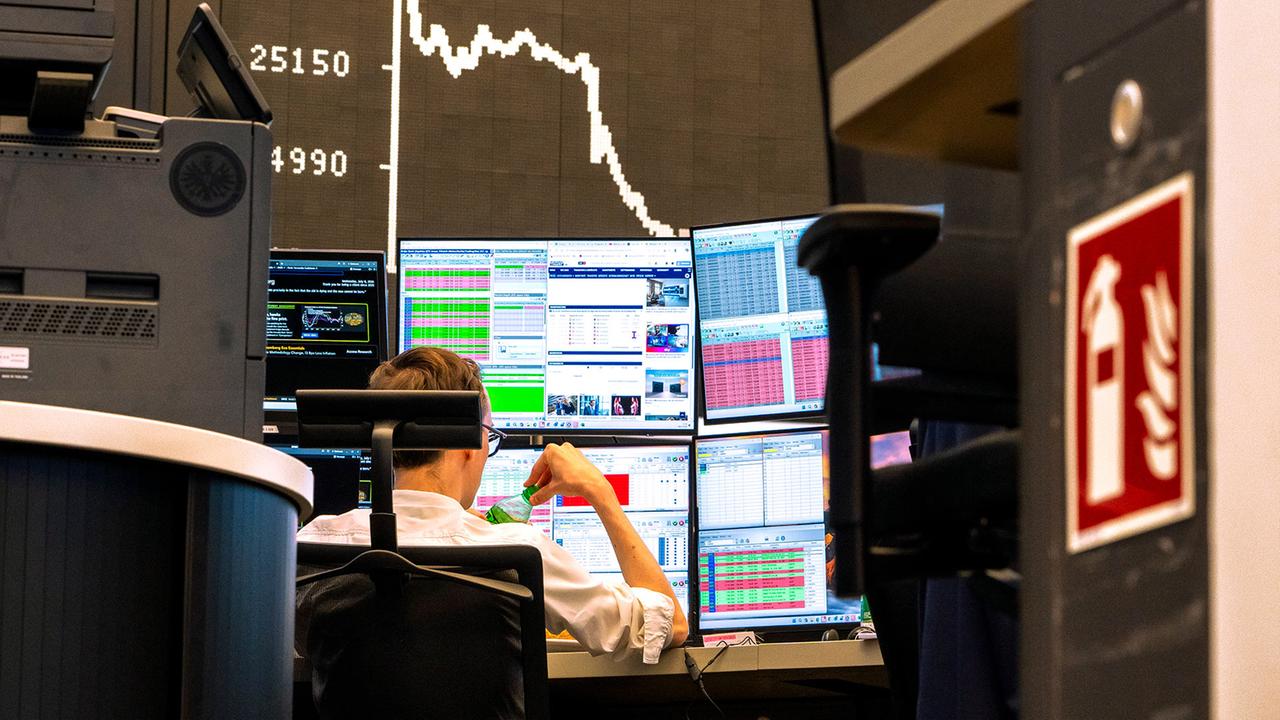
The shift in investor behavior is not merely panic; it is a calculated retreat. Many portfolio managers are locking in profits from the AI-driven rally of the past year, wary that any potential "miss" in future guidance from major tech players could trigger a much deeper correction. The market is essentially demanding a "risk premium" that it had ignored for the better part of two years.
Implications for the Real Economy
While financial markets grab the headlines, the ripple effects of these trends are beginning to touch the real economy. The "inflationary experience" is not uniform; it is becoming increasingly fragmented.
The Case of the Staple Commodity: Potatoes
While central banks focus on headline inflation, the average consumer feels the sting through specific, volatile commodity prices. In Germany, the cost of potatoes surged by 11.3% in September alone, compared to an overall national inflation rate of 3.3%. This discrepancy highlights a critical economic reality: aggregate inflation figures often mask the pain felt by households regarding daily essentials.
The potato price spike is driven by supply-side constraints—specifically, a lower harvest yield. This serves as a reminder that climate-related or agricultural supply shocks can create localized inflationary pressure that exists independently of the central bank’s monetary policy. For the average consumer, this means that even if the broader economy stabilizes, the cost of living remains under pressure from specific, essential goods.
The "Individual" Inflation Gap
The divergence between the prices of luxury/tech goods and basic food items underscores the growing difficulty in managing household budgets. As interest rates rise to combat aggregate inflation, the cost of borrowing for the average consumer increases, while the price of food remains elevated due to supply chain and agricultural factors. This "double squeeze" is likely to reduce discretionary spending in the coming quarters, which could, in turn, dampen the revenue growth of the very technology companies that are currently seeing their valuations challenged on the stock market.
Future Outlook: A Period of Re-calibration
As we move toward the final quarter of 2026, the financial world is entering a phase of significant re-calibration. The era of cheap money, which fueled the rapid expansion of the digital economy, has reached an inflection point.
The coming weeks will be defined by three key factors:
- Central Bank Rhetoric: The tone of the Federal Reserve at the end of October will be the most significant indicator for global market direction.
- Corporate Guidance: TSMC’s record profits provide a floor for the semiconductor sector, but the market will be looking for signs of cooling demand in the upcoming earnings calls from other major tech firms.
- Consumer Resilience: The ability of the average consumer to absorb localized price shocks, such as those seen in agricultural commodities, will determine the sustainability of broader retail demand.
In conclusion, the current sell-off is a reflection of a transition phase. Markets are moving from an environment of speculative exuberance to one of defensive posturing. While the long-term potential of technological innovation remains high, the short-term reality is dictated by the hard physics of interest rates and the sobering necessity of tangible, sustained profitability. Investors and consumers alike should brace for continued volatility as the global economy attempts to find a new equilibrium in an era of higher costs and heightened uncertainty.