By Editorial Staff
October 15, 2026
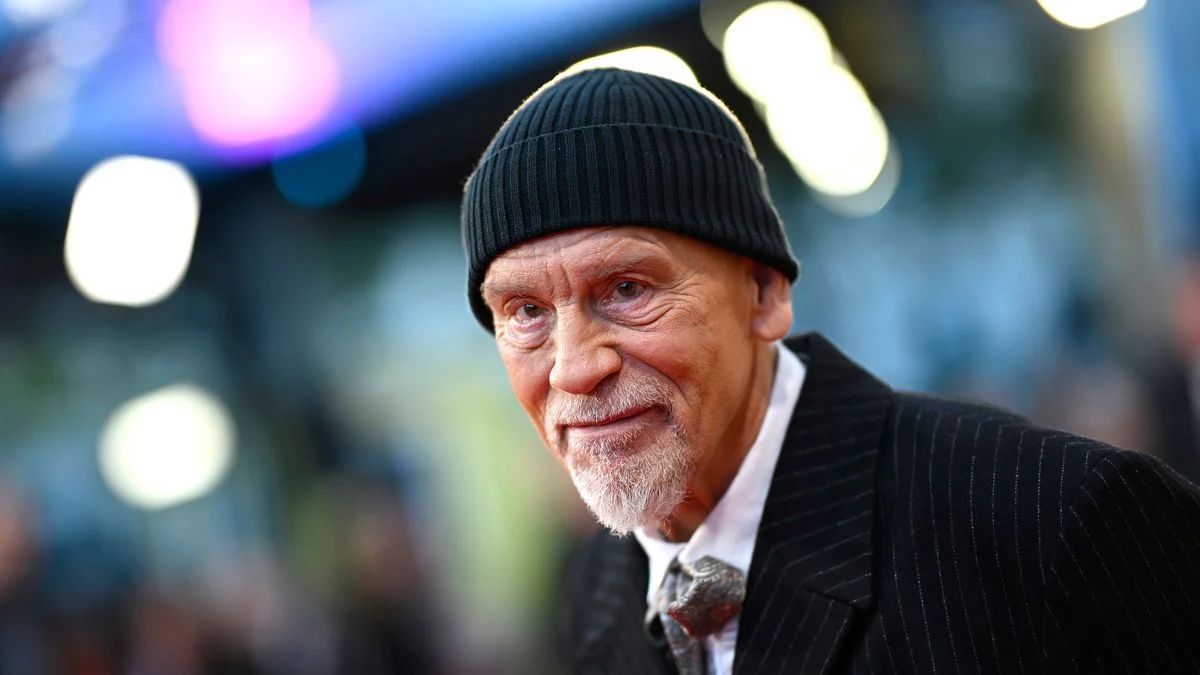
In an era of hyper-politicized discourse and relentless calls to "get out the vote," the revelation that one of Hollywood’s most intellectual and enigmatic figures has abstained from the democratic process for over five decades is more than a mere curiosity—it is a profound statement of disillusionment. John Malkovich, the 72-year-old titan of stage and screen, has confirmed in a recent interview that he has not cast a vote in a U.S. election since 1972. His reason? A lingering, deep-seated malaise triggered by the landslide victory of Richard Nixon.
The Catalyst of Disillusionment
The year was 1972. The United States was a nation deeply fractured by the Vietnam War, civil rights unrest, and the growing shadow of the Watergate scandal. For a 19-year-old John Malkovich, the political landscape was not merely a backdrop for news cycles; it was a theater of moral failure.
In a candid conversation with the Guardian, Malkovich reflected on the night the democratic challenger George McGovern was soundly defeated by the incumbent Richard Nixon. While the world remembers the 1972 election as a sweeping mandate for Nixon, Malkovich remembers it as the moment he severed his ties with the ballot box.
"I am not a believer," Malkovich stated flatly when pressed about his decades-long absence from the polls. When asked to clarify whether this skepticism extended to the democratic system as a whole, his response was succinct, borrowing a French phrase to illustrate his detachment: "Je ne pratique pas" (I do not practice).

A Chronology of Abstention
The timeline of Malkovich’s withdrawal from the electoral process provides a unique lens through which to view American political evolution.
- 1972: The Breaking Point. Following the results of the presidential election, a young Malkovich famously told his father, "Okay, I’m done." Despite his father’s desperate pleas to remain engaged—reminding him that a citizen’s duty is to persevere—Malkovich had reached a personal terminus.
- 1973–1990s: The Era of Observation. While the U.S. moved through the post-Watergate era, the Reagan revolution, and the rise of the digital age, Malkovich channeled his energies into his craft. He became a fixture in the Steppenwolf Theatre Company and later an international cinematic icon. Throughout this time, he maintained his silence at the ballot box.
- 2000s–Present: Sustained Disengagement. Despite the polarizing nature of elections involving figures like George W. Bush, Barack Obama, and Donald Trump, Malkovich remained consistent in his refusal to participate. He shifted his focus from the "system" to his own sphere of influence, choosing to work within the parameters of his profession rather than seeking change through legislative representation.
Contextualizing the 1972 Election
To understand Malkovich’s perspective, one must revisit the atmosphere of 1972. The election was characterized by the "Southern Strategy" and a profound distrust of the federal government. The Nixon victory was not just a political event; for many, it signaled the triumph of cynicism over idealism.
Malkovich’s decision to disengage at age 19 was not a youthful whim, but a permanent decision to opt out. "I focus on what I can do, and I leave it at that," he explained. By opting out, he removed himself from the machinery of a system he no longer trusted to produce meaningful or moral outcomes.
The Role of Art as a Mirror
Malkovich’s interview coincides with the release of his latest film, Wild Horse Nine. In the movie, he portrays a CIA operative in 1973—a year defined by the collapse of the Nixon administration—who is sent to the remote reaches of the Easter Island.
Critics have noted that the timing of the film, which mirrors the era of his own political withdrawal, adds a layer of meta-commentary to his performance. Playing a man embedded in the dark, clandestine heart of the U.S. government at the exact moment the country was losing faith in its own executive branch, Malkovich seems to be channeling the very disillusionment that led to his long-term abstention.

Implications for Modern Democracy
Malkovich’s stance raises uncomfortable questions about the nature of civic duty in a modern democracy. In a political culture that equates voting with the "highest form of patriotism," the refusal to participate is often met with vitriol or dismissal.
However, Malkovich represents a segment of the population that views voting not as a moral imperative, but as a symbolic act that, in his view, has lost its potency. His philosophy suggests that for some, the system is so fundamentally flawed that participation feels like an endorsement of a broken mechanism.
The "Smoking Gun" and the Erosion of Trust
It is worth noting that the era Malkovich points to—the early 1970s—was a watershed moment for American public trust. The revelation that Richard Nixon had been recording his conversations in the Oval Office, which eventually led to the "Smoking Gun" tape in 1973, fundamentally changed the relationship between the American public and the Presidency.
For many of Malkovich’s generation, the discovery that the executive branch was operating in a climate of paranoia and surveillance was the definitive end of the "age of innocence." While many stayed in the game to fight for reform, Malkovich chose the path of the "non-practitioner."
Conclusion: The Quiet Protest
John Malkovich is not an activist, nor is he attempting to lead a movement of electoral boycotters. His choice is profoundly personal. By choosing to stay home on Election Day for over 50 years, he has made a quiet, private protest against the institutional failings he witnessed as a young man.

As the U.S. faces yet another cycle of intense political division, the actor’s words serve as a stark reminder: for some, the most powerful political statement is the one that is never made at the ballot box. Whether one views his choice as a abdication of responsibility or a principled stance against a compromised system, Malkovich’s longevity in his chosen "abstinence" remains a striking footnote in the history of American celebrity and civic life.
As he puts it, he has chosen to focus his energy on what he can control—his art, his life, and his craft—leaving the "whole thing" of politics to those who still believe in its efficacy. For Malkovich, the ballot box is a relic of 1972, a year he decided he was, quite simply, "done."