On October 14, 1926, the literary landscape was forever altered by the publication of A.A. Milne’s Winnie-the-Pooh. One hundred years later, the "bear of very little brain" continues to resonate with readers of all ages, offering a masterclass in empathy, simplicity, and the enduring power of friendship.
The Genesis of an Icon: Main Facts
The story of Winnie-the-Pooh began not in a writer’s study, but in the nursery of Christopher Robin Milne. Alan Alexander Milne, an established playwright and novelist, drew inspiration from his son’s collection of stuffed animals. Among them was a teddy bear manufactured by Harrods, which Christopher Robin had named after "Winnie," a black bear he had seen at the London Zoo, and "Pooh," a swan he had encountered on a holiday.
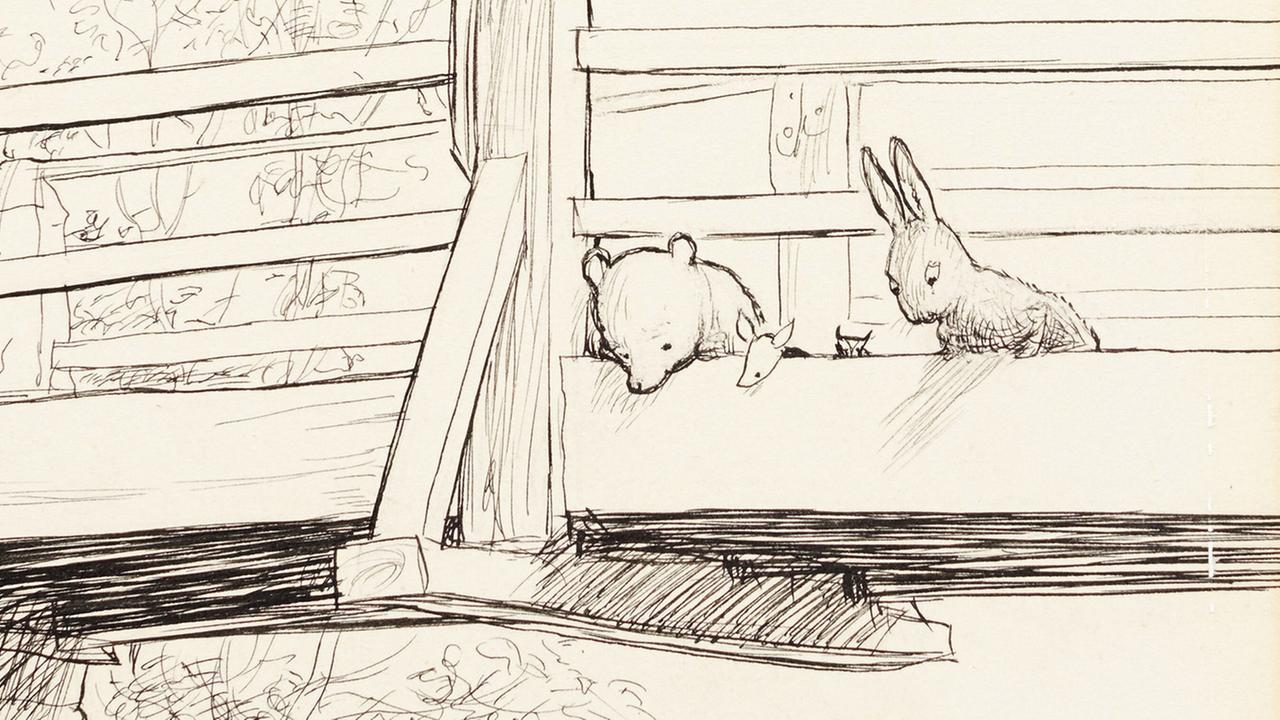
When Winnie-the-Pooh was published in 1926, it was an immediate departure from the high-stakes drama Milne usually penned. The book, illustrated by E.H. Shepard, introduced the world to the Hundred Acre Wood—a sanctuary of gentle adventures, honey-fueled mishaps, and profound philosophical inquiries disguised as childhood games. Unlike the heroes of contemporary adventure novels, Pooh was not brave, fast, or particularly intelligent. He was, however, profoundly kind, perpetually hungry, and deeply loyal.
A Chronology of a Literary Phenomenon
- 1921: Christopher Robin Milne receives a stuffed bear for his first birthday.
- 1924: A.A. Milne publishes When We Were Very Young, a collection of poems that introduces the world to the boy who would become Christopher Robin.
- October 14, 1926: The original Winnie-the-Pooh collection is published in London by Methuen & Co.
- 1928: The sequel, The House at Pooh Corner, is released, introducing the character of Tigger.
- 1961: The Walt Disney Company acquires the rights to the characters, leading to a series of featurettes that would cement Pooh’s status as a global pop-culture icon.
- 1987: German translator Harry Rowohlt publishes a new translation of the works, which critics argue finally captured the nuanced wit and linguistic playfulness of the original English text, re-establishing its appeal for adult readers.
- 2026: The centennial of the first publication is celebrated globally, acknowledging a century of cultural influence that spans literature, film, psychology, and philosophy.
The Literary Architecture: How a Story is Built
The genius of Milne’s work lies in its meta-fictional structure. As noted by Professor Thomas Kullmann of the University of Osnabrück, the narrative operates on multiple planes. The reader is invited into a world where the father-narrator reads stories to his son, Christopher Robin. In turn, the son is both a listener and a participant in the adventures within the wood.
This "literary game" forces the audience to confront the nature of storytelling itself. It invites children—and adults—to ask: What is a story? How do these characters relate to one another? To whom are we telling this tale? By blurring the lines between the storyteller and the story, Milne created a self-reflexive masterpiece that encourages critical thinking about the act of reading and creation.
Supporting Data: Why the World Still Loves Pooh
The endurance of Pooh is not merely a result of nostalgia. Literary scholar Emer O’Sullivan points out that the text functions on a sliding scale of complexity. For the toddler, the appeal is visual and sensory; for the older child, it is found in the satirical portrayal of character flaws—such as Owl, who presents himself as an intellectual giant while masking his profound inability to spell.
For adults, the attraction is often the "absence of conflict." In an increasingly digitized and high-pressure world, the Hundred Acre Wood serves as an antidote to modern anxieties. There is no war, no technology, and no competition for status in the Wood. Instead, there is an abundance of time—time to sit by a stream, time to share a pot of honey, and time to be present.
A Comparative Look at Global Adaptations
While Disney’s adaptations are the most widely recognized, they are not the only ones. The 1969 Soviet-era animation Winnie-Puch, directed by Fyodor Khitruk, offered a grittier, more existential take on the bear. Interestingly, both the Western and Eastern adaptations found profound success, proving that the archetypes within the Wood—the anxious Piglet, the melancholic Eeyore, the boisterous Tigger, and the pragmatic Rabbit—are universal.
Official Perspectives and Expert Analysis
Academic consensus, solidified over the last few decades, highlights that the "flaws" of the characters are actually their greatest strengths. Pooh is explicitly described as a "bear of very little brain," yet he is the emotional anchor of the group.
"Pooh represents the triumph of the heart over the intellect," says Dr. Julian Thorne, a researcher in children’s literature. "He doesn’t solve problems through logic or force. He solves them by being present, by listening, and by being the kind of friend who simply shows up."
The characters in the Hundred Acre Wood represent a diverse spectrum of psychological archetypes. Eeyore’s chronic pessimism, Piglet’s crippling anxiety, and Rabbit’s obsessive-compulsive need for order reflect the reality of the human condition. The fact that this "dysfunctional" group remains a functioning, loving community provides a template for empathy that remains vital in contemporary society.
Implications: The Legacy of a Hundred Years
As we mark the 100th anniversary of Winnie-the-Pooh, the implications of its longevity are clear. Literature does not need to be epic or tragic to be significant. By focusing on the "small" moments of life—the sharing of a meal, the walk through the woods, the reassurance of a friend—Milne created a timeless manual for human interaction.
The success of Harry Rowohlt’s translation in the late 20th century further proved that the book is not "just for children." It is a work of linguistic artistry, filled with puns, subverted expectations, and social satire. It is a work that reminds us that intelligence is secondary to compassion, and that the "very little brain" is often capable of the very largest insights.
Looking Forward
In an age where social media creates a culture of performance and perfection, the characters of the Hundred Acre Wood offer a quiet, stubborn resistance. They are, in their own way, radical figures. They are messy, they are prone to mistakes, and they are unapologetically themselves.
As we look toward the next century, the legacy of Winnie-the-Pooh remains secure. Not because of its marketing, not because of its merchandise, but because of its fundamental, stubborn truth: that it is enough to simply be who you are, and that in a world of complexity, there is no greater gift than a friend who knows exactly how to sit with you, even when you have nothing to say.
The Wood is still there, waiting for the next generation to wander in. And as Pooh might say, it is a very good day for a little something to eat, a little conversation, and the comforting knowledge that no matter how much the world changes, the bear of very little brain will be there to remind us how to be human.