By Financial News Desk
Updated: September 29, 2026 | 14:31 CET
The 2026 summer season will be remembered in economic history not just for its record-breaking temperatures, but for the profound structural shift it forced upon the European economy. As the heat finally begins to subside, the financial aftermath is coming into sharp focus. From the withered fields of the agricultural heartlands to the congested, low-water arteries of the Rhine, the physical realities of climate change have moved from long-term forecasts to immediate balance-sheet volatility. While the broader economic landscape faces a sobering reality—with estimated damages to the German economy alone reaching a staggering €42 billion—the stock market is telling a more nuanced story of winners and losers in an era of extreme weather.
The Economic Toll: A Continent Under Pressure
The cumulative economic impact of the 2026 heatwave is vast, affecting nearly every sector of the European Union. According to recent reports from EU Agrar-Commissioner Christophe Hansen, the agricultural sector has borne the brunt of the crisis, with losses attributed to heat, drought, and wildfires estimated between €14 billion and €17 billion.
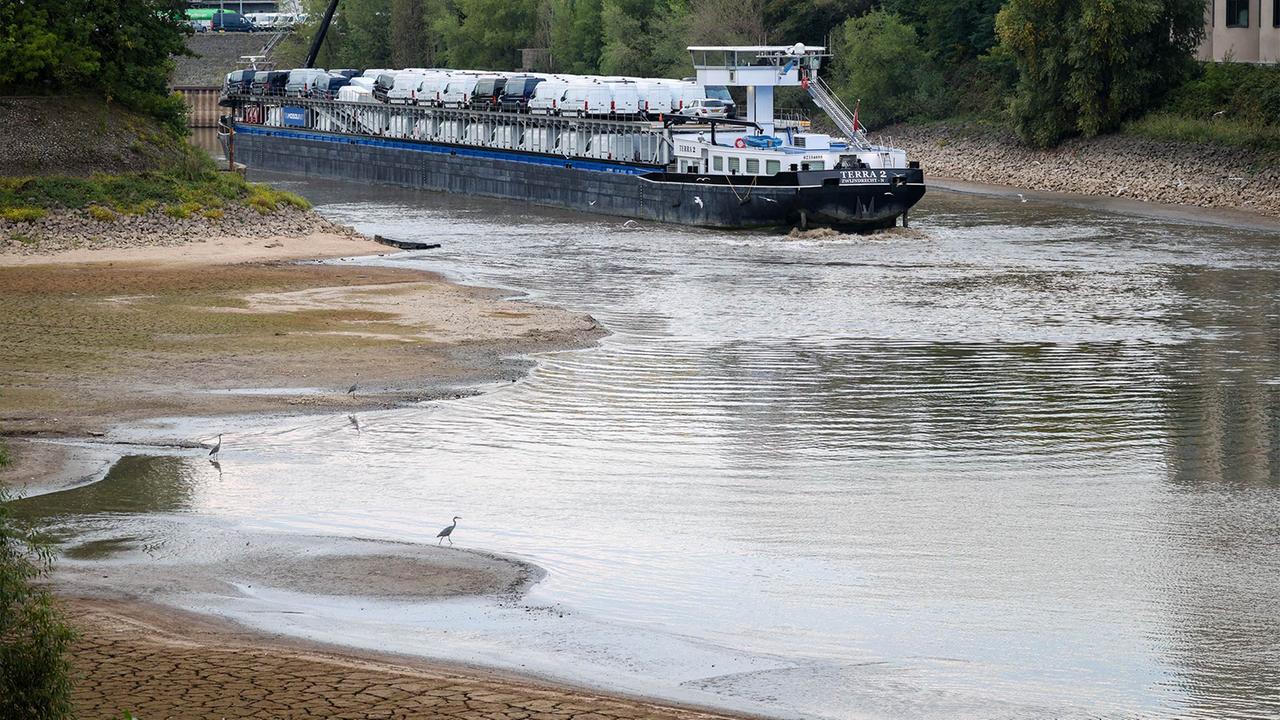
The damage is not confined to the fields. Low water levels in major European rivers—the lifeblood of industrial logistics—have created a cascading effect on supply chains. Manufacturers, unable to rely on cost-effective barge transport, have been forced to pivot to more expensive road or rail alternatives, eroding profit margins and slowing the pace of the regional industrial recovery. Furthermore, the human cost, characterized by reduced labor productivity during peak heatwaves and rising health-related expenditures, has acted as a silent drag on macroeconomic growth.
Chronology of a Heat-Driven Market Shift
- Early Summer (June 2026): Initial reports of below-average rainfall signal trouble for the agricultural sector. Energy prices begin to fluctuate as cooling demand surges.
- Mid-Summer (July 2026): Record temperatures across Central Europe trigger the first formal warnings regarding Rhine water levels. Logistics companies issue profit alerts as barge capacity drops by 40%.
- Late Summer (August 2026): Statistical data from the Federal Statistical Office reveals that consumer prices for staples, particularly chocolate and grain-based goods, have spiked 69% since 2020. Market sentiment turns cautious as inflation fears mount.
- Early Autumn (Late September 2026): The market begins to price in the full impact of the "Heat Summer." While industrial output struggles, retail sectors focused on climate adaptation (home improvement, cooling) report record-breaking quarterly earnings.
The Sweet Price of Climate Change: Lindt & Sprüngli’s Struggle
Few companies exemplify the intersection of supply-chain disruption and changing consumer behavior as clearly as the Swiss chocolate giant Lindt & Sprüngli. On September 29, the company’s stock plunged to a yearly low on the Zurich exchange after a downward revision of its growth forecast.
Initially projecting a growth rate of four to six percent, the firm now anticipates a best-case scenario of just two percent. The factors behind this slump are twofold:
- The Supply Crunch: Persistent heat and drought in West Africa—the world’s primary cocoa production hub—have severely limited yields, driving raw material costs to unsustainable heights.
- The Demand Plateau: As the cost of a chocolate bar has soared—averaging nearly 70% higher than 2020 levels—consumers have become increasingly "price-sensitive." When coupled with the psychological aversion to heavy, sweet treats during periods of extreme heat, demand has cratered.
This scenario serves as a case study in how climate-driven commodity volatility can intersect with consumer psychology to erode brand loyalty and market position.
Winners of the Heatwave: Adaptation as a Growth Strategy
While the majority of the industrial sector has faced headwinds, a small cohort of companies has managed to capitalize on the crisis. These "heat winners" have benefited from the necessity of adaptation.
The Home Improvement Surge: Hornbach’s Gains
Perhaps the most notable beneficiary has been the retail sector, specifically companies providing tools for residential climate mitigation. Hornbach, the German-based building supply giant, announced stellar half-year results today. The company reported a 6% revenue increase to €3.8 billion, with an operating profit (EBIT) rising by nearly 5% to €285.6 million.
The growth is directly attributable to the "Heat Economy." Consumers, desperate to maintain livable conditions in their homes, flooded stores to purchase air conditioning units, shading systems, and automated irrigation equipment. By capturing these specific market segments, Hornbach has successfully insulated itself from broader retail stagnation, confirming its full-year outlook despite geopolitical headwinds.
Commodity Hedging: The Südzucker Case
In the commodities market, firms like Südzucker have seen a windfall. As harvests of sugar cane, corn, and wheat suffered globally, the resulting scarcity pushed the prices of both sugar and ethanol to record highs. Südzucker, having anticipated these supply-chain bottlenecks, adjusted its earnings projections upward. Their success highlights a critical trend: in an era of climate volatility, firms that control the processing of essential agricultural inputs may find themselves with significant pricing power.
Official Responses and Policy Implications
Government and regulatory bodies are under increasing pressure to address the systemic nature of these climate-related losses. The European Commission has begun drafting frameworks for a "Climate Resilience Fund," aimed at subsidizing agricultural infrastructure that can withstand prolonged drought.
However, critics argue that such measures are merely reactive. Industry groups are calling for a more proactive approach, including:
- Logistics Diversification: Investment in rail and road infrastructure to decouple industrial supply chains from river-level dependence.
- Labor Reform: Legislative updates regarding workplace safety, including mandatory temperature thresholds and flexible working hours to protect productivity during heat spikes.
- Agricultural Diversification: Moving away from monoculture toward heat-resistant crop varieties, supported by EU-wide research grants.
Market Outlook: Diplomacy and Stability
Despite the heat-related turbulence, the broader market remains cautiously optimistic. On the Frankfurt Stock Exchange, the DAX index climbed 0.8% to 25,590 points by the early afternoon of September 29.
The primary driver for this recovery is not the weather, but geopolitics. Reports from the Iranian Foreign Ministry suggest that constructive negotiations with the United States are being mediated through Qatar. For investors, the potential easing of tensions in the Middle East provides a necessary counter-narrative to the domestic climate struggles. While the climate crisis continues to present a structural challenge to the European economy, the market is currently pivoting back to traditional levers of stability: diplomacy, trade, and corporate adaptation.
Conclusion: A New Normal for Investors
The summer of 2026 has served as a wake-up call for the investment community. The "Heat Summer" demonstrated that climate change is no longer an environmental issue; it is a fundamental market variable.
As we move toward the final quarter of the year, investors are increasingly differentiating between companies that are passive victims of the changing climate and those that are actively positioning themselves to provide solutions for it. Whether through the sale of climate-resilient home goods or the strategic management of agricultural commodities, the winners of the coming decade will be those who recognize that the climate is not just changing the weather—it is changing the very rules of the global economy.
As winter approaches, the question remains: will corporations use the coming months to fortify their supply chains and business models, or will they be caught off guard by the next cycle of environmental volatility? For now, the market is betting on the former, holding onto the hope that adaptation, combined with a cooling geopolitical climate, will stabilize the volatile gains and losses of a summer that truly redefined the status quo.