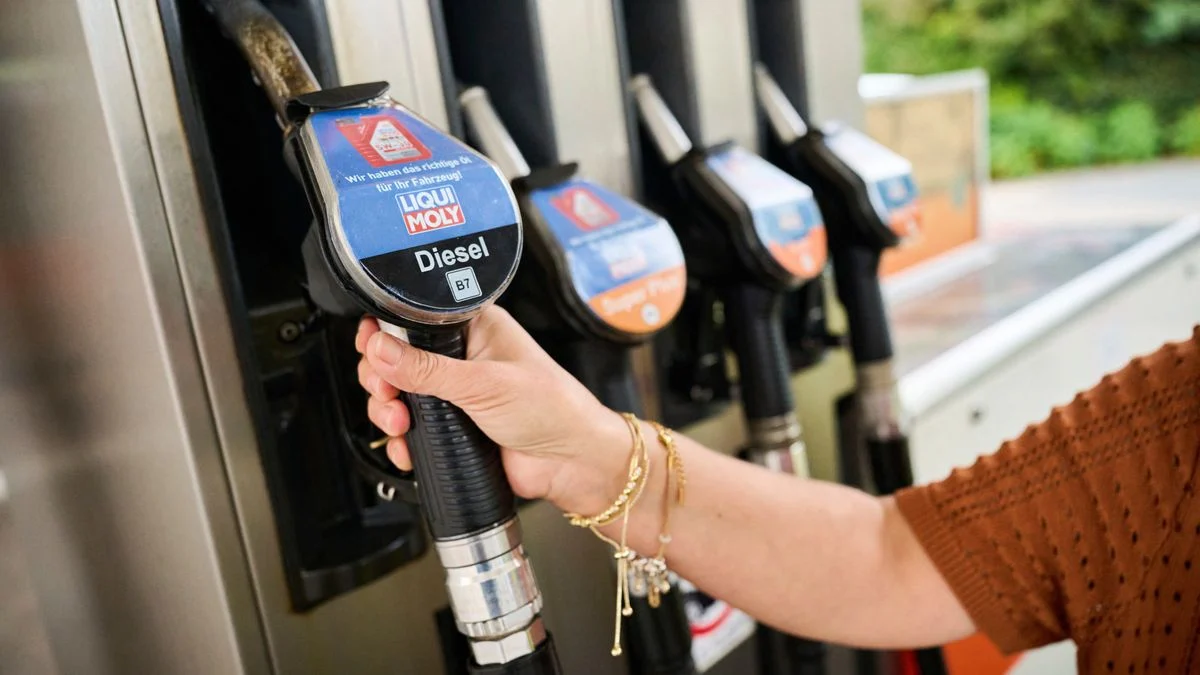
Since the introduction of the latest government intervention in fuel pricing on October 1, a heated debate has erupted across Germany regarding the effectiveness and fairness of the state-mandated "tank rebate." As the federal government seeks to alleviate the financial burden of soaring energy costs by reducing taxes on gasoline and diesel by 16.7 cents per liter, independent economic analysis suggests that consumers are not receiving the full benefit of these savings.
Data provided by the Munich-based Ifo Institute indicates that mineral oil companies are consistently failing to pass the entirety of the tax relief on to the public. This has reignited long-standing suspicions regarding market transparency and the pricing power of major fuel retailers in Europe’s largest economy.
The Discrepancy: A Failure to Pass Through Savings
According to Florian Neumeier, an energy market expert at the Ifo Institute, the first five days of the rebate program painted a clear, albeit troubling, picture. While the state effectively subsidized the pump price by 16.7 cents, the actual relief experienced by the average driver was significantly lower.
For diesel fuel, the data shows that only about 15 cents of the 17-cent tax reduction was passed on to the end consumer. The situation for gasoline was marginally better but still fell short of the full intended impact: Super E5 saw an average reduction of roughly 16 cents, while Super E10—the most common grade—also hovered around the 15-cent mark.
This statistical shortfall suggests that oil companies are absorbing a portion of the tax cut to pad their profit margins or to offset other operational costs, effectively neutralizing the government’s attempt to provide targeted relief to motorists.
A Chronological Analysis of Market Volatility
The Ifo Institute’s investigation highlights a peculiar, cyclical trend in how these prices are adjusted. The "pass-through" rate is not static; it fluctuates wildly depending on the day of the week, suggesting that retailers may be strategically timing price hikes to maximize revenue when consumer demand is high or oversight is low.
- The Launch (October 1): On the inaugural day of the program, the rebate was fully realized at the pump, providing a brief moment of relief for consumers and a positive outlook for the government’s policy.
- The Weekend Erosion: As the first weekend approached, the effectiveness of the rebate began to wane. Data indicates that by Sunday, the pass-through rate for Super E10 dropped significantly—by approximately 7 cents compared to the Thursday levels.
- The Weekly Reset: Interestingly, as the new work week began on Monday, the prices reverted to a more favorable pass-through rate of over 15 cents.
This volatility suggests that fuel retailers are utilizing algorithmic pricing strategies that respond to daily demand cycles, often at the expense of the intended policy outcomes. Diesel has followed a similar, albeit less volatile, trajectory, showing that while the mechanics differ, the outcome—a failure to consistently provide the full 16.7-cent benefit—remains a systemic issue.
Methodology: Measuring Price against Global Benchmarks
To ensure the accuracy of these findings, the Ifo Institute utilized a sophisticated comparative analysis. By benchmarking German fuel prices against international markets, economists were able to strip away the "noise" of general market fluctuations, such as global crude oil price spikes or supply chain disruptions.
This comparative approach allows researchers to isolate the specific impact of the tax cut. By controlling for international variables, the researchers concluded that the price drops observed in Germany were not merely a reflection of global oil trends but were instead directly influenced by the domestic retail sector’s reaction to the government’s fiscal policy.
Historical Context: Lessons from the RWI Institute
This is not the first time the German government has attempted to influence pump prices through subsidies. Earlier this year, the RWI – Leibniz Institute for Economic Research in Essen conducted an extensive study on previous fuel rebate initiatives. Their findings were stark: while prices initially fell in accordance with tax cuts, the impact began to "erode" as public and media attention waned.

Manuel Frondel, a researcher at the RWI, warned that when the political spotlight shifts, fuel companies often reclaim those lost margins. Furthermore, the RWI study suggested that legal interventions—such as using antitrust or cartel laws to force price reductions—are frequently toothless. The structure of the German fuel market, characterized by a few dominant players, makes it notoriously difficult to prove price-fixing, even when the data suggests anti-competitive behavior.
Official Responses and Industry Defenses
The fuel industry, represented by the economic association Fuels and Energy (En2x), has vehemently denied accusations of pocketing the tax savings. In a statement issued on Monday, the organization argued that the premise of the critique is flawed.
"Without the tank rebate, fuel prices at gas stations would have been exactly 17 cents higher per liter at every point since the beginning of October," an En2x spokesperson claimed. The industry argues that it is impossible to draw a blanket conclusion for the entire German market, which consists of approximately 14,000 gas stations. En2x notes that its members represent only about half of these outlets, suggesting that the diverse landscape of independent and branded stations makes a uniform pricing strategy impossible to coordinate.
However, critics argue that the sheer market dominance of the major oil companies allows them to set the "price floor," which smaller stations follow to remain competitive. This "price leadership" model means that even if half of the market is not directly involved in price-fixing, the behavior of the largest players inevitably dictates the retail price for the entire nation.
Economic Implications: The "Distortion" Argument
Beyond the immediate question of fairness, many economists, including the Ifo Institute’s Neumeier, have raised fundamental concerns about the wisdom of the tank rebate itself. There are two primary schools of thought regarding the long-term economic damage caused by such subsidies:
- Consumption vs. Conservation: High fuel prices serve a secondary, market-driven purpose: they encourage energy conservation. By artificially lowering prices, the government is essentially subsidizing consumption, which runs counter to the broader climate goals of the European Union and Germany’s own "Energiewende" (energy transition).
- Market Distortion: Critics argue that the rebate distorts consumer behavior. When fuel is artificially cheap, it incentivizes the purchase of internal combustion engine vehicles over electric or hybrid alternatives. This creates a "lock-in" effect, where consumers become dependent on fossil fuels for years to come, potentially undermining the transition to a sustainable economy.
As Neumeier pointed out, the high price of fuel should serve as a clear signal to the market. By masking that signal, the government may be preventing the necessary shift in consumer behavior required to reduce dependence on the Gulf region and other volatile oil-producing areas.
The Road Ahead: A Policy in Peril?
The ongoing dispute over the tank rebate highlights a significant gap between fiscal policy and market reality. While the German government’s intent to provide immediate relief is clear, the implementation has been plagued by the opacity of the fuel retail sector.
As the government continues to weigh its options, the data suggests that without stricter oversight or a radical change in how energy taxes are handled, the "rebate" may continue to function more as a profit-sharing scheme for oil giants than as a lifeline for the average citizen. Whether through increased regulatory scrutiny or a move away from broad-based subsidies toward more targeted, means-tested support, the current model appears increasingly unsustainable in the face of persistent energy market volatility.
Ultimately, the tank rebate serves as a cautionary tale for policymakers: in a market dominated by a few powerful entities, government intervention—no matter how well-intentioned—is often met with strategic resistance that prioritizes corporate margins over the public interest. As the debate continues, the burden remains on the shoulders of the German driver, who continues to pay for the friction between state ambition and market reality.