As yields on US government debt hit levels unseen in over two decades, global markets are gripped by a sense of déjà vu. Financial analysts are looking back to 1981—a year that marked the beginning of a four-decade bull market in bonds—to determine if history is preparing to repeat itself or if a new, more volatile era has begun.
Main Facts: The Current Landscape
As of mid-October 2026, the global financial architecture is under significant pressure. The yield on the benchmark 10-year US Treasury note has spiked to over 5.3%, a level not witnessed since 2002. This surge in borrowing costs represents a seismic shift for institutional investors, pension funds, and individual savers alike.
The mechanism driving this shift is fundamental: as the Federal Reserve maintains a restrictive stance to combat persistent inflationary pressures, the "risk-free" rate—the yield on US debt—has climbed. Historically, high yields have signaled an attractive entry point for investors seeking long-term income. However, the current environment is complicated by geopolitical instability, specifically the ongoing conflict in the Middle East involving Iran, which has sent shockwaves through energy markets and fueled fears of structural inflation.
Chronology: From the 1981 Peak to the Present
To understand the current obsession with 1981, one must look at the data. On September 30, 1981, the 10-year Treasury yield touched an all-time peak of 15.84%. At that time, the United States was grappling with double-digit inflation, which had reached 11% earlier that year.
The strategy employed by then-Federal Reserve Chairman Paul Volcker is the stuff of economic legend. By orchestrating a series of aggressive interest rate hikes, the Fed intentionally triggered a severe recession to break the back of inflation. By the end of 1982, inflation had cooled to below 4%. This "Volcker Moment" set the stage for a secular bull market in bonds; as interest rates steadily declined over the next 40 years, the prices of existing, higher-coupon bonds skyrocketed, rewarding investors with massive capital gains alongside steady interest income.
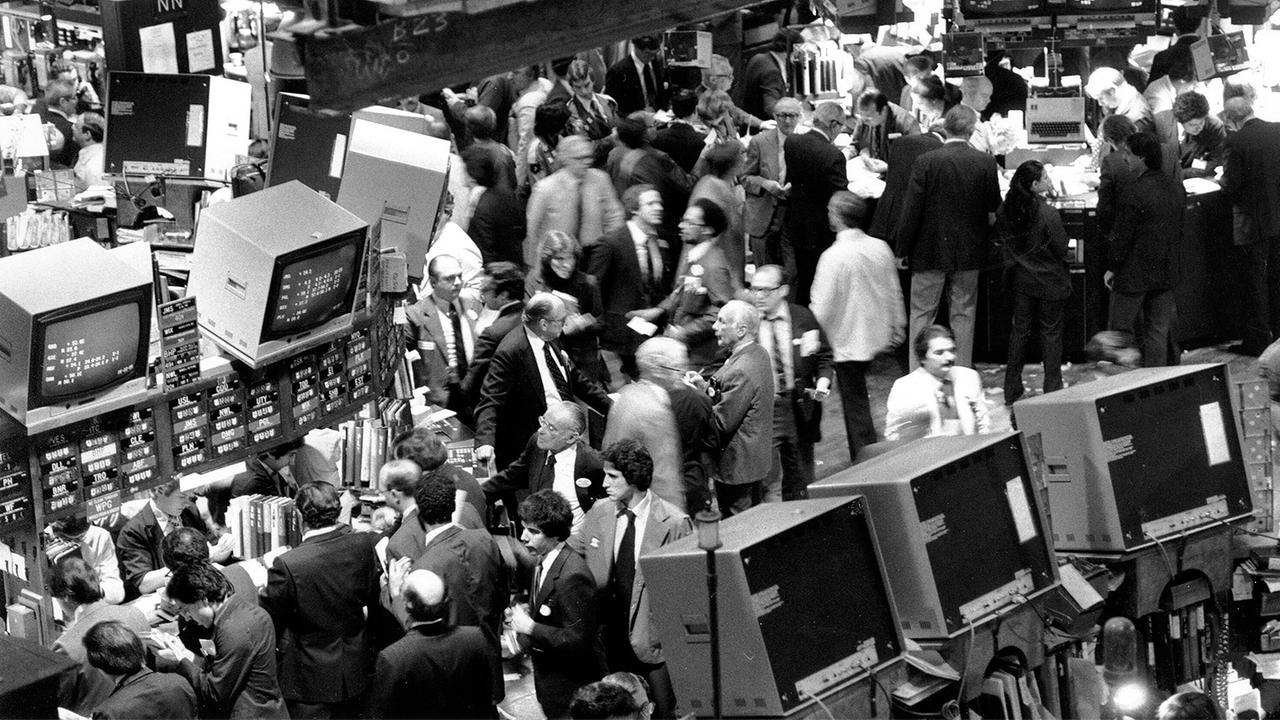
Fast forward to 2026, and the landscape bears surface-level similarities but structural divergences. While 1981 was defined by a clear, singular focus on crushing inflation via monetary policy, today’s market is influenced by a convergence of fiscal irresponsibility, technological investment booms, and a fundamental questioning of the US dollar’s long-term purchasing power.
Supporting Data: Debt and Market Competition
The primary argument against a repeat of the 1981-2021 bull market is the ballooning US national debt. In 1981, outstanding federal debt held by the public was roughly 25% of GDP. Today, the Congressional Budget Office (CBO) projects that this figure will reach 101% by the end of 2026 and climb toward 120% by 2036.
This explosion in debt creates a "crowding out" effect. As the US Treasury issues massive volumes of debt to finance the budget deficit, it competes directly with the private sector for capital. Edgar Walk, Chief Economist at Metzler Asset Management, notes that the aggressive expansion of the artificial intelligence sector and the massive capital expenditure required for new data centers are pulling liquidity out of the market. When tech giants and the US government compete for the same pool of investable capital, yields are naturally forced upward.
Furthermore, the cost of servicing this debt is becoming a fiscal burden. Net interest payments are expected to hit $1 trillion this fiscal year, with the CBO forecasting a doubling of that cost to $2.1 trillion by 2036. This creates a feedback loop: higher debt requires more borrowing, which necessitates higher yields to attract buyers, which in turn increases the interest burden.
Official Responses and Expert Analysis
Market experts remain divided on whether the current 5.3% yield represents a "once-in-a-generation" buying opportunity or a "value trap."
"The trust in the sovereign issuer is beginning to waver," observes Beil, an analyst at Sutor Bank. He points out that the traditional assumption—that US Treasuries are the ultimate safe haven—is being tested by the sheer scale of fiscal issuance. "We are in an extremely tense situation. I do not expect a 40-year bull market like the one that followed 1981. The structural conditions simply aren’t there."
However, others argue that for investors willing to hold to maturity, the current nominal yields are objectively attractive. If the economy slows or inflation moderates, those who locked in these rates will likely see their bond values appreciate significantly. The risk, as noted by Metzler’s Edgar Walk, is that there is "no political sign that the US government intends to pursue austerity." Without fiscal restraint, the pressure on yields may remain structural, not cyclical.
Implications for the Global Investor
For investors outside the United States, particularly in the Eurozone, the calculus is further complicated by currency risk. While a 5.3% yield on a 10-year Treasury note appears superior to the roughly 3.65% yield currently offered by German Bunds, the advantage can evaporate in a heartbeat due to currency fluctuations.
Key Considerations for the Modern Portfolio:
- The Dollar Factor: If the US dollar weakens against the Euro, any capital gains from bond price appreciation or the yield itself may be neutralized when converted back into a domestic currency.
- Duration Risk: Long-dated bonds offer the highest potential for capital gains if interest rates fall, but they are also the most sensitive to inflation surprises and fiscal mismanagement.
- The "Safety" Premium: Investors must decide if the yield premium on US Treasuries compensates for the political and fiscal risks associated with the record-high national debt.
- Entry Strategies: Many analysts suggest that while a "buy-and-hold" strategy is tempting, a staggered entry (dollar-cost averaging) is the most prudent path to navigate the current volatility.
Conclusion: A New Era?
The comparison to 1981 is useful for its historical context but potentially dangerous if taken as a roadmap. The 1981 bull market was fueled by a long-term decline in inflation and interest rates that was arguably the most favorable macroeconomic backdrop in modern history. Today, the world faces a "higher-for-longer" reality characterized by fiscal deficits, geopolitical tension, and a re-ordering of global supply chains.
Investors standing at the precipice of this market are not necessarily looking at a repeat of the past. Instead, they are looking at a fundamentally different environment where the risk-reward ratio of US government debt is no longer dictated solely by the Federal Reserve, but by the complex interplay of global capital flows and national fiscal sustainability. While US Treasuries remain a cornerstone of global finance, the days of relying on them as a guaranteed, low-volatility engine for growth may well be coming to an end. Investors should remain cautious, diversified, and hyper-aware that in the current climate, yield is not just a reward for patience—it is compensation for increasing uncertainty.